The Best Strength Training Exercises for Seniors: Improve Your Health and Mobility
Strength training is one of the best things you can do for your health after 60. It keeps you strong enough for stairs, groceries and getting up from a chair, protects your bones, lowers your risk of falls and helps you stay independent. It is never too late to start: people in their 80s and 90s still gain strength when they train.
This guide covers the best strength training exercises for seniors, how to start safely, simple tests to check your starting point, sample upper body, lower body and core routines, balance and flexibility work, how much to do, what to eat, and how to train at home.
The short version
- Older adults should do muscle-strengthening exercise at least 2 days a week, plus at least 150 minutes a week of moderate activity such as brisk walking, and regular balance work.
- The best exercises copy everyday movements: standing up from a chair, stepping up, pushing, pulling, carrying and balancing.
- Start light, move slowly with good form, breathe steadily, and add weight or reps gradually.
- Exercise that combines balance and strength work is the best-proven way to prevent falls.
- Eat enough protein at every meal to help your muscles respond to training.

Why strength training matters for seniors
Muscle mass and strength decline gradually from middle age, and the loss speeds up in your 60s and 70s. Power, the ability to move quickly, drops even faster. That is what makes everyday tasks harder: getting out of a low chair, climbing stairs, carrying bags or catching yourself when you trip.
Falls are the biggest risk. About 1 in 4 adults aged 65 and older falls each year, and falls are the leading cause of injury among older adults. Exercise that builds balance and leg strength is one of the best-proven ways to lower that risk: a review of 108 trials found it cut the rate of falls by about a quarter.
| Benefit | What strength training does |
|---|---|
| Strength and independence | Builds the muscle you need to stand up, climb stairs, carry things and live on your own. |
| Fewer falls | Stronger legs and hips, combined with balance training, lower the risk of falling. |
| Bone health | Loading your muscles and bones helps maintain bone density, which matters for osteoporosis. |
| Blood sugar and heart health | Helps the body use blood sugar and supports healthy blood pressure, alongside aerobic exercise. |
| Mood and thinking | Regular exercise, including strength training, is linked to better mood, better sleep and slower decline in thinking skills. |
| Joint comfort | Stronger muscles support the joints and can ease pain from arthritis. |
How much exercise older adults need
The U.S. Physical Activity Guidelines, published by the Department of Health and Human Services and used by the CDC, recommend that adults 65 and older aim for:
- Muscle strengthening: at least 2 days a week, working all the major muscle groups (legs, hips, back, chest, shoulders, arms and core).
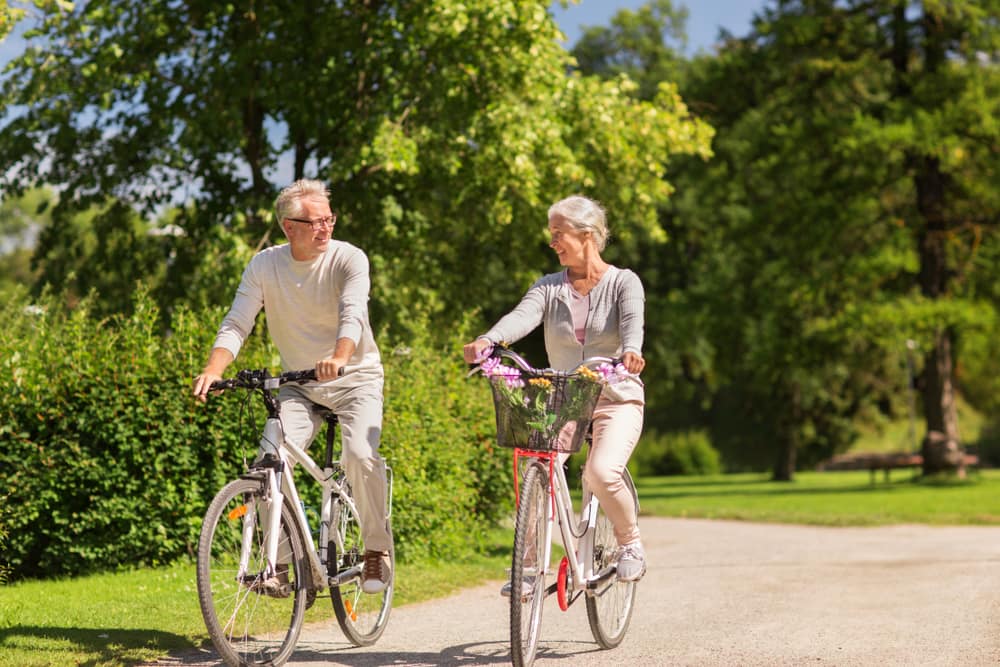
- Aerobic activity: at least 150 minutes a week of moderate activity, such as brisk walking, cycling or swimming. That is about 30 minutes, 5 days a week.
- Balance: activities that improve balance, as part of a routine that mixes strength, aerobic and balance work.
If a health condition limits you, the advice is to be as active as your abilities allow. Some activity is always better than none. For more on the aerobic side, see our guide to cardio exercise for seniors.
Before you start: training safely
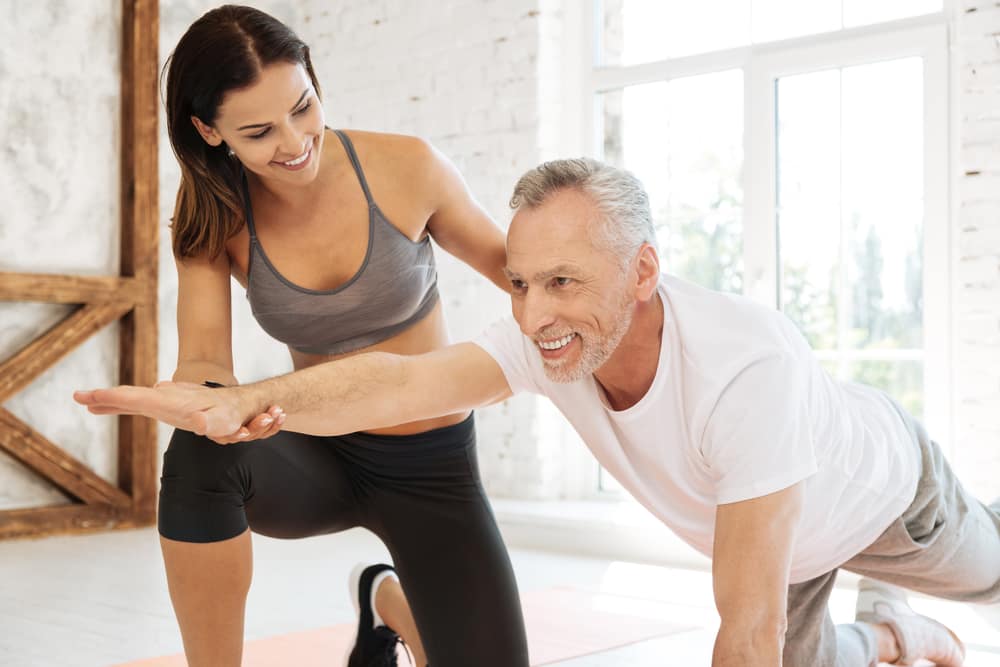
- Check with your doctor if you have heart disease, high blood pressure, diabetes, osteoporosis, a joint replacement, recent surgery, or if you have been inactive for a long time.
- Start light. Choose a weight you can lift 10 to 15 times with good form and a couple of reps to spare.
- Breathe. Breathe out as you lift and in as you lower. Holding your breath raises blood pressure.
- Move slowly and with control, taking about 2 to 3 seconds to lift and 2 to 3 seconds to lower.
- Warm up for 5 to 10 minutes with easy walking, marching in place or arm circles.
- Know the difference between effort and pain. Muscles working hard is expected. Sharp pain, chest pain, dizziness or unusual shortness of breath means stop.
- If you have osteoporosis, avoid sit-ups, crunches, toe touches, bending forward from the waist, and forceful or end-range twisting, which put stress on the spine. Keep overhead presses and carries light. Exercises that keep your back straight are the safer choice.
- Use support. Keep a sturdy chair, counter or wall within reach for standing and balance exercises.
For more detail, see our guides to senior fitness safety and fall prevention for seniors.
Test your starting point
These simple tests, used by doctors and physical therapists, show where you are starting and make progress easy to track. Do them with someone nearby and a sturdy chair or counter in reach.
| Test | How to do it | What to watch for |
|---|---|---|
| 30-second chair stand | Sit in a chair with arms crossed. Count how many times you can stand up fully and sit back down in 30 seconds. | Fewer than 12 stands for men or 11 for women aged 65 to 69 is below average and signals a higher fall risk. The cutoff drops with age, for example under 10 for men and 9 for women aged 80 to 84. |
| Timed Up and Go | Stand up from a chair, walk 10 feet at a normal pace, turn, walk back and sit down. Time it. | 12 seconds or longer suggests a higher risk of falling. |
| Balance stands | Hold four positions for 10 seconds each: feet side by side, then the instep of one foot touching the big toe of the other, then heel to toe, then on one foot. | If you cannot hold heel to toe for 10 seconds, your fall risk is higher. |
Repeat the tests every 6 to 8 weeks. If your scores are low, start with the easier version of each exercise below, and consider training with a professional at first.
The best strength training exercises for seniors
These exercises train the movements you use every day. Each one has an easier and a harder version, so you can start where you are and progress. Aim for 1 to 3 sets of 8 to 15 reps.
1. Sit-to-stand (chair squat)
The single most useful exercise for older adults. Sit near the front of a sturdy chair with your feet flat and hip-width apart. Lean forward slightly, press through your heels and stand up tall, then lower yourself slowly back down. Easier: use your hands on the armrests or a higher seat. Harder: hold a dumbbell at your chest or lower more slowly.
2. Step-ups
Stand facing a bottom stair or a sturdy step, holding a railing. Step up with one foot, press through that heel to bring the other foot up, then step down with control. Do all reps on one side, then switch. Easier: use a lower step and both hands on the railing. Harder: hold a light dumbbell in the free hand.
3. Wall or counter push-ups
Place your hands on a wall or kitchen counter at shoulder height, a little wider than your shoulders. Walk your feet back, keep your body in a straight line, bend your elbows to bring your chest toward the surface, then push back. Easier: stand closer to the wall. Harder: use a lower surface, such as a sturdy table or a step.
4. Rows
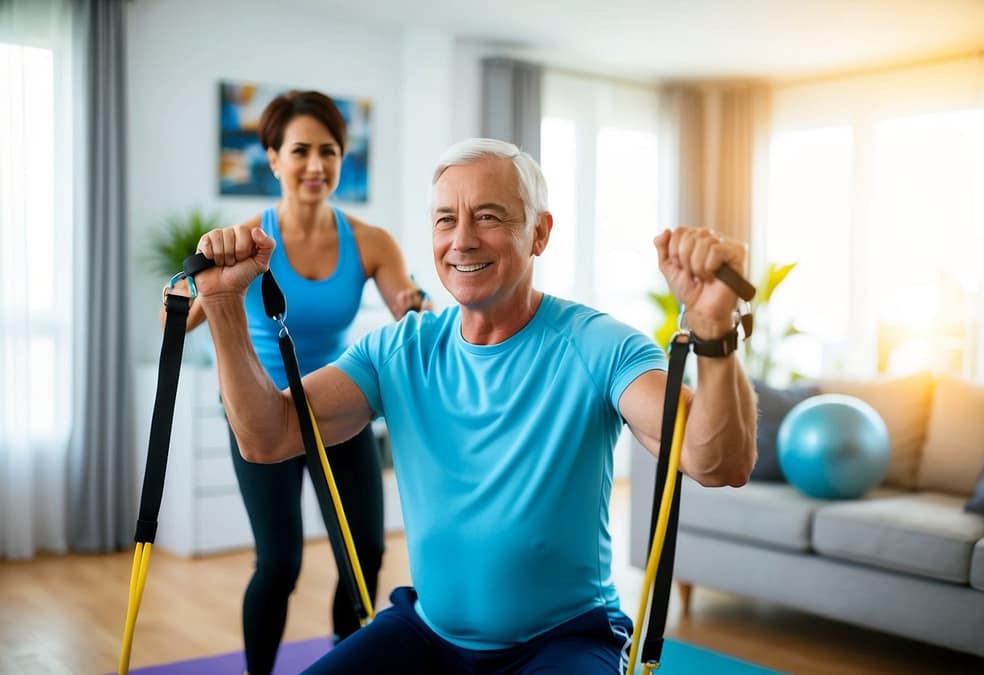
Loop a resistance band around a sturdy post or door anchor at chest height, or sit and loop it around your feet. Pull the handles toward your ribs, squeezing your shoulder blades together, then return slowly. Rows strengthen the upper back and help posture. Harder: use a firmer band, or do a one-arm dumbbell row with your other hand on a bench.
5. Seated overhead press
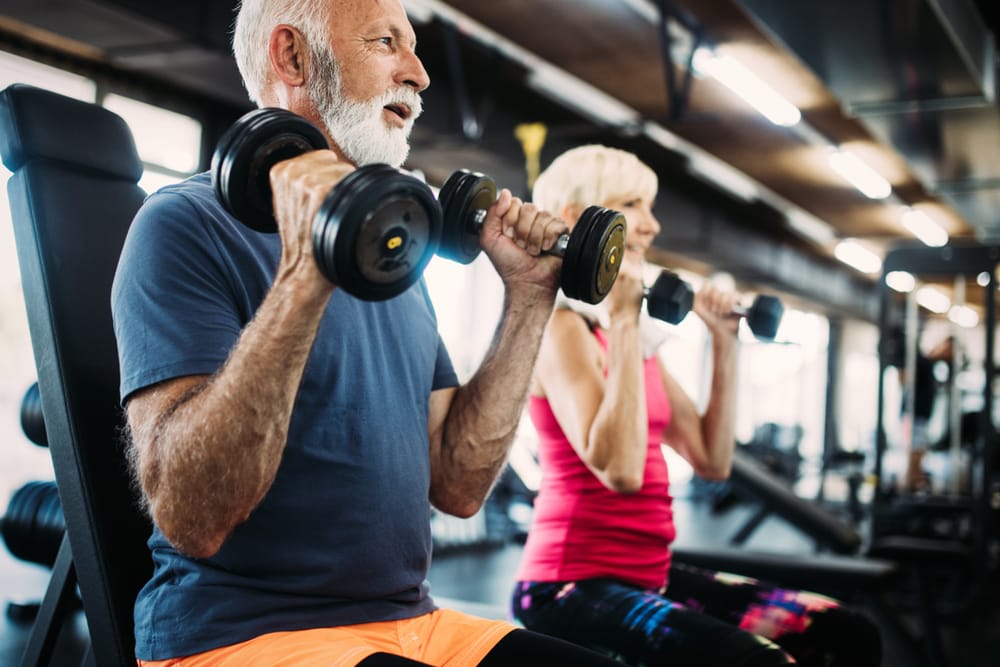
Sit tall with a light dumbbell in each hand at shoulder height. Press them overhead without arching your back, then lower slowly. If overhead movement bothers your shoulders, press forward at chest height instead. Harder: stand up to do it, which also trains balance.
6. Glute bridge
Lie on your back with knees bent and feet flat. Press through your heels to lift your hips until your body forms a straight line from shoulders to knees, hold for a second, then lower. Bridges strengthen the hips and back of the legs, which power walking and climbing stairs. If getting down to the floor is hard, do this on a firm bed. Harder: hold at the top for 5 seconds.
7. Calf raises
Stand behind a chair or at a counter, holding on lightly. Rise up onto the balls of your feet, pause, then lower slowly. Strong calves help with walking speed and balance. Harder: do one leg at a time.
8. Farmer’s carry
Hold a dumbbell or a full shopping bag in each hand, stand tall and walk 20 to 40 steps, then set them down carefully. Carries build grip, shoulder and core strength for real-life tasks. Easier: carry in one hand at a time, staying near a wall.
9. Bird dog
Start on your hands and knees. Reach one arm forward and the opposite leg back, keeping your back flat and hips level, hold for 2 seconds, then switch. This trains the core without bending the spine. Easier: move only the arm or only the leg.
10. Standing side leg raise
Hold the back of a chair. Keeping your body upright and toes pointing forward, lift one leg out to the side, then lower slowly. This strengthens the outer hip muscles that keep you steady when you walk. Harder: add a light ankle weight or a band around your ankles.
Sample upper body, lower body and core routines
Each routine takes about 15 to 20 minutes. Do 2 sets of each exercise, resting about a minute between sets. Start with lighter weights and add a little more only when you can complete every rep with good form.
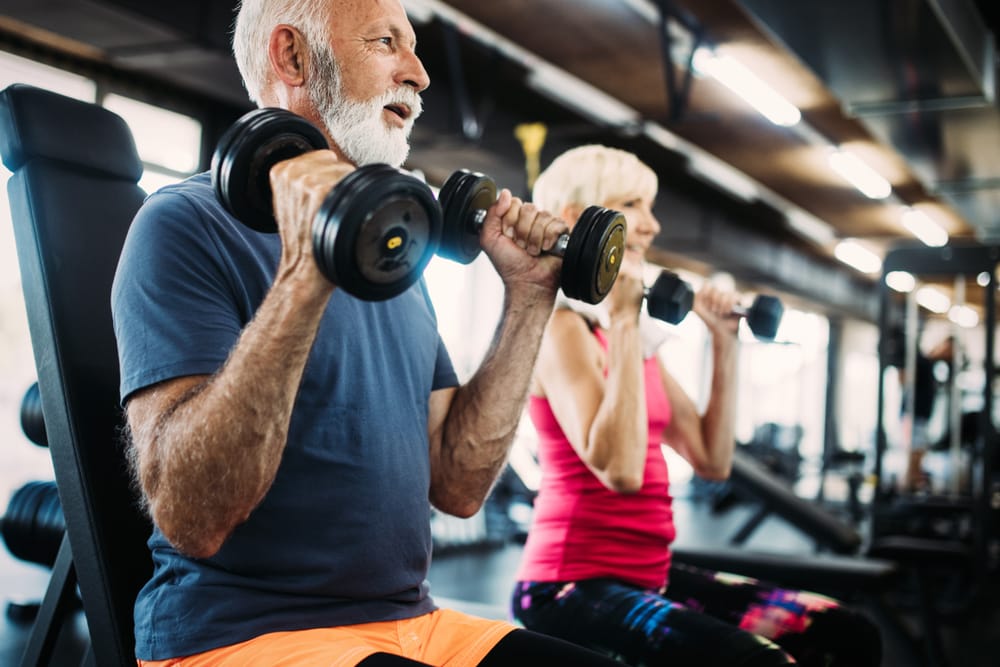
Upper body routine
- Wall or counter push-ups: 8 to 12 reps
- Band or dumbbell rows: 10 to 12 reps
- Seated overhead press: 10 to 12 reps
- Biceps curls: 10 to 12 reps
- Seated triceps extensions with one dumbbell held in both hands: 10 to 12 reps
Lower body routine
- Sit-to-stand: 8 to 12 reps
- Step-ups: 8 to 10 reps each leg
- Glute bridges: 10 to 12 reps
- Calf raises: 12 to 15 reps
- Standing side leg raises: 10 reps each leg
Core routine
- Bird dog: 6 to 8 reps each side
- Dead bug, lying on your back and slowly extending one arm and the opposite leg: 6 to 8 reps each side
- Side plank from the knees, or against a wall: hold 15 to 30 seconds each side
- Farmer’s carry: 2 walks of 20 to 40 steps
Core training for seniors works best when it keeps the spine steady. Sit-ups and Russian twists add little and are best avoided, especially with osteoporosis or back pain.
How many sets and reps, and how to progress
- How often: 2 or 3 strength sessions a week, on days that are not back to back.
- Sets and reps: 1 to 3 sets of 8 to 15 reps per exercise. Beginners can start with 1 set and add more over a few weeks.
- Effort: the last couple of reps should feel challenging but doable, around 6 or 7 on a 10-point effort scale.
- Progress: when you can do 2 more reps than your target in the last set for two sessions in a row, increase the weight slightly or move to the harder version.
- Add power later: once you are comfortable, do the lifting part of some exercises a little faster, such as standing up quickly from the chair and sitting down slowly. Power training can improve everyday tasks such as getting out of a chair, and may help a little more than slow lifting alone. Power is also what helps you react quickly if you trip.
Balance and coordination exercises
Balance is a skill, and it improves with practice at any age. Do these near a counter or sturdy chair, holding on lightly at first.
- Stand with feet together, then with the instep of one foot touching the big toe of the other, then heel to toe. Hold each for 10 to 30 seconds.
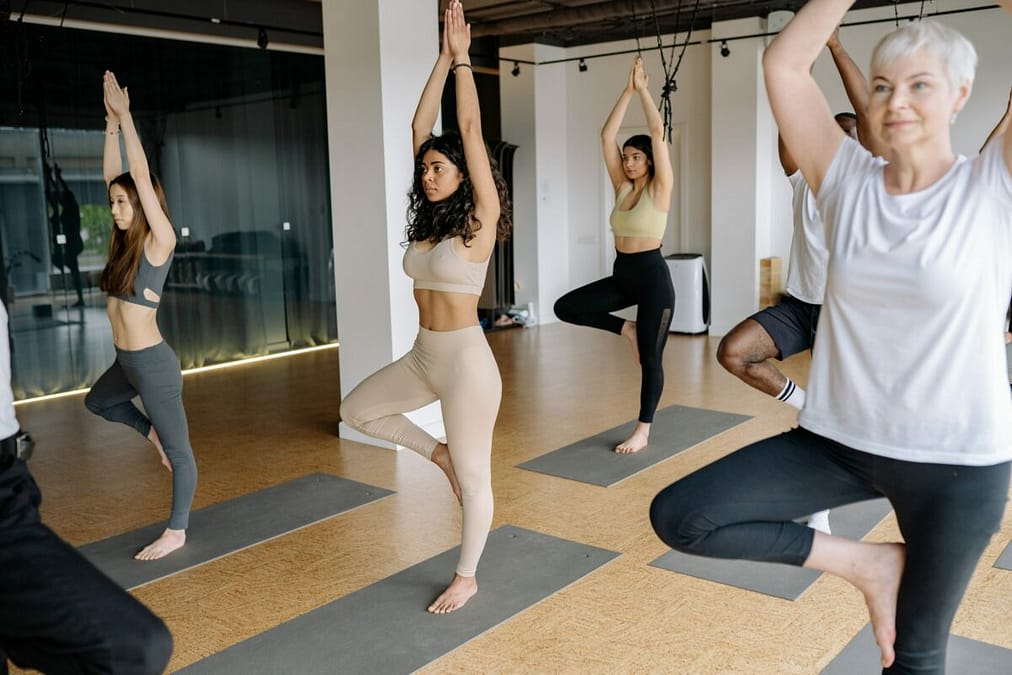
- Single-leg stand: stand on one foot for up to 30 seconds, then switch. Progress by letting go of the counter, then by turning your head slowly side to side.
- Heel-to-toe walk: walk in a straight line, placing the heel of one foot directly in front of the toes of the other, for 10 to 20 steps.
- Clock reach: stand on one leg and reach the opposite hand toward imaginary numbers on a clock face around you.
- Tai chi: slow, flowing movements that train balance, strength and focus. Research suggests tai chi can lower the risk of falls, and the CDC recommends it as a strength and balance exercise.
The strength exercises above support your balance too. Step-ups, side leg raises, calf raises and carries all train the muscles that keep you upright.
Flexibility, mobility and chair yoga
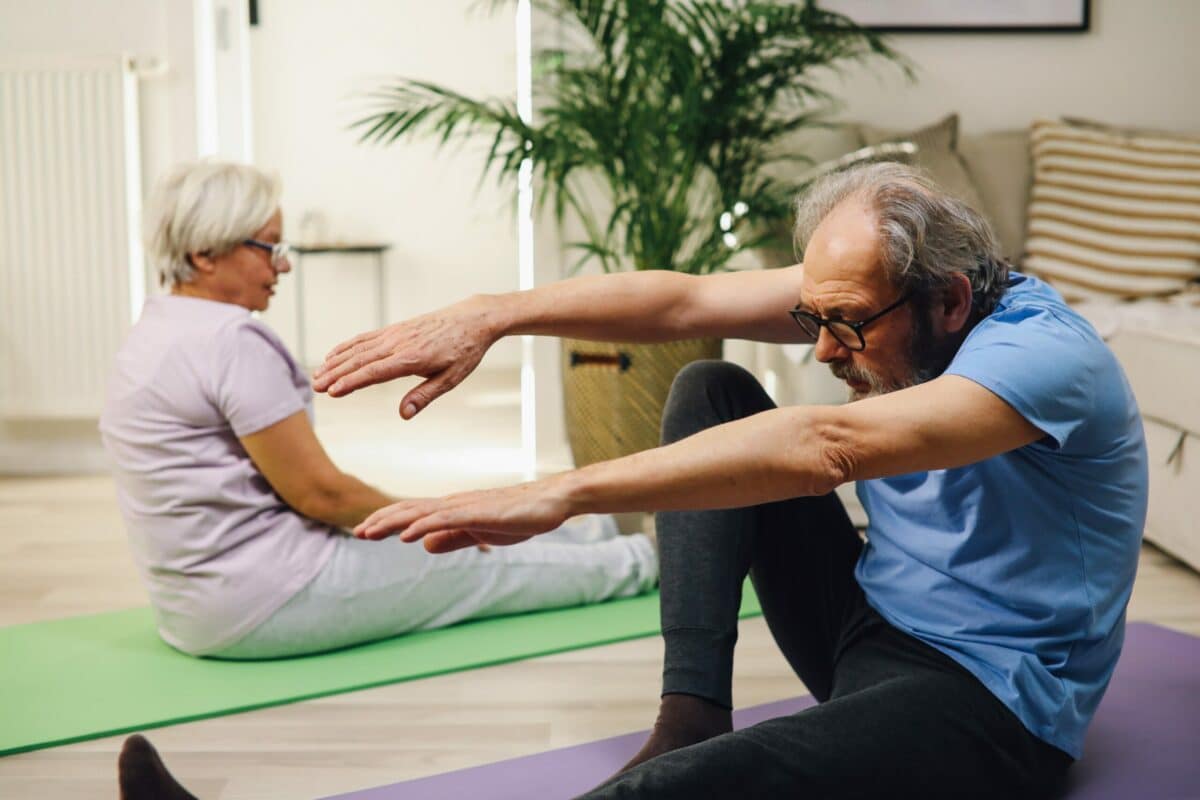
Mobility work keeps your joints moving through their full range, which makes everyday movements and strength exercises easier. Stretch after your workout, when your muscles are warm, holding each stretch for 30 to 60 seconds, or 15 to 30 seconds while you are getting used to it, without bouncing.
Chair yoga is a good option if getting down to the floor is difficult or balance is a concern. A few poses to try:
- Seated cat-cow: with hands on your knees, gently arch your back and lift your chest, then round your back, moving with your breath. Keep the rounding small if you have osteoporosis.
- Seated side stretch: reach one arm overhead and lean gently to the opposite side.
- Seated figure four: cross one ankle over the opposite knee to stretch the hip, sitting tall.
- Shoulder and chest opener: clasp your hands behind your back or hold the chair seat, and lift your chest.
If you have osteoporosis, skip deep forward bends and twisting under strain. A private instructor can adapt yoga to your body; see our private yoga and Pilates or at-home assisted stretching.
A sample weekly plan
| Day | What to do |
|---|---|
| Monday | Strength: lower body and core routines, then stretching, plus a 20-minute walk |
| Tuesday | Brisk walk, 30 minutes, plus balance exercises |
| Wednesday | Strength: upper body routine plus sit-to-stands and carries, plus a 20-minute walk |
| Thursday | Brisk walk or swim, 30 minutes, plus chair yoga |
| Friday | Strength: full body, choosing 6 to 8 exercises from the list, plus a 20-minute walk |
| Saturday | Longer walk, tai chi class or another activity you enjoy |
| Sunday | Rest or gentle stretching |
New to exercise? Start with two strength days and short walks, and build up over 4 to 6 weeks.
Eating for strength
Muscles need protein to respond to training, and many older adults eat less of it than they need.
- Protein: experts on aging recommend that healthy older adults aim for about 1.0 to 1.2 grams of protein per kilogram of body weight a day, more than the standard adult recommendation. For a 150-pound person, that is roughly 70 to 80 grams. Spread it across meals, with a good portion at each one: eggs, Greek yogurt, fish, chicken, beans, tofu or cottage cheese. People with kidney disease should check with their doctor first.
- Bones: get enough calcium and vitamin D from food, sunlight or supplements, as your doctor advises.
- Fluids: the sense of thirst fades with age, so drink regularly through the day, not only when thirsty.
For a plan that fits your health and appetite, see our nutrition services.
Habits for a longer, stronger life
Strength training is one piece of healthy aging. The research on longevity points to a handful of habits that work together:
- Walk every day. In a large analysis, adults 60 and older who took about 6,000 to 8,000 steps a day had a lower risk of death than those who took fewer.
- Keep your heart and lungs fit with regular aerobic exercise, including some brisk efforts that raise your breathing.
- Sleep 7 to 8 hours. See our guide to the stages of sleep and how to sleep better.
- Stay connected. Group classes, walking partners and family activities keep you social as well as active.
- Do not smoke, limit alcohol and keep up with checkups and screenings.
Equipment for strength training at home
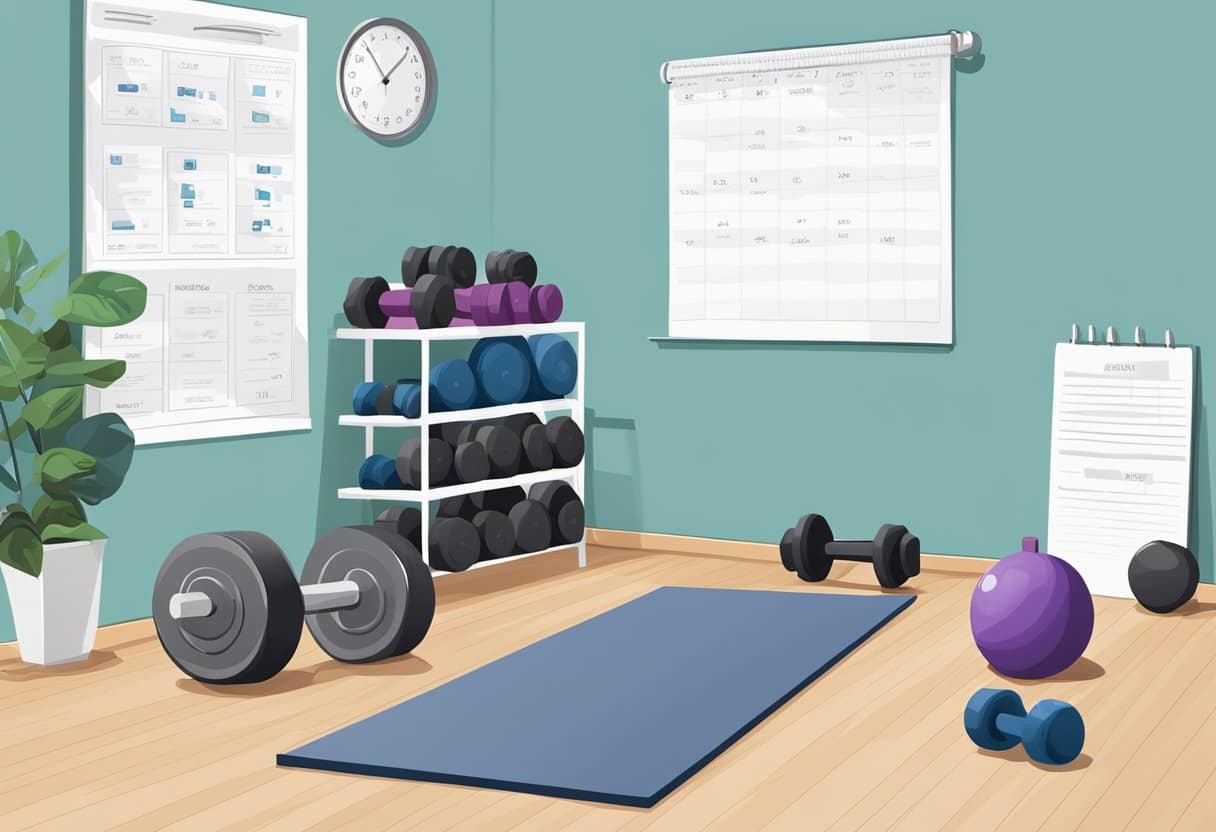
You do not need a gym. A few pieces of equipment cover everything in this guide:
- A sturdy chair without wheels
- A set of light dumbbells, such as 2, 5 and 8 pounds, or adjustable dumbbells
- Resistance bands in two or three strengths, with a door anchor
- A sturdy step or the bottom stair
- An exercise mat, if you are comfortable getting to the floor
For more ideas, see our guide to the best exercise equipment for seniors.
Top exercise equipment recommendations for seniors
Gaiam Yoga Mat Premium
Foam Roller for Exercise
Exercise Ball
SPRI Braided Xertube Resistance Band
Resistance Bands Set. 5 Pack
Non Slip Grip Hexagon Deluxe Neoprene Dumbbells
Foam Balance Pad For Balance Exercises And Core
Aerobic Exercise Step Platform
Gaiam Hand Weights for Women & Men
Working with a trainer
A good trainer for older adults starts with an assessment, not a workout. Look for someone who:
- Has experience training older adults and asks about your health history, medications and goals
- Tests your strength, balance and mobility before choosing exercises
- Adapts every exercise to your joints and any conditions, and coordinates with your doctor or physical therapist when needed
- Explains clearly, watches your form closely and progresses you gradually
- Makes the sessions something you look forward to
Training at home removes the hardest parts of getting started: the commute, the crowded gym and unfamiliar equipment. A Type A Training trainer comes to your home or building gym, builds the program around what you have, and adjusts it as you get stronger. Learn more about personal training for seniors, or read why many seniors hire an in-home trainer.
Frequently asked questions
Is strength training recommended for 70-year-olds?
Yes. Strength training is recommended at every age, including your 70s, 80s and beyond. Studies show people well into their 90s still get stronger with the right program. Start light and check with your doctor if you have health conditions.
What are the best strength exercises for seniors?
Exercises that copy daily movements: sit-to-stands, step-ups, wall push-ups, rows, overhead presses, glute bridges, calf raises, carries and bird dogs.
How often should seniors do strength training?
At least 2 days a week, with a rest day between sessions, working all the major muscle groups.
How can older adults do strength training at home?
With a sturdy chair, a few light dumbbells and resistance bands, you can do every exercise in this guide at home. Bodyweight exercises such as sit-to-stands and wall push-ups need no equipment at all.
Should seniors lift heavy weights?
Heavier is not the goal at the start. Good form and steady progress are. Over time, many older adults safely lift moderate to fairly heavy weights with supervision, and that challenge is what builds strength and bone.
What exercises should seniors avoid?
Avoid anything that causes sharp pain. People with osteoporosis should skip sit-ups, crunches, toe touches, bending forward from the waist and forceful twisting. High-impact jumping and very fast movements are best avoided until you have built a base of strength and balance.
What is the best way for seniors to build muscle?
Train each major muscle group at least twice a week, increase the challenge gradually, and eat enough protein, spread across your meals.
Is it too late to start strength training at 80?
No. Older beginners often see some of the biggest improvements in strength, balance and confidence. Start with the easier versions and build from there.
Patient trainers who specialize in balance, strength, and confidence, in your own home.
Explore senior training