Best Workouts for Kids: Fun, Safe Exercise That Builds Focus and Discipline
The best workouts for kids do not look like adult workouts. They look like play: running, jumping, climbing, throwing, dancing and games, with a little structured strength work as children get older. Done regularly, that kind of activity builds strong bones and muscles, a healthy heart, better sleep and mood, and the focus and discipline that come from practicing a skill and getting better at it.
This guide covers how much activity kids need at each age, the best workouts and games, whether strength training is safe, running, yoga and martial arts, keeping girls active, preventing injuries, fueling active kids, and how parents can help it all stick.
The short version
- Children and teens ages 6 to 17 need at least 60 minutes of moderate to vigorous activity every day. Preschoolers should be active throughout the day.
- Most of that hour should be aerobic, with muscle-strengthening and bone-strengthening activity at least 3 days a week each.
- Supervised strength training is safe and helpful for kids who can follow instructions, usually around age 7 or 8. Technique comes first, not heavy weight.
- Variety beats early specialization. Rest days and time off from a single sport help prevent overuse injuries.
- The best workout is the one your child enjoys. Make it fun, social and part of the family routine.
How much exercise kids need
These recommendations come from the U.S. Physical Activity Guidelines, published by the Department of Health and Human Services and used by the CDC, and from the World Health Organization for young children.
| Age | How much | What it looks like |
|---|---|---|
| 3 to 5 years | Active throughout the day. For ages 3 and 4, the WHO recommends at least 3 hours of activity a day, including at least 1 hour of moderate to vigorous activity. | Running, jumping, climbing, throwing and catching, tricycles and balance bikes, active games |
| 6 to 17 years | At least 60 minutes of moderate to vigorous activity every day | Mostly aerobic activity, such as running, biking, swimming, dancing and sports |
| 6 to 17 years, within that hour | Vigorous activity at least 3 days a week | Activities that make kids breathe hard, such as running games, soccer or swimming laps |
| 6 to 17 years, within that hour | Muscle-strengthening at least 3 days a week | Climbing, push-ups, gymnastics, tug of war, bodyweight or supervised weight training |
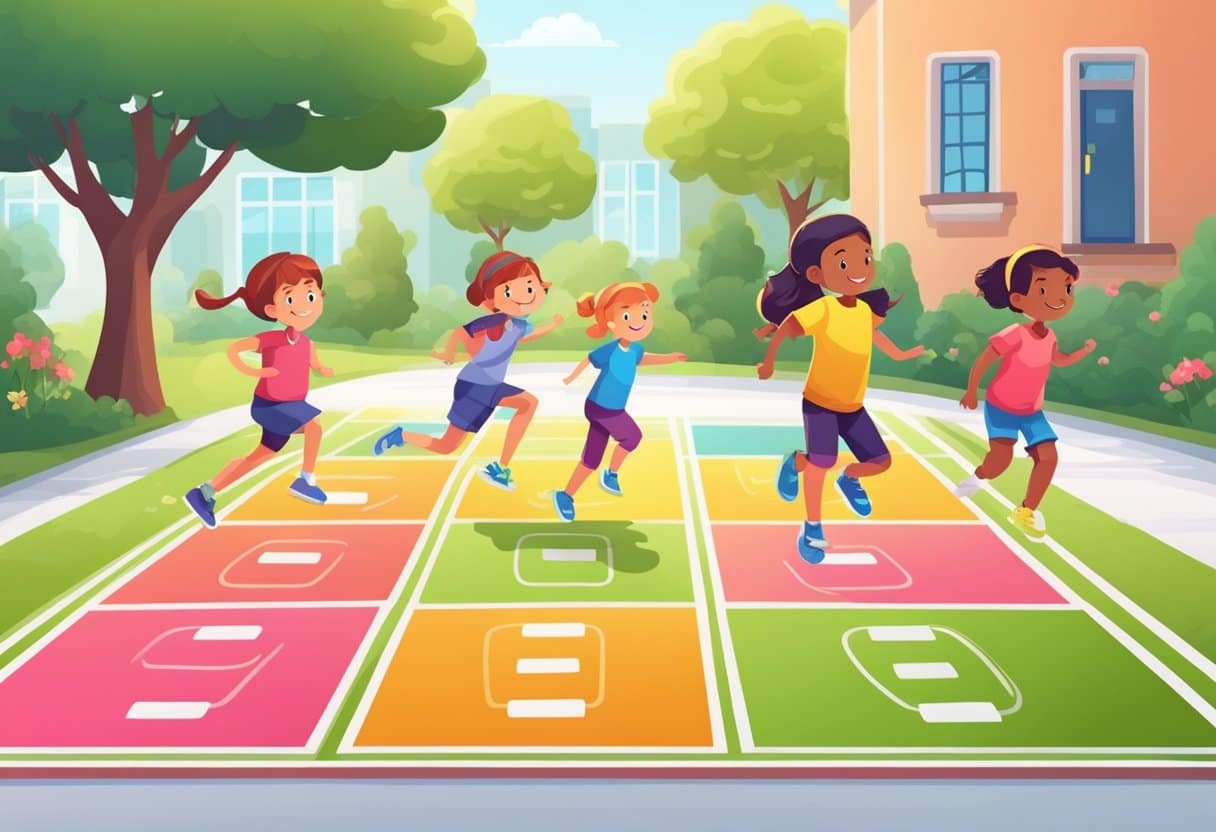
| 6 to 17 years, within that hour | Bone-strengthening at least 3 days a week | Jumping rope, hopscotch, basketball, running and other jumping and impact activities |
The hour does not have to happen all at once. Recess, a walk to school, sports practice and active play after dinner all count toward it.
Why exercise matters for kids
Regular activity helps children build strong bones and muscles, a healthy heart and lungs, and a healthy weight. It also helps the brain: active children tend to have better attention, memory and school performance, and exercise can lower symptoms of anxiety and depression.
Exercise also teaches lessons that carry beyond the playground. Learning a new skill, practicing it and seeing it improve builds focus, patience and confidence. Structured activities such as martial arts, gymnastics, dance and yoga ask kids to listen, follow sequences and control their bodies, which is why so many parents choose them to help build discipline.
The best workouts for kids by age
Ages 3 to 5: play is the workout
Young children build fitness through free play and simple games. Focus on the basic movement skills that every sport is built on: running, jumping, hopping, skipping, climbing, balancing, throwing, catching and kicking. Playgrounds, tag, follow the leader, ball games and dance are all perfect. Short, frequent bursts of activity fit their attention spans better than long sessions.
Ages 6 to 11: games, sports and bodyweight strength
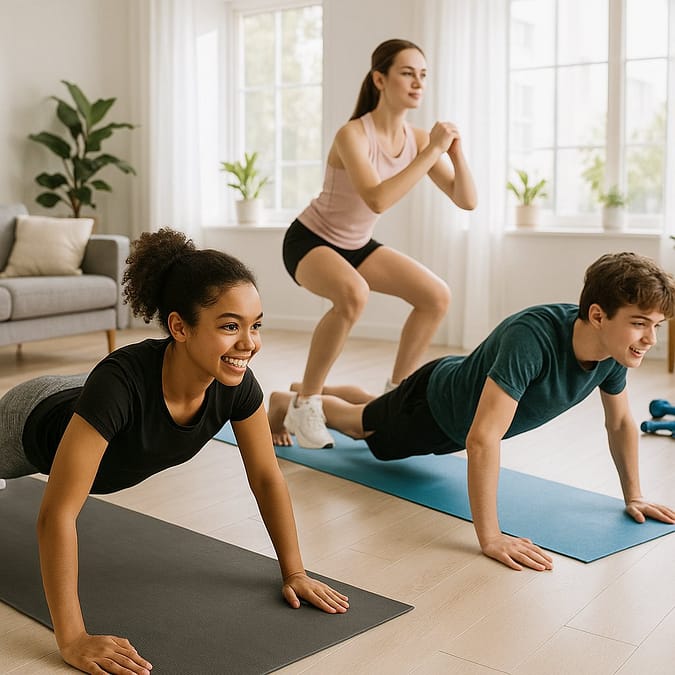
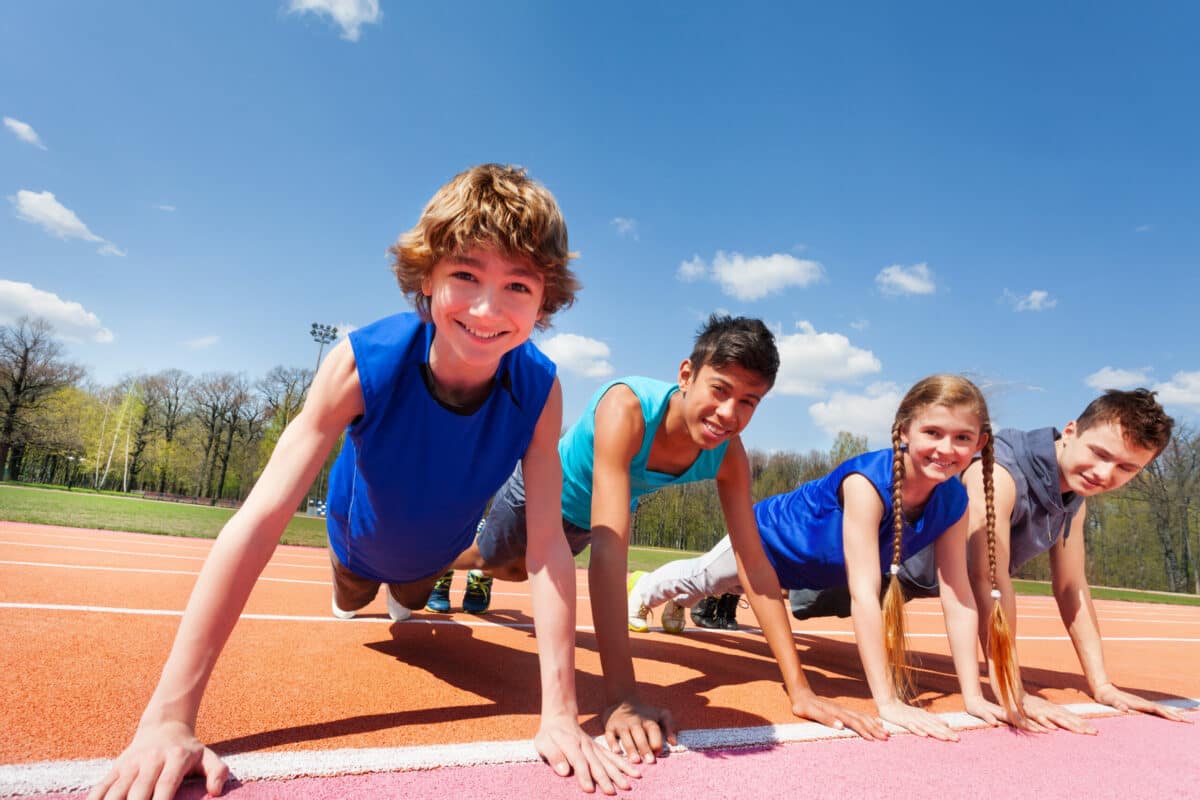
School-age kids are ready for more structure. Team and individual sports, swimming lessons, martial arts, gymnastics and dance teach skills and rules. This is also a great age to introduce bodyweight exercises such as squats, lunges, push-ups, planks and animal walks, taught with good form and kept playful.
Ages 12 and up: structured training
Teens can follow a more structured program that mixes sports, running or other cardio, and supervised strength training with bodyweight, bands, dumbbells or barbells. Good coaching matters most here, because habits formed now tend to last. For older kids, see our teen home workout plan.
Fun exercises and games for kids
These work at home, in the park or in a small New York apartment, and most need no equipment.
- Animal walks: bear crawls, crab walks, frog jumps and inchworms build strength and coordination and feel like a game.
- Jumping games: jump rope, hopscotch and jumping jacks are great for bones and heart health.
- Listening games: Simon Says and Red Light, Green Light practice attention and self-control while kids move.
- Living room obstacle course: a tape line on the floor as a balance beam, pillows to hop between, and a tunnel of chairs and blankets to crawl through.
- Dance party: put on music and take turns leading the moves, or freeze when the music stops.
- Ball games: catch, kicking at a target, or rolling a ball back and forth build hand-eye coordination.
- Tag and relay races: short sprints with rest in between, which is how kids naturally like to move.
A 20-minute home workout for kids
For kids about 7 and older. Do each exercise for 30 seconds, rest for 30 seconds, and go through the circuit two times. Let them pick the music.
| Part | Exercise | Tip |
|---|---|---|
| Warm-up, 4 minutes | Marching, arm circles, skipping in place, jumping jacks | Start easy and build up |
| Circuit | Bodyweight squats | Sit back like into a chair, chest up |
| Circuit | Push-ups, on knees or hands on a couch | Keep the body straight like a plank |
| Circuit | Bear crawl | Knees just off the floor, crawl forward and back |
| Circuit | Jumping jacks or jump rope | Land softly on the balls of the feet |
| Circuit | Plank | Hold as long as form stays good, then rest |
| Circuit | Lunges | Step forward, lower gently, push back up |
| Cool-down, 3 minutes | Stretches such as butterfly, child’s pose and a standing quad stretch | Slow breathing to finish |
Is strength training safe for kids?
Yes, when it is supervised and taught well. The American Academy of Pediatrics and the National Strength and Conditioning Association both support strength training for children and teens. It builds strength, bone density and coordination, and can lower the risk of sports injuries. Injuries are usually linked to poor technique, too much weight, unsafe home equipment or no supervision, not to well-run programs.
- When to start: usually around age 7 or 8, or whenever a child is ready for organized sports and can follow instructions.
- Start with bodyweight: squats, lunges, push-ups, planks and bridges, then add bands, light dumbbells or medicine balls.
- Sets and reps: 1 to 3 sets of 8 to 15 reps with a light to moderate load, 2 or 3 days a week on days that are not back to back.
- Technique first: add weight only when form is consistent, and in small steps.
- Skip max-effort lifts and competitive powerlifting or bodybuilding until a teen is physically mature.
- Always supervise, and include a warm-up and cool-down.
Strength training does not stunt growth. That is a common myth, and research does not support it when training is properly supervised.
Running for kids
Running is easy to start and builds heart health and strong bones. Keep it playful for younger children, with games, relays and family fun runs rather than long distances.
- Start with short runs mixed with walking, and let your child set the pace.
- Build distance gradually. A sudden jump in how far or how often they run is a common cause of injury.
- Many kids’ races offer short distances, and some children enjoy a family 5K once they have built up to it.
- Choose running shoes that fit well and replace them as feet grow.
- Pain that does not go away, limping, or pain at the heel or knee is a reason to rest and check with a pediatrician.
Yoga, martial arts and mindfulness
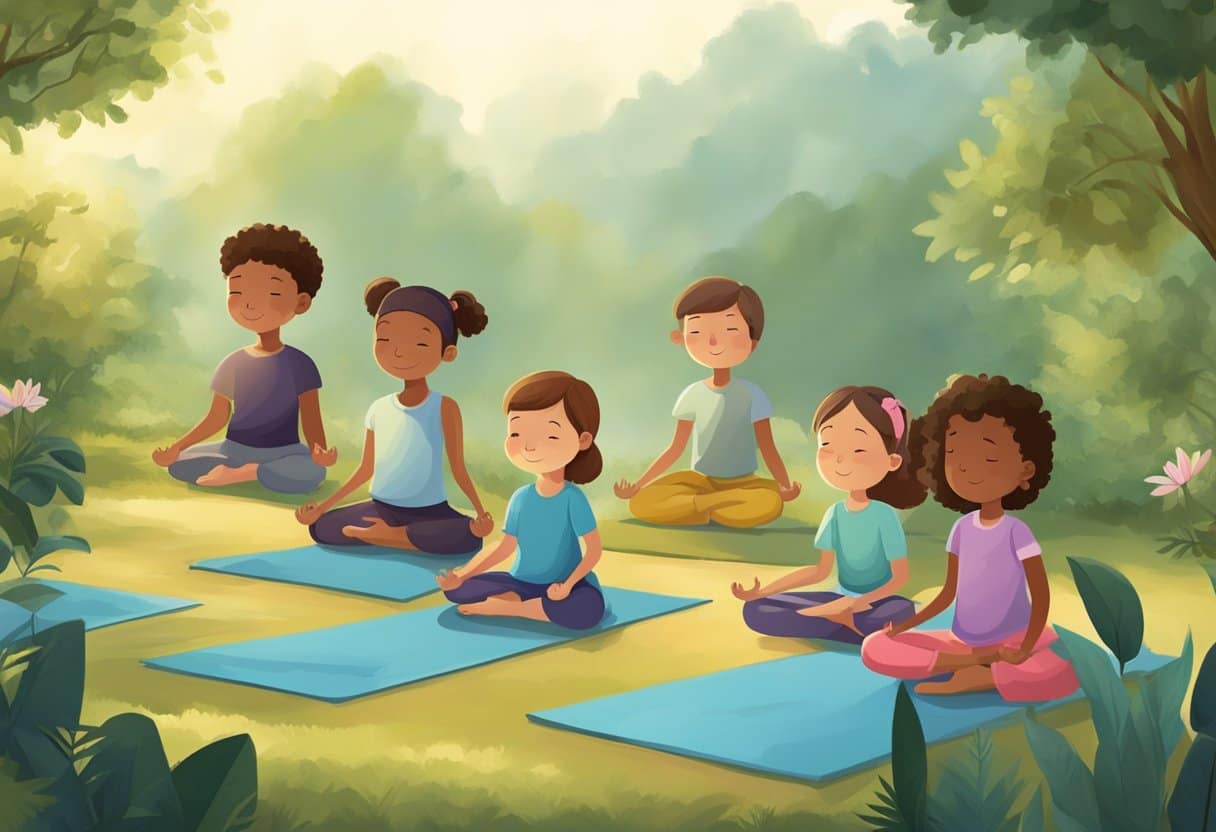
Activities that join movement with attention are a natural fit for building focus and self-control.
- Kids yoga: poses such as tree, cobra, downward dog, butterfly and child’s pose build balance, flexibility and body awareness. Story-based yoga videos keep younger kids engaged. Studies of yoga in schools suggest it can help with attention and managing stress.
- Breathing games: “balloon breathing,” where kids breathe in slowly to fill an imaginary balloon in their belly and breathe out to let it go, is an easy way to calm down.
- Martial arts: learning sequences, following an instructor and earning new belts teaches focus, respect and persistence, along with strength and coordination.
Keeping girls active
Girls are less likely than boys to meet activity guidelines, and activity tends to drop during the teen years. Parents make a real difference.
- Talk about what bodies can do, such as getting stronger, faster or more skilled, rather than about weight or appearance.
- Let her choose. Dance, climbing, swimming, martial arts, team sports and strength training all count, and choice builds ownership.
- Make it social. Many girls stay active because their friends are there.
- Encourage strength training. Programs that combine strength, balance and landing technique lower the risk of knee injuries, including ACL tears, in young female athletes.
- Be active together, and let her see you making time for exercise.
Preventing injuries in young athletes
About half of sports injuries in kids are overuse injuries, from doing too much of one thing, too soon.
- Take rest days. Pediatric guidance suggests at least one or two days a week off from a sport, and a few months off from that sport each year, spread through the year.
- Play more than one sport. Specializing in a single sport too early raises the risk of overuse injuries and burnout. Variety builds a better athlete.
- Watch the hours. A widely used rule of thumb is that kids should not spend more hours a week in organized sports than their age in years.
- Warm up properly. Short warm-up programs with running, strength and balance exercises lower injury rates in youth sports.
- Use the right gear, including helmets for biking and scooting, and make sure it fits.
- Protect sleep, which supports growth, recovery and focus.
- Do not play through pain. Pain that lasts or changes how a child moves needs a check-up.
Fueling active kids
Active kids need regular meals and snacks, not special diets.
- Carbohydrates for energy: whole grains, fruit, potatoes and pasta, especially before practice or games.
- Protein at each meal: eggs, yogurt, milk, beans, fish, chicken or meat for growth and recovery.
- Water first: water is the best drink for most activity. Sports drinks are rarely needed except during long, vigorous exercise, and energy drinks are not appropriate for children or teens.
- Snacks around activity: a banana, crackers with cheese or a yogurt before practice, and a balanced meal or snack afterward.
- Avoid restrictive diets. Diets such as keto are not recommended for kids unless a doctor prescribes them. The ketogenic diet is a medical therapy for certain seizure disorders, used under close supervision.
For a plan that fits your family, see our nutrition services.
How parents can help it stick
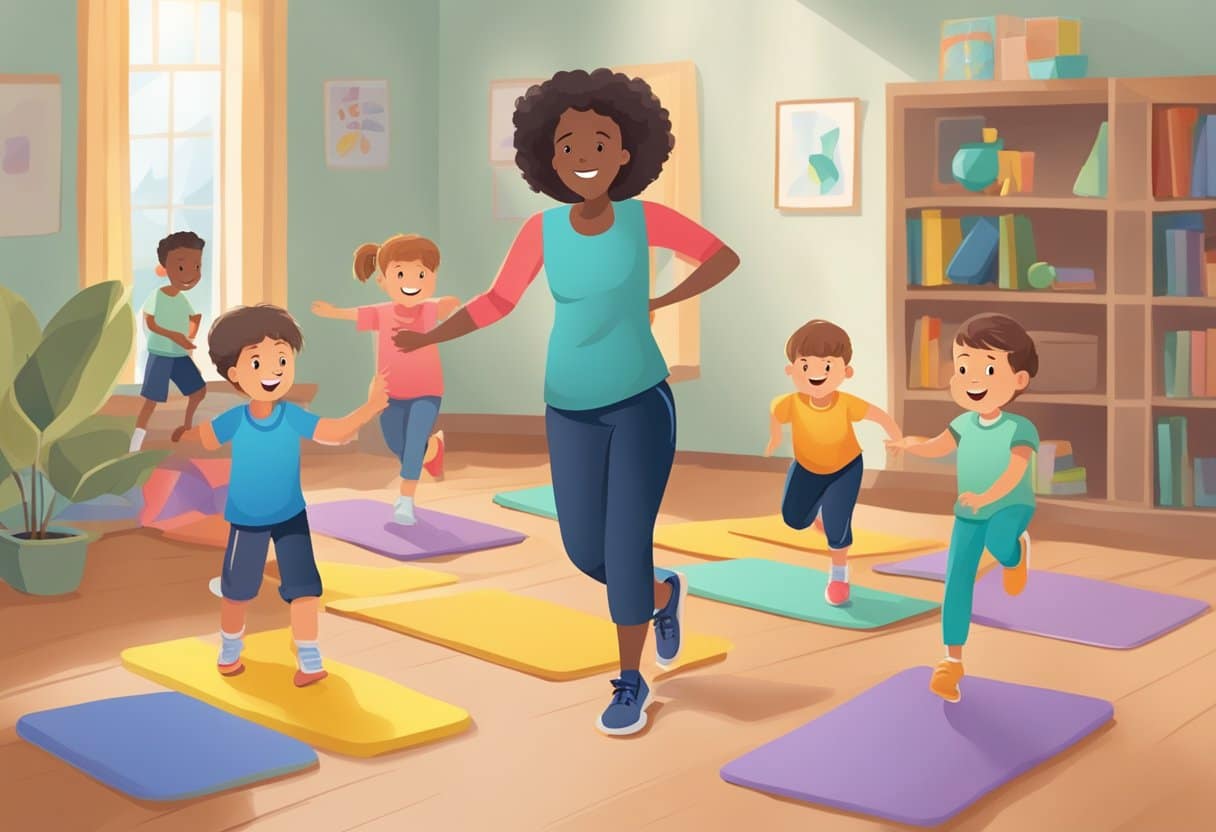
- Be active together: family walks, bike rides, park trips and weekend hikes count for everyone.
- Make a routine: a regular time for activity makes it a habit, the same way homework time does.
- Praise effort, not results, and let kids track their own progress, such as more push-ups or a faster lap.
- Limit recreational screen time and swap some of it for active time.
- Let kids lead: they stick with activities they choose and enjoy.
- Keep it positive: exercise should never be used as punishment.
Gear for active kids
You do not need much. A few simple pieces and some floor space cover most of the games and workouts in this guide. Pick gear sized for your child: a lighter ball, a shorter jump rope, a band with light resistance.
- Ages 3 to 5: soft balls, a balance bike or tricycle, a hula hoop and a play mat for tumbling and animal walks.
- Ages 6 to 11: a jump rope, cones or sidewalk chalk for agility games, a bike or scooter and light resistance bands.
- Ages 12 and up: resistance bands, a medicine ball, a pull-up bar and light dumbbells, once they have learned good form with supervision.
Bike and scooter helmets
A helmet is the one piece of gear worth getting exactly right. The Consumer Product Safety Commission recommends a bicycle helmet for both bikes and kick scooters. Look for a label inside the helmet showing it meets the CPSC bicycle helmet standard. To check the fit, the National Highway Traffic Safety Administration suggests three quick tests:
- Eyebrows: place two fingers above your child’s eyebrows. The front of the helmet should sit just above your fingers.
- Ears: the side straps should form a V around each ear.
- Chin: with the strap buckled, no more than two fingers should fit between the strap and the chin.
Bike helmets are built to absorb one crash. Replace a helmet after any crash or hard hit, even if it looks fine, and when your child outgrows it.
Working with a trainer
A good trainer for kids makes exercise fun, teaches safe technique from the start and builds confidence along with strength. Look for experience coaching children, current CPR and first aid certification, a patient and positive style, and a plan matched to your child’s age and goals.
A Type A Training trainer comes to your home or building gym in Manhattan, keeps sessions playful and age-appropriate, and teaches the movement skills and strength habits that carry into every sport. Learn more about personal training for kids, or read about personal trainers for kids in NYC.
Frequently asked questions
What are the best workouts for kids?
Active play and games for young children, plus sports, swimming, dance, martial arts and bodyweight exercises such as squats, push-ups, planks and animal walks as they get older.
How much exercise does a child need each day?
Kids ages 6 to 17 need at least 60 minutes of moderate to vigorous activity daily. Preschoolers should be active throughout the day.
At what age can kids start strength training?
Usually around 7 or 8, when they can follow instructions and are ready for organized sports. Start with bodyweight exercises and supervision.
Does lifting weights stunt a child’s growth?
No. Properly supervised strength training does not stunt growth. Injuries usually come from unsupervised lifting or poor technique.
What exercises help kids with focus and discipline?
Martial arts, gymnastics, dance and yoga, which ask kids to follow instructions, learn sequences and control their bodies. Listening games such as Simon Says help younger kids practice attention.
Can kids do adult workouts?
Not as written. Kids need shorter, more playful sessions with lighter loads, lots of variety and more rest than adults. Teens can gradually move toward structured training with good coaching.
Should my child focus on one sport?
The American Academy of Pediatrics recommends playing a variety of sports and waiting until about age 15 or 16 to focus on one. Early specialization raises the risk of overuse injuries and burnout.
How do I get my child to exercise if they would rather play video games?
Make activity fun and social, let them choose, do it together, and set a family routine. Active video games can be a start, but outdoor play and sports are best.
A trainer, a plan, and real accountability, designed for results that stay.
Start your plan