The Best Smart Rings in 2027: Oura, RingConn, Samsung and What Replaced the Rest
A smart ring is the wearable for people who want the data without the screen. It sits on your finger, reads heart rate, heart rate variability and skin temperature around the clock and blood oxygen overnight (all day on RingConn), scores your sleep and recovery each morning, and most last about a week or more on a charge. What it is not is a workout device: no GPS, no display, and a heart rate reading that gets shaky once you grip a bar or push an interval. This guide explains what a smart ring does, which ones are worth buying heading into 2027, and how the market changed after a patent fight took two of the biggest names off US shelves.
We have not tested these rings in a lab. Our picks come from independent reviewers (Android Authority, TechRadar, Tom’s Guide, Wareable, T3, the5krunner), from the peer-reviewed validation studies cited below, and from what our trainers see on clients’ hands. Product status, prices and legal status are as of October 2026. Links to Amazon are affiliate links, and Type A Training earns a commission if you buy through them, at no extra cost to you.
The short version
- Best overall: Oura Ring 5. Oura calls it the smallest smart ring made (2.28 mm thick, from 2 g), it comes from the brand with the deepest validation record, and it is the only one here with a required membership.
- Best without a subscription: RingConn Gen 3. Twelve days of battery in testing, a charging case in the box, no monthly fee.
- Best under $200: RingConn Gen 2 Air.
- Best for Android: Samsung Galaxy Ring, with the caveat that it is a 2024 ring and its successor has slipped to 2027.
- Longest claimed battery: Ultrahuman Ring Pro, sold direct, back in the US after a redesign.
- Skip: Circular Ring 2 (maker in liquidation), Evie Ring (parent company exited the business), and the Ultrahuman Ring Air (banned from new US import since October 2025).
What a smart ring does, and what it cannot do
Every ring here uses the same core sensor as a smartwatch: LEDs shine into the skin and photodiodes read the pulse of blood underneath (photoplethysmography, or PPG). The finger is a good place to do that. A six-site comparison in Frontiers in Physiology (2019) found the finger produced the highest share of readable pulse waveforms, and a 2019 Sensors paper by Longmore and colleagues found the finger superior to the wrist for PPG-derived heart rate and blood oxygen. Rings add a skin temperature sensor and an accelerometer, and from those signals the app builds sleep stages, resting heart rate, HRV, respiratory rate, a readiness or recovery score, and cycle tracking.
What a ring is best at is the night. In a 2024 study in Sensors (Robbins and colleagues, funded by Oura), the Oura Ring Gen3 agreed with a sleep lab on four sleep stages with a kappa of 0.65, ahead of an Apple Watch Series 8 (0.60) and a Fitbit Sense 2 (0.55). An earlier Oura study (Kinnunen and colleagues, Physiological Measurement, 2020) found nightly average heart rate from the ring matched a medical ECG with an r-squared of 0.996. In an independent 2022 comparison of six wearables by Miller and colleagues (Sensors), the Oura Gen 2 had the best sleep-versus-wake agreement of the group, though its overnight HRV tracked ECG less closely than a Whoop strap did.
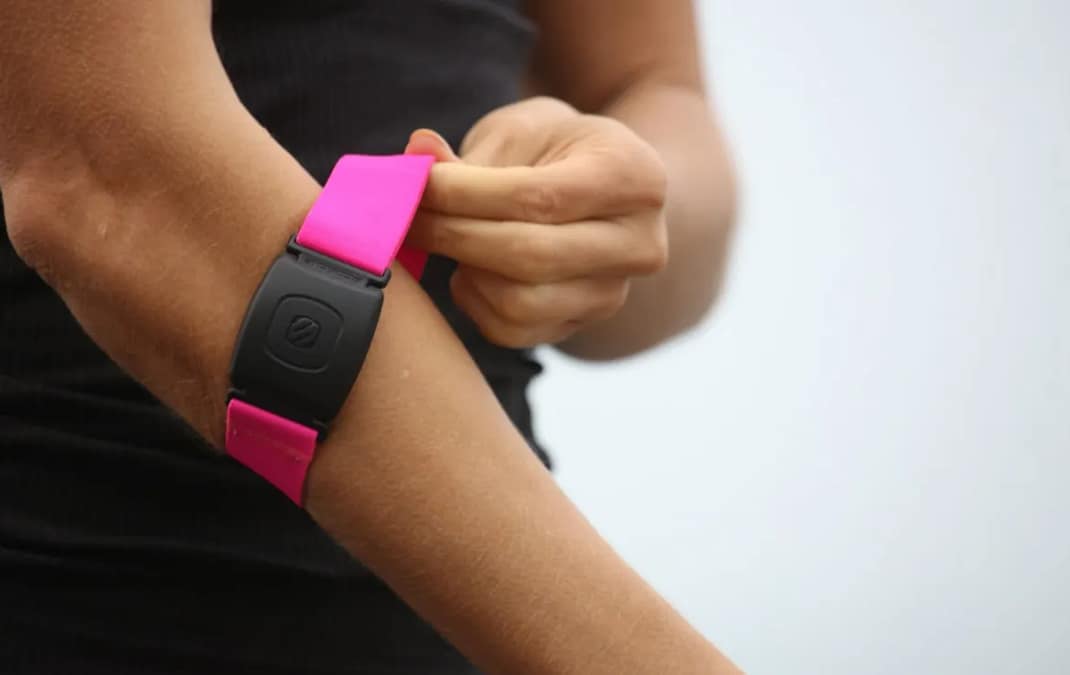
What a ring is weak at is the workout. There is no screen, no GPS and no button; distance and pace come from your phone. Finger heart rate drops out when you grip a bar, a rowing handle or handlebars, and it lags on intervals. Apple’s own September 2026 heart rate study, which used a Polar H10 chest strap as the reference and included the Oura Ring 5 among six comparison devices, found the Apple Watch Series 12 more accurate across the board, and excluded the Oura ring from strength training on Oura’s advice. If you want heart rate during training, wear a chest strap or armband and let the ring handle the other 23 hours. For the ring-versus-watch decision, see Oura Ring vs Apple Watch.
How to choose
- Subscription. Oura requires a membership ($5.99 a month or $69.99 a year, first month free). RingConn, Samsung and Luna charge nothing. Ultrahuman’s core metrics are free but its advanced features are paid add-ons. Over three years the membership adds about $210 on the annual plan, more than half again the price of a $399 ring.
- Your phone. Oura, RingConn, Ultrahuman and Amazfit work with iPhone and Android. The Samsung Galaxy Ring is Android only.
- Sizing. Ring sizes do not match jewelry sizes and the sensor bumps change the fit. Oura, Samsung, RingConn, Ultrahuman and Luna all send a free or near-free sizing kit first; use it, and wear the sizer overnight, since fingers swell. The Oura Ring 5 comes in US sizes 6 to 13 only; the Ring 4 runs 4 to 15.
- Battery and charging. Claims run from about a week (Oura, Samsung) to two weeks (RingConn, Ultrahuman). RingConn (Gen 3) and Samsung include a charging case; Oura’s case is a $99 extra, and Ring 4 chargers do not fit the Ring 5.
- What is measured versus what is modeled. Heart rate, HRV, temperature and SpO2 are measured. Sleep stages, readiness, “blood pressure signals” (Oura) and “vascular insights” (RingConn) are models built on top of them. None of the rings we recommend measures blood pressure or glucose, and none has an ECG (the Circular Ring 2 does, but see below).
- Payments. None of the smart rings in this guide offers contactless payments.
The best smart rings
Oura Ring 5: best overall
Announced May 28, 2026 and shipping since June 4, the Ring 5 is 40 percent smaller than the Ring 4 (2.28 mm thick, from 2 grams) and is rated for 6 to 9 days of battery, 100 meters of water resistance, and works with iPhone and Android. Oura’s 2026 software adds Health Radar trend signals for blood pressure and nighttime breathing, GLP-1 insights and live activity tracking; most of it also reaches the Ring 4 and Gen3. Android Authority’s July 2026 review called its overnight heart rate “consistently excellent” and its sleep stages “among the most accurate I’ve tested,” noted the workout heart rate dipped while gripping a rowing handle, and said Ring 4 owners need not rush to upgrade. Oura lists it at $399 in Silver and Black and $499 in the other finishes, plus the membership. Apple used this ring as a comparator in its 2026 accuracy study, which tells you where it sits in the market.
Oura Ring 5
Oura’s smallest ring, 6 to 9 days of battery, 100 m water resistance, temperature, SpO2 and HRV, iPhone and Android. Membership required. US sizes 6 to 13.
Oura Ring 4: the value pick within Oura
The 2024 ring is still sold and now routinely discounted, runs the same app with the same membership, and comes in US sizes 4 to 15, so it is the Oura for anyone outside the Ring 5’s size range. It is thicker (2.88 mm) and rated for 5 to 8 days. The 2024 Robbins study above used the Gen3 ring; the Ring 4 uses Oura’s newer sensor layout and runs the same app, and we found no peer-reviewed study of the Ring 4 or Ring 5 specifically.
Oura Ring 4
Same app and membership as the Ring 5, wider size range (US 4 to 15), 5 to 8 days of battery, 100 m water resistance. The discounted Oura.
RingConn Gen 3: best without a subscription
RingConn settled its patent case with Oura in late 2025 by taking a license, which is why it is the only rival from the first ITC case still sold new in the US, and the only one selling under an Oura license. The Gen 3 arrived in May 2026 at $349: titanium, 2.3 mm thick, IP68 and 10 ATM, a charging case in the box, a vibration motor for inactivity and health alerts, sleep apnea risk monitoring (a wellness feature, not a diagnosis), cycle tracking, and no fee. TechRadar measured nearly 12.5 days of battery with everything turned on, found overnight heart rate within a beat of a Whoop 5.0 and step counts slightly under, and called it “one of the smartest purchases if you’re looking for the best value.” Its “vascular insights” feature combines overnight readings with blood pressure numbers you enter from a cuff; it does not measure blood pressure.
RingConn Gen 3
No subscription, 10 to 14 days of battery, charging case included, haptic alerts, sleep apnea monitoring, iPhone and Android. US sizes 6 to 15.
RingConn Gen 2 Air: best under $200
The $199 Air drops the titanium for stainless steel and loses the apnea monitoring and the case, but keeps the 24/7 heart rate, HRV, SpO2, temperature-based cycle prediction, 100 meters of water resistance and the no-fee app. Tom’s Guide got about 8 days from its 10-day claim and found steps and heart rate on a walk fairly accurate against an Apple Watch 10, with one complaint: the sensor bumps left marks after a week. It is the right first ring if you are not sure you will keep wearing one.
RingConn Gen 2 Air
Stainless steel, 24/7 heart rate, HRV, SpO2 and temperature, about 8 days of battery in testing, 100 m water resistance, no subscription. US sizes 6 to 14.
Samsung Galaxy Ring: best for Android
Samsung’s 2024 ring is titanium, 2.6 mm thick, rated to 10 ATM, lasts about a week plus another week from its charging case, and has no subscription. It needs an Android phone running Android 11 or later; it does not work with an iPhone at all, and its gesture controls need a Samsung phone. It is also showing its age: Samsung’s second ring was expected this year and has been reported delayed to early 2027, Samsung is a respondent in a new patent complaint Oura filed in November 2025, and size 6 was out of stock in every color on Samsung’s own site when we checked. If you live in Samsung Health already, it is the natural choice; otherwise RingConn gives you more battery for the same no-fee deal. Samsung lists it at $399.99 and it is often discounted well below that; on Amazon it is sold by third-party sellers, so check the seller or buy from Samsung directly.
Samsung Galaxy Ring
Titanium, about 7 days of battery plus 7 from the case, 10 ATM, no subscription. Android 11 and later only; no iPhone support.
Ultrahuman Ring Pro: longest claimed battery, sold direct
Ultrahuman’s Ring Air held about a quarter of US smart ring sales in mid-2025 by IDC’s count, until the US International Trade Commission found it infringed an Oura patent and barred new imports from October 21, 2025. The company redesigned the ring as the Ring Pro, US Customs ruled in March 2026 that the new design does not infringe, and after several shipping delays it has been shipping to US customers from Ultrahuman’s own store since mid-September 2026. It claims up to 15 days of battery (T3 projected more than 12 from a nine-day test), is rated to 100 meters, has no mandatory subscription, and costs $399, or $479 with the charging case. The trade-offs: it is thicker and heavier than the Ring Air it replaces, T3 found its activity detection patchy and its sleep stages at odds with an Oura Ring 5 worn alongside, and Ultrahuman’s appeal of the original ruling is still pending. We are not linking an Amazon listing because there is no official one; buy from Ultrahuman directly if you want it, and think twice about a Ring Air from a third-party seller: it is stock imported before the ban, with no clear path to warranty service.
Not a smart ring: Wellue O2Ring
The O2Ring keeps turning up in smart ring lists, but it is a different kind of device: a continuous pulse oximeter you wear overnight that records blood oxygen and pulse once a second and vibrates if your oxygen drops. It has no sleep stages, no HRV and no readiness score, and its battery lasts one night. If a doctor has asked you to track overnight oxygen, it does that job for under $200; if you want sleep and recovery tracking, it is the wrong ring.
Wellue O2Ring
Overnight pulse oximeter: continuous SpO2 and pulse, low-oxygen vibration alert, PDF reports. One night per charge. Not a sleep or recovery tracker.
The patent fight, in short
Oura holds patents on the smart ring form factor and has spent more than two years enforcing them. In the case it brought against Ultrahuman, RingConn and Circular at the International Trade Commission, Circular settled in 2024, the Commission found against Ultrahuman and RingConn in August 2025, RingConn took a license in October 2025 and was removed from the orders in December, and Ultrahuman’s Ring Air has been excluded from import since October 2025 while its appeal continues. In November 2025 Oura filed a second complaint naming the Samsung Galaxy Ring, the Amazfit Helio Ring, the Reebok Smart Ring and the Luna Ring 2; no decision has been reported as of October 2026, and the Galaxy Ring, Helio Ring and Luna Ring 2 remain on sale. The practical advice: a ring from a company that is licensed (RingConn) or that holds the patents (Oura) carries the least legal risk, and buy from an official channel so a ban cannot leave you with stock nobody will service.
What happened to the old picks
- Oura Ring Gen3 and Gen3 Horizon: superseded by the Ring 4 (2024) and Ring 5 (2026); still supported by the app.
- Ultrahuman Ring Air: banned from new US import since October 21, 2025. Existing owners keep app access, updates and warranty. Replaced by the Ring Pro.
- Circular Ring Pro (the model we listed) and the newer Ring 2: the Ring 2 shipped in 2025, but Circular SAS entered judicial liquidation in 2025, and although the founders say the app and servers will stay up, reviewers report updates have effectively stopped, refunds have gone unpaid and step counts run high. Avoid.
- Evie Ring: its maker, Movano, renamed itself Corvex in March 2026 and transferred its healthcare assets to a lender in mid-2026. The product page is still up, but we cannot recommend a ring whose app has no clear owner.
- Amazfit Helio Ring: still sold, usually under $200, with only three sizes and about four days of battery; a second generation has been confirmed for the second half of 2026 but had not launched when we checked. Amazfit’s parent is also named in Oura’s new complaint.
- AMOVAN and Gloring: dropped. Neither has a credible independent review, and Gloring has no US presence we could find.
A ring tells you how you slept; a trainer decides what to do about it
Readiness scores are useful once someone reads them against a plan: an easy day when recovery is low, a harder one when it is high, and a look at the trend over weeks rather than one bad night. Our trainers do that with clients who wear a ring or a band, and they set training heart rate from a strap rather than a ring, which matches Oura’s own advice to Apple’s researchers to leave the ring out of strength testing. A Type A Training trainer comes to your home, your building gym or a park in Manhattan, brings any equipment you need and builds a program around your goals and your schedule. Learn more about in-home personal training, and if sleep is the thing you are trying to fix, start with our guide to the stages of sleep.
Frequently asked questions
Which smart ring is the most accurate?
Oura has the only substantial peer-reviewed record: four-stage sleep agreement of kappa 0.65 against a sleep lab (Robbins 2024, Oura-funded) and nightly heart rate within a beat of ECG (Kinnunen 2020). We found no peer-reviewed validation of the Galaxy Ring, RingConn or Ultrahuman as of October 2026. Reviewer testing and Apple’s own 2026 study (which included only the Oura Ring 5) both show finger heart rate is weak during hard exercise.
Do smart rings need a subscription?
Of the rings we recommend, only Oura requires one, at $5.99 a month or $69.99 a year. RingConn, Samsung, Luna and Amazfit are free to use; Ultrahuman charges only for optional add-on features.
Can I use a smart ring with an iPhone?
Oura, RingConn, Ultrahuman, Amazfit and Luna all work with iPhone. The Samsung Galaxy Ring is Android only.
Why was the Ultrahuman ring banned?
The US International Trade Commission found in August 2025 that the Ultrahuman Ring Air infringed an Oura patent, and barred new imports from October 21, 2025. Ultrahuman redesigned the ring as the Ring Pro, which US Customs cleared in March 2026, and is appealing the original decision.
Can a smart ring replace a chest strap for training?
No. Rings read the pulse through the finger, which drops out when you grip and lags on intervals; Apple’s 2026 study excluded the Oura ring from strength testing on Oura’s own advice. Use a chest strap or armband for workouts and the ring for sleep and recovery.
A trainer, a plan, and real accountability, designed for results that stay.
Start your plan