Yoga for Athletes: Benefits, Best Poses and Simple Routines
Yoga is a useful complement to running, lifting and sport. It works on the mobility, balance and body control that training depends on, offers a structured way to recover, and gives you a simple way to practice calm, controlled breathing. You do not need to be flexible to start, and a few short sessions a week is a good place to begin.
This guide covers the benefits of yoga for athletes and active people, the best poses, sport-specific focus areas, simple routines for mornings, after workouts and stress relief, breathing, yoga for back pain and mood, yoga vs. Pilates, choosing a style, safety, and how to get started.
The short version
- Yoga can improve flexibility, balance and body awareness, and many athletes use it for recovery and focus.
- Two or three sessions a week, or 10 to 15 minutes most days, is plenty to start.
- Choose poses that target what your sport tightens: hips and hamstrings for runners, hip flexors and upper back for cyclists, hips and spine rotation for golfers.
- Do longer holds after training or on rest days, and keep pre-workout yoga short and dynamic.
- Yoga complements strength training and cardio. It does not replace them.
- Move within a comfortable range. Pain is a signal to ease off, not push through.
Benefits of yoga for athletes and active people
- Flexibility and mobility: regular practice can improve range of motion in the hips, hamstrings, shoulders and spine, which may help you move more freely in your sport.
- Balance and stability: standing and single-leg poses train balance and the small stabilizing muscles around the ankles, knees and hips.
- Strength and control: holding poses builds endurance in the core, glutes and shoulders, and teaches you to control your body through a full range.
- Recovery: gentle, slower practice is an easy way to move on rest days and after hard sessions.
- Breathing and focus: linking breath to movement trains calm, controlled breathing that can help you stay composed under pressure.
- Stress and sleep: yoga may help many people manage stress and sleep better, which supports recovery.
Yoga is not a magic performance booster. Think of it as one part of a complete program, alongside strength training, conditioning and practice in your sport.
The best yoga poses for athletes
| Pose | What it targets | Good for |
|---|---|---|
| Downward-facing dog | Hamstrings, calves, shoulders, upper back | Runners, swimmers, almost everyone |
| Low lunge | Hip flexors, quads | Runners, cyclists, anyone who sits a lot |
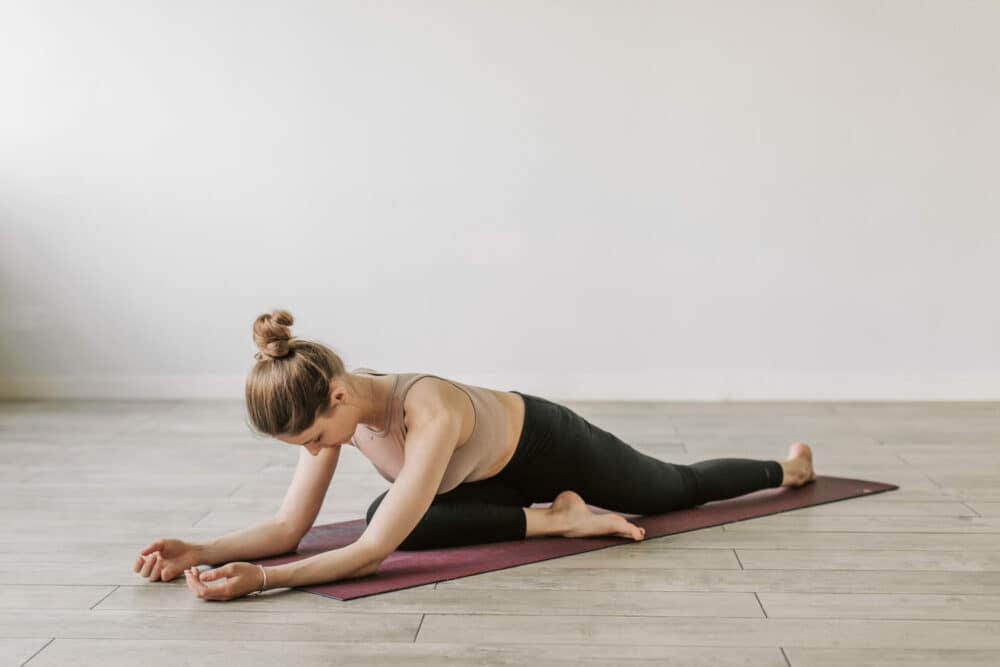
| Pigeon pose | Outer hips and glutes | Runners, soccer and basketball players |
| Warrior II | Legs, hips, shoulders, endurance | Building leg strength and stamina |
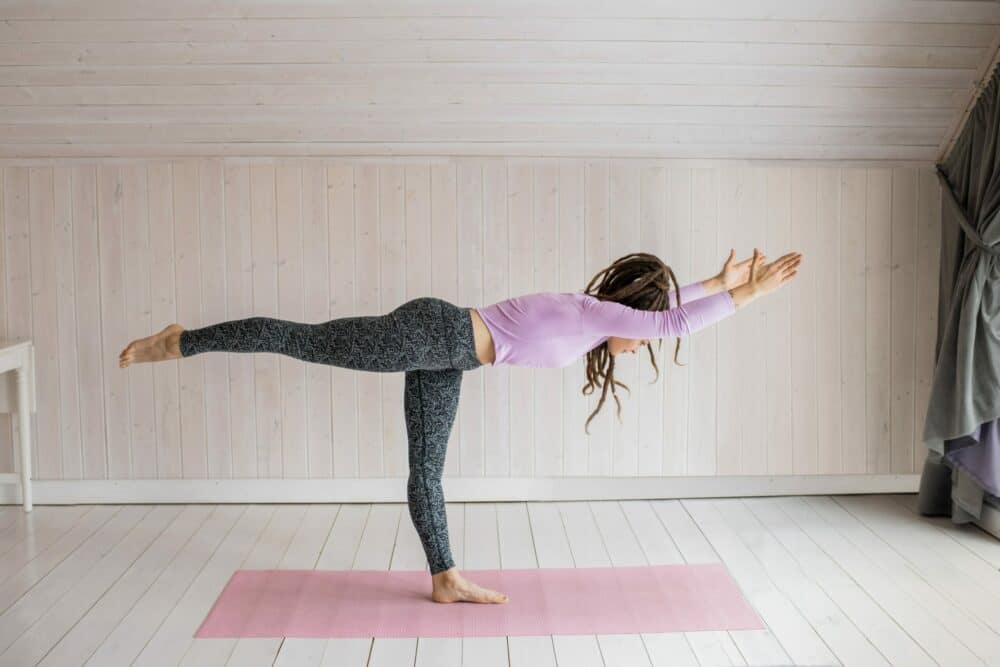
| Warrior III | Balance, glutes, hamstrings, core | Single-leg sports, balance work |
| Tree pose | Balance, ankles, hips | Runners, golfers, beginners |
| Bridge pose | Glutes, hamstrings, front of the hips | Runners, cyclists, desk workers |
| Cat-cow | Spine mobility | Warm-ups and stiff backs |
| Thread the needle | Upper back rotation, shoulders | Golfers, tennis players, swimmers |
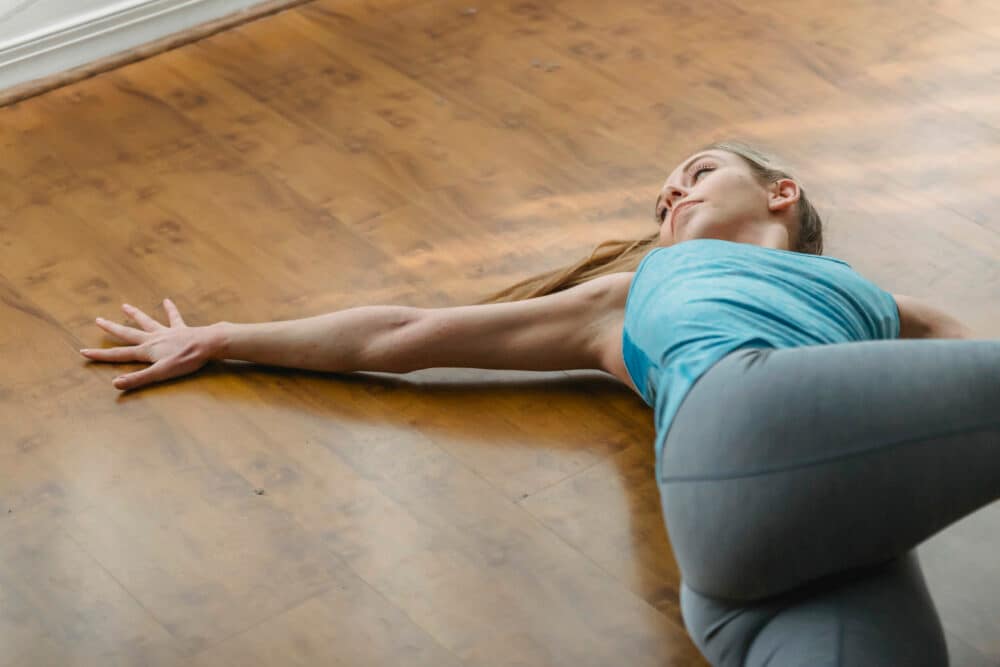
| Supine twist | Lower back, outer hips | Cool-downs and recovery |
| Child’s pose | Lower back, hips, a calm reset | Recovery and stress relief |
Hold static poses for about 30 seconds (3 to 5 slow breaths), and longer on recovery days if it feels good. Use blocks or a strap to bring the floor closer instead of forcing a pose.
Yoga for your sport
| Sport | Focus areas | Poses to start with |
|---|---|---|
| Running | Hips, hamstrings, calves, balance | Low lunge, pigeon, downward dog, tree |
| Cycling | Hip flexors, quads, chest, upper back | Low lunge, bridge, thread the needle, cobra |
| Golf and tennis | Spine rotation, hips, shoulders | Thread the needle, supine twist, low lunge with a twist |
| Soccer and basketball | Hips, groin, ankles, balance | Pigeon, wide-legged forward fold, warrior III |
| Strength training | Hips, upper back, shoulders, ankles | Downward dog, low lunge, cat-cow, deep squat hold |
| Swimming | Shoulders, upper back, hips | Downward dog, thread the needle, child’s pose |
For runners specifically, yoga is a simple way to work on hip, hamstring and calf mobility, and balance poses train single-leg stability. Start with 10 minutes after easy runs, and save longer sessions for rest days.
When to do yoga
- Before training: keep it short and moving, such as cat-cow, downward dog and lunges, as part of your warm-up. Skip long, deep holds right before explosive work.
- After training: a 10-minute cool-down with longer holds helps you relax and stretch while you are warm.
- On rest days: a slower, gentler session is a good form of active recovery.
- How often: two or three sessions a week, or a short daily practice, works well for most people.
Three simple routines
10-minute morning flow
- Cat-cow: 1 minute
- Downward-facing dog: 1 minute, pedaling your heels
- Low lunge: 30 seconds each side
- Cobra or sphinx: 30 seconds
- Child’s pose: 1 minute
- Standing forward fold: 1 minute, knees soft
- Warrior II: 30 seconds each side
- Tree pose: 30 seconds each side
- Mountain pose with 5 slow breaths: 1 minute
10-minute post-workout cool-down
- Downward-facing dog: 1 minute
- Low lunge: 45 seconds each side
- Pigeon pose: 1 minute each side
- Bridge pose: 3 holds of 20 seconds
- Supine twist: 45 seconds each side
- Legs up the wall or lying still with slow breathing: 2 minutes
5 poses for stress relief
- Child’s pose: knees wide, forehead down, breathe slowly into your back.
- Standing forward fold: knees bent, let your head and arms hang.
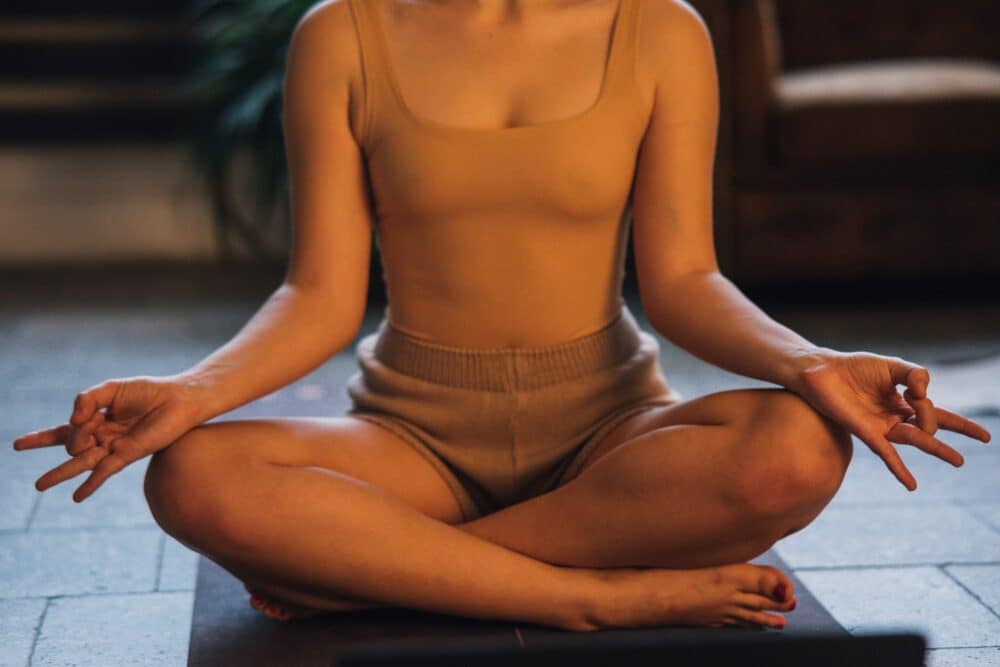
- Easy seated pose: sit tall and lengthen your exhale for a few minutes.
- Legs up the wall: lie with your legs resting against a wall.
- Corpse pose: lie flat and let your body go heavy for 3 to 5 minutes.
Breathing
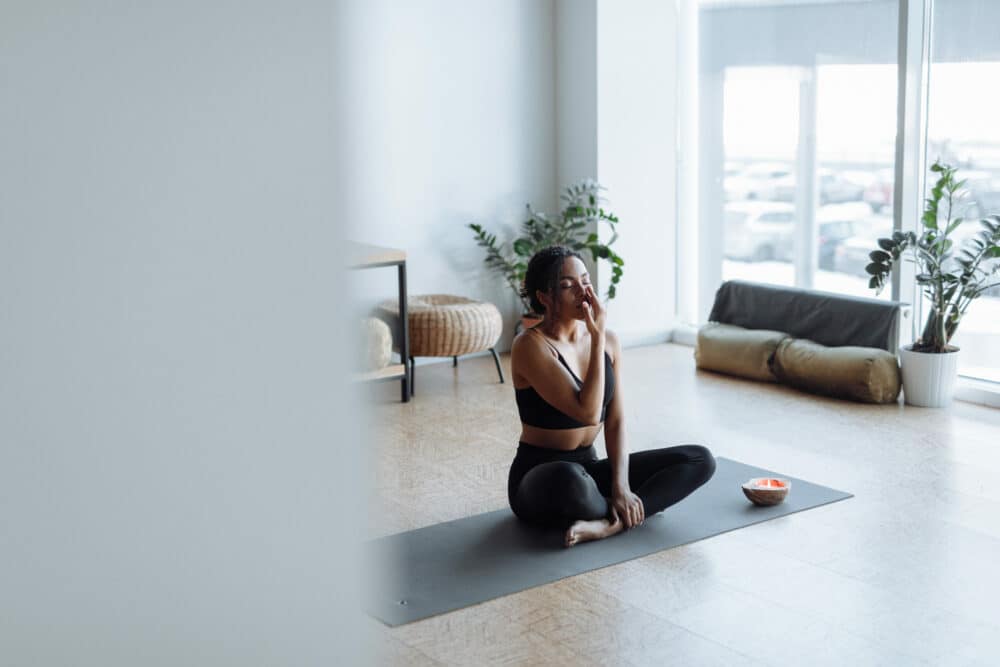
Breathing is at the heart of yoga. A simple place to start is slow breathing through the nose with a longer exhale than inhale, for example in for a count of 4 and out for a count of 6. Many people find this calming before sleep, competition or a stressful meeting. For more techniques, see our guide to yoga breathing exercises.
Yoga for back and neck pain
Yoga is one of the non-drug treatments the American College of Physicians recommends for chronic low back pain, and research suggests it may help neck pain too. Most studies used hatha, Iyengar or viniyoga, so a gentle, slower class like these, with props and modifications, is a sensible place to start.
- Get a diagnosis from a doctor or physical therapist for pain that is new, severe or spreading down a leg.
- Start with gentle poses and avoid deep twists, forward folds or backbends that bring on pain.
- Tell your instructor about any injuries so they can offer modifications.
For more on easing back pain with exercise, see our corrective exercises for lower back pain and our posture guide.
Yoga for stress, mood and sleep
Research suggests yoga may help people manage stress, improve sleep and ease symptoms of anxiety and depression. Yoga combines movement, slow breathing and focused attention, and many people find that combination calming.
Yoga can be a helpful addition to mental health care, but it is not a replacement for it. If you are struggling with anxiety, depression or another mental health condition, talk to your doctor or a mental health professional. If you are in crisis, call or text 988.
Yoga vs. Pilates
Both build core strength, mobility and body awareness, and many athletes do both.
- Yoga leans more toward flexibility, balance, breathing and holding poses, with a wide range of styles from gentle to vigorous.
- Pilates focuses on controlled, precise movement, core strength and stability, often with small equipment or machines.
Runners and athletes who want more hip and hamstring mobility often lean toward yoga. Those who want targeted core and stability work often like Pilates. Doing a bit of both is a great combination.
Choosing a yoga style
- Hatha: slower, basic poses. A good starting point.
- Vinyasa or flow: poses linked with breath in a continuous sequence. More dynamic.
- Power yoga: a vigorous, strength-focused flow.
- Yin: long, passive holds of several minutes, mostly on the floor. Good for recovery days.
- Restorative: fully supported poses with props for deep relaxation.
- Iyengar: precise alignment with props. Helpful if you are working around an injury.
- Hot yoga: practiced in a heated room. Drink plenty of water and avoid it if you have heart problems, are pregnant or do not tolerate heat well.
Staying safe
Yoga is generally considered safe for healthy people when practiced properly with a qualified instructor. Injuries can still happen, most often sprains and strains. If you are new to yoga, avoid extreme poses such as headstands and shoulder stands. Older adults may need to take extra care.
- Move slowly and stay in a range that feels like a stretch, not pain.
- Use props, and bend your knees in forward folds if your hamstrings are tight.
- Check with your doctor first if you are pregnant or have high blood pressure, glaucoma, osteoporosis, or a recent injury or surgery. Some poses may need to be avoided or modified. With glaucoma, head-down poses such as downward dog, forward folds, bridge and legs up the wall can raise eye pressure.
- If you are pregnant, see our guide to prenatal and postnatal yoga.
Getting started at home
All you need is a non-slip mat and a little space. Two blocks and a strap make many poses easier and safer, especially if you are tight. For gear ideas, see our guide to the best yoga accessories. Start with the morning flow or cool-down above, and build from there. Our guide to proper stretching techniques covers the basics of stretching safely.
Working with an instructor
A private instructor can tailor every session to your sport, your body and your goals, correct your alignment and keep you progressing safely. Type A Training’s private yoga and Pilates instructors come to your home or building gym in Manhattan, so there is no studio schedule to work around. Learn more about private yoga and Pilates in NYC.
Frequently asked questions
Is yoga good for athletes?
Yes. Studies in athletes suggest yoga can improve flexibility and balance. It also gives you a structured way to recover and trains calm, controlled breathing. It works best alongside strength training and practice in your sport.
How often should athletes do yoga?
Two or three sessions a week, or 10 to 15 minutes most days, is plenty for most athletes. Fit longer, gentler sessions into rest days.
Should I do yoga before or after a workout?
Both can work. Before training, keep it short and dynamic as part of your warm-up. After training or on rest days, use longer holds to stretch and relax.
Which type of yoga is best for athletes?
It depends on your goal. Vinyasa or power yoga builds strength and stamina, while hatha, yin and restorative styles are better for mobility and recovery. A simple plan is one dynamic and one gentle session a week.
Can yoga replace stretching or strength training?
Yoga can cover much of your flexibility and mobility work, but it does not replace strength training. Most athletes do best with both.
Is yoga or Pilates better for runners?
Both help. Yoga is especially good for hip, hamstring and calf mobility and balance, while Pilates is great for core strength and stability. Many runners do some of each.
Is yoga good for back pain?
For chronic low back pain, yoga is one of the non-drug treatments recommended by the American College of Physicians. Choose a gentle style, avoid poses that bring on pain, and see a doctor for pain that is new, severe or spreading down a leg.
Can beginners do yoga at home?
Yes. Start with simple poses and short routines, use props, and move slowly. A few sessions with an instructor can help you learn good alignment early.
Private yoga and Pilates sessions at home, matched to an instructor and built around your goals.
See yoga & pilates