Strength Training for Women Over 50: The Complete Guide to Fitness After 50
Strength training is one of the best things a woman over 50 can do for her health. It helps you keep the muscle and bone you have, stay steady on your feet, manage your weight and blood sugar, and keep doing the things you love for years to come. It is also never too late to start. Women who begin lifting in their 50s, 60s and beyond can still build real strength.
This guide covers why strength training matters after 50, how much exercise you need, how to start safely, the best exercises, a sample weekly plan, cardio, flexibility and balance, menopause and bone health, exercising with health conditions, nutrition, staying consistent, and recovery.
The short version
- Aim for strength training at least 2 days a week, working all the major muscle groups, plus at least 150 minutes a week of moderate cardio such as brisk walking.
- Start with bodyweight or light weights, learn good form, then add weight gradually. The last few reps of each set should feel challenging.
- Focus on big movements: squats, hip hinges, lunges or step-ups, pushes, pulls, carries and core work.
- Add balance and flexibility work. Balance matters more every year.
- Get enough protein, calcium and vitamin D to support your muscles and bones.
- Check with your doctor first if you have heart disease, diabetes, osteoporosis, a joint replacement or another health condition.
Why strength training matters after 50
- It protects your muscle. Muscle mass and strength decline gradually with age, a process called sarcopenia. Strength training is the main recommended way to slow it, and it can rebuild some lost strength and muscle.
- It supports your bones. Bone loss speeds up in the years around menopause, as estrogen levels fall. Resistance training and weight-bearing exercise put healthy stress on your bones, which helps maintain bone density.
- It improves balance and lowers fall risk. Stronger legs and hips, plus balance practice, help you stay steady on stairs, curbs and uneven ground.
- It helps with weight and metabolism. Muscle is active tissue. Keeping it helps you manage your weight and use blood sugar more effectively.
- It helps your heart. Regular exercise, including strength training, supports healthy blood pressure and cholesterol.
- It lifts your mood. Exercise can ease stress, anxiety and symptoms of depression, and helps many people sleep better.
- It keeps you independent. Carrying groceries, climbing stairs, lifting a grandchild and getting up from the floor all take strength.
How much exercise you need
These are the U.S. Physical Activity Guidelines for adults, used by the CDC. They apply to women over 50 too.
| Type | How much | Examples |
|---|---|---|
| Moderate cardio | At least 150 minutes a week, such as 30 minutes on 5 days | Brisk walking, cycling, swimming, dancing |
| Or vigorous cardio | At least 75 minutes a week | Jogging or running, swimming laps, fast cycling, singles tennis |
| Strength training | At least 2 days a week, working all major muscle groups | Weights, resistance bands, bodyweight exercises, Pilates |
| Balance (adults 65 and older) | Include balance training as part of your weekly activity | Standing on one leg, heel-to-toe walking, tai chi |
You can mix moderate and vigorous cardio. If you are just starting out, any amount is better than none. Build up gradually.
Is strength training safe after 50?
For most women, yes. Strength training is safe and beneficial at any age when you use good form and progress gradually. Talk to your doctor before you start if you have heart disease, high blood pressure that is not under control, diabetes, osteoporosis, a recent injury or surgery, or a joint replacement. They may give you specific limits or suggest working with a physical therapist first.
A little muscle soreness a day or two after a new workout is normal. Sharp pain or joint pain during an exercise is a sign to stop. Chest pain, dizziness, unusual shortness of breath or an irregular heartbeat are signs to stop right away and get checked by a doctor.
How to start strength training
- Train 2 or 3 days a week on non-consecutive days, so your muscles have time to recover.
- Work the whole body each session: legs, hips, back, chest, shoulders and core.
- Learn form first. Start with bodyweight or light weights until each movement feels smooth and controlled.
- Choose a weight you can lift 8 to 12 times with good form, where the last 2 or 3 reps feel hard. Do 1 set to start, then build to 2 or 3.
- Progress gradually. When 12 reps feel easy, add a little weight or a few reps.
- Warm up with 5 to 10 minutes of easy movement, such as marching, arm circles and bodyweight squats.
- Breathe. Exhale as you lift or push, inhale as you lower. Do not hold your breath.
You do not need a gym. A set of dumbbells, a few resistance bands, a sturdy chair and a mat cover almost everything in this guide.
The best strength exercises for women over 50
| Exercise | What it works | Easier version | Harder version |
|---|---|---|---|
| Squat | Legs, glutes | Sit-to-stand from a chair | Goblet squat holding a dumbbell |
| Hip hinge (Romanian deadlift) | Glutes, hamstrings, back | Hinge with a dowel or no weight | Dumbbell or kettlebell Romanian deadlift |
| Step-up or lunge | Legs, glutes, balance | Low step-up holding a rail or wall | Higher step-up or reverse lunge with dumbbells |
| Push-up | Chest, shoulders, arms, core | Wall push-up | Push-up on a bench or counter, then the floor |
| Row | Upper back, arms | Band row | One-arm dumbbell row |
| Overhead press | Shoulders, arms | Seated press with light dumbbells | Standing dumbbell press |
| Glute bridge | Glutes, hamstrings | Two-leg bridge | Single-leg bridge or bridge with a dumbbell |
| Farmer carry | Grip, core, posture | Walk with light dumbbells | Heavier dumbbells or longer distance |
| Plank or dead bug | Core | Incline plank on a counter | Forearm plank on the floor |
| Calf raise | Calves, ankles, balance | Hold a wall with both hands | Single-leg calf raise |
For more on these movements, see our guides to deadlift form, squats and longevity and core strengthening exercises. If you are 65 or older, or just getting back into exercise, our guide to the best strength training exercises for seniors is a good place to start.
A sample beginner workout
Do this full-body workout 2 or 3 times a week, with a rest day in between. Rest 60 to 90 seconds between sets.
- Squat or sit-to-stand: 2 sets of 10
- Wall or counter push-up: 2 sets of 10
- Dumbbell Romanian deadlift: 2 sets of 10
- Band or dumbbell row: 2 sets of 10 each side
- Step-up: 2 sets of 8 each leg
- Seated overhead press: 2 sets of 10
- Glute bridge: 2 sets of 12
- Dead bug: 2 sets of 8 each side
- Farmer carry: 2 walks of about 30 seconds
A sample weekly plan
| Day | Workout |
|---|---|
| Monday | Full-body strength, 30 to 45 minutes |
| Tuesday | Brisk walk, 30 minutes, plus a few minutes of balance work |
| Wednesday | Full-body strength, 30 to 45 minutes |
| Thursday | Yoga, Pilates or a mobility session |
| Friday | Full-body strength, or a brisk walk if you only lift twice a week |
| Saturday | A longer walk, hike, bike ride, swim or tennis |
| Sunday | Rest or an easy walk |
Busy week? Two 30-minute strength sessions and a brisk 30-minute walk on 5 days still cover the basics. Short workouts count.
Cardio after 50

Cardio keeps your heart and lungs strong and supports healthy blood pressure, blood sugar and weight. Low-impact options such as brisk walking, cycling, swimming, water aerobics, the elliptical and dancing are easy on the joints. Hiking and stair climbing add a strength and bone-loading benefit.
To judge intensity, use the talk test. During moderate activity you can talk but not sing. During vigorous activity you can only say a few words before pausing for breath. Interval training, alternating short harder efforts with easier ones, can be a good option once you have a base of fitness, but it is not required.
For structured plans, see our progressive walking plan and our guide to zone 2 cardio.
Flexibility, mobility and balance
Muscles and joints tend to stiffen with age, and balance can slip without practice. A few minutes a day helps.
- Stretch after workouts, when your muscles are warm. Hold each stretch for about 30 seconds without bouncing.
- Move through your full range with mobility work for the hips, upper back and shoulders.
- Try yoga, Pilates or tai chi. They build flexibility, core strength and balance together.
- Practice balance: stand on one leg while you brush your teeth, walk heel to toe, or do step-ups slowly. Keep a counter or wall nearby.
See our guide to workouts for flexibility, balance and energy and our tips on proper stretching techniques. Good posture matters too; our posture guide covers simple corrective exercises.
Strength training through menopause
The hormonal changes of perimenopause and menopause affect how your body responds to training. Falling estrogen speeds up bone loss and makes it easier to lose muscle and gain fat around the middle. Sleep, mood and energy can be harder to manage, too.
Strength training is a smart tool for these years. Progressive resistance training helps protect muscle and bone. Regular exercise may also bring small improvements in sleep and mood. Training may need to flex around energy levels and recovery, but the basics stay the same: lift consistently, progress gradually and keep moving every day.
For a deeper look at training through these changes, see strength training for menopause from Women’s Fitness Over 50, our program for women in perimenopause, menopause and beyond.
Bone health and osteoporosis
Women lose bone faster than men after 50, mostly because of the drop in estrogen at menopause. Osteoporosis makes bones weak and more likely to break, often without any warning signs until a fracture happens.
- Lift weights and do weight-bearing exercise. Strength training plus activities such as walking, hiking, stair climbing and dancing help maintain bone.
- Get enough calcium and vitamin D. See the nutrition section below.
- Do not smoke, and limit alcohol. Both are linked to bone loss.
- Ask about a bone density test. Screening is recommended for women 65 and older, and for women under 65 who are past menopause and at higher risk of fracture. Your doctor can check your risk.
If you already have osteoporosis or have had a fracture, exercise is still important, but ask your doctor or a physical therapist which movements are right for you. Some exercises, such as deep forward bending and twisting of the spine, may need to be modified.
Exercising with health conditions
Regular exercise helps manage many common conditions after 50, and for most of them some movement beats none. Get your doctor’s advice on what is right for you.
- Arthritis: strength training supports the joints, and low-impact cardio such as walking, cycling and water exercise keeps them moving. Work in a pain-free range.
- Type 2 diabetes: both strength training and cardio help your body use blood sugar. If you take insulin or medicines that can cause low blood sugar, ask your doctor about checking your levels around exercise.
- High blood pressure: regular moderate exercise can help lower it. Avoid holding your breath while lifting.
- Heart disease: exercise is usually encouraged. After a heart attack, heart surgery, a stent or a heart failure diagnosis, it often starts with a cardiac rehabilitation program. Follow your care team’s limits.
- Back pain: core and hip strengthening, plus staying active, often help more than rest.
Nutrition for active women over 50
- Protein: include a source at each meal, such as eggs, Greek yogurt, fish, chicken, beans or tofu. Spreading protein across your meals is an easy way to get enough. Many experts suggest older adults aim a bit higher than the basic recommendation, unless your doctor has told you to limit protein, for example because of kidney disease.
- Calcium: women over 50 need about 1,200 mg a day, from foods such as dairy, fortified plant milks, canned salmon with bones, tofu made with calcium, and greens such as kale, broccoli and bok choy.
- Vitamin D: 600 IU a day through age 70 and 800 IU a day after that, from fatty fish, fortified foods, sunlight or a supplement if your doctor recommends one.
- Fiber and whole foods: vegetables, fruit, whole grains, beans and nuts support heart health and digestion.
- Water: thirst can be a less reliable signal with age, so drink regularly, especially around workouts.
Eating patterns such as the Mediterranean and DASH diets are well studied for heart health and are a sensible starting point. For personal guidance, see our nutrition services.
Weight management after 50
Many women find their weight shifts in midlife, especially toward the middle. Changes in hormones, loss of muscle, sleep and activity all play a part. The most effective approach combines strength training to keep muscle, regular cardio and daily movement, enough protein, and an eating pattern you can stick with. Cutting calories without strength training tends to cost muscle, which is exactly what you want to keep.
Exercise and mental health
Regular exercise can lift your mood, ease anxiety and stress, and help you sleep better. It also supports thinking and memory as you age. Activities you enjoy and do with other people, such as walking with a friend, group classes, tennis or dancing, add a social boost. If your mood is low for more than a couple of weeks, talk to your doctor; exercise helps, but it is not a replacement for care. If you are in crisis, call or text 988.
Staying consistent
- Schedule workouts like appointments, at the same times each week.
- Start small. Two short strength sessions a week is a real start, and you can build from there.
- Track your progress by writing down your weights and reps. Seeing the numbers rise is motivating.
- Make it social. Walk with a friend, join a class or train with a partner.
- Get outside. Walking, hiking, cycling, swimming, gardening and pickleball all count toward your activity.
- Be flexible. On a hard day, a 10-minute walk or a short stretch keeps the habit alive.
Recovery and injury prevention
- Warm up before every workout and cool down after.
- Leave a day between strength sessions for the same muscles.
- Prioritize sleep. Muscles recover and adapt while you rest. Our sleep guide has tips.
- Increase gradually. Add weight, reps or time a little at a time, not all at once.
- Use good form over heavier weight. If your form breaks down, the weight is too heavy.
- Listen to your body. Normal soreness fades in a day or two. Pain that is sharp, in a joint or does not go away needs attention.
Working with a trainer
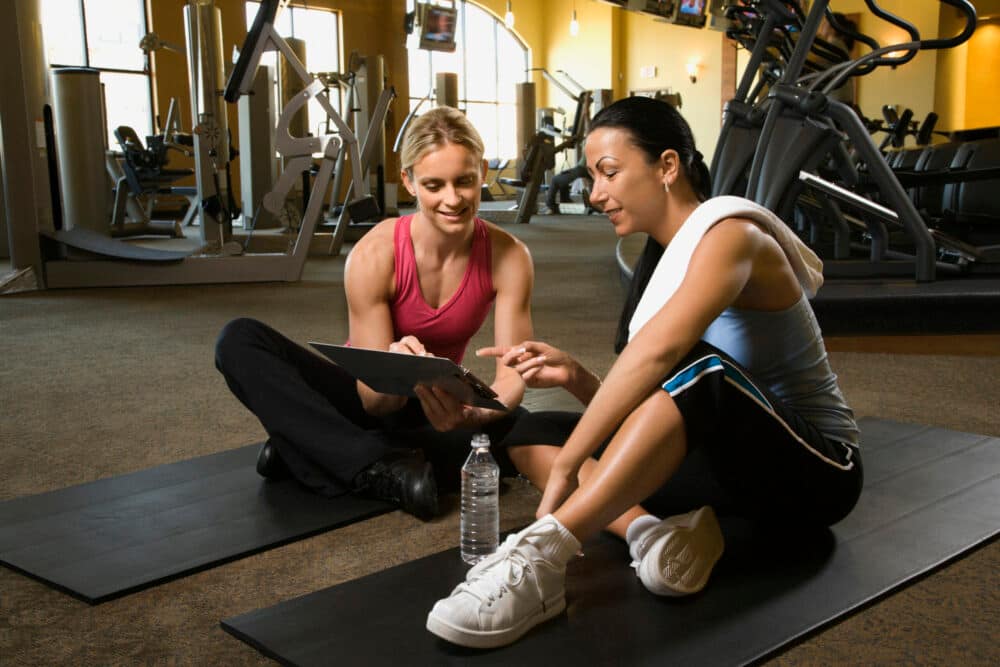
A good trainer teaches you safe form, builds a program around your goals and health history, and makes sure you keep progressing. That matters most when you are starting out, coming back from an injury or managing a health condition.
Type A Training trainers come to your home or building gym in Manhattan. For women in perimenopause, menopause and beyond, our Women’s Fitness Over 50 program follows the W50 Method: Assess, Load, Stabilize, Progress. Learn more about our personal trainers for women.
Frequently asked questions
How many days a week should a woman over 50 lift weights?
At least 2 days a week, working all the major muscle groups. Many women do well with 2 or 3 full-body sessions on non-consecutive days.
Is it too late to start strength training at 50 or 60?
No. Research shows women and men can build strength and muscle well into their 70s, 80s and beyond. Start light, learn good form and progress gradually.
Will lifting weights make me bulky?
Very unlikely. Building large muscles takes years of specific training and eating. For most women, lifting weights builds strength and a firmer, more toned look.
How heavy should I lift?
Heavy enough that the last 2 or 3 reps of a set of 8 to 12 feel challenging while your form stays good. As you get stronger, increase the weight gradually.
What is the best exercise for bone density?
A combination works best: progressive strength training plus weight-bearing activities such as brisk walking, hiking, stair climbing and dancing. If you have osteoporosis, ask your doctor which exercises are right for you.
Should I do cardio or strength training?
Both. Strength training protects your muscles and bones, and cardio protects your heart and lungs. The guidelines recommend both every week.
Can strength training help with menopause weight gain?
It can help. Keeping muscle supports your metabolism and blood sugar, and strength training pairs well with cardio, daily movement and a balanced diet for managing weight in midlife.
How long until I see results?
Many people get stronger within the first few weeks of regular training, partly because the body gets better at the movements. Changes in muscle size take longer, usually a few months of consistent work.
Female trainers, women-centered programming, and a plan built around your life, not the other way around.
Meet our female trainers