8 Popular HIIT Workouts: Tabata, EMOM, AMRAP and More
High-intensity interval training, or HIIT, alternates short bursts of hard effort with periods of easier recovery. It is one of the most time-efficient ways to build fitness, and it comes in many formats, from Tabata and EMOM to AMRAP, sprint intervals and circuits.
This guide explains what HIIT is and what it does, walks through 8 popular HIIT workouts with a sample of each, and covers how often to train, low-impact options, equipment, safety and recovery.
The short version
- HIIT means repeated hard efforts with recovery in between. The hard parts should feel like an 8 or 9 out of 10.
- It can improve heart and lung fitness as much as longer, steady cardio in less time.
- Popular formats include Tabata, EMOM, AMRAP, classic intervals, sprint intervals, pyramids, 10-20-30 and circuits.
- Two or three HIIT sessions a week, on non-consecutive days, is plenty for most people.
- Beginners can start with longer rest periods and low-impact moves, such as a bike or brisk step-ups.
- Check with your doctor first if you have a heart condition, high blood pressure, diabetes or another health condition, or if you are pregnant.
What HIIT is
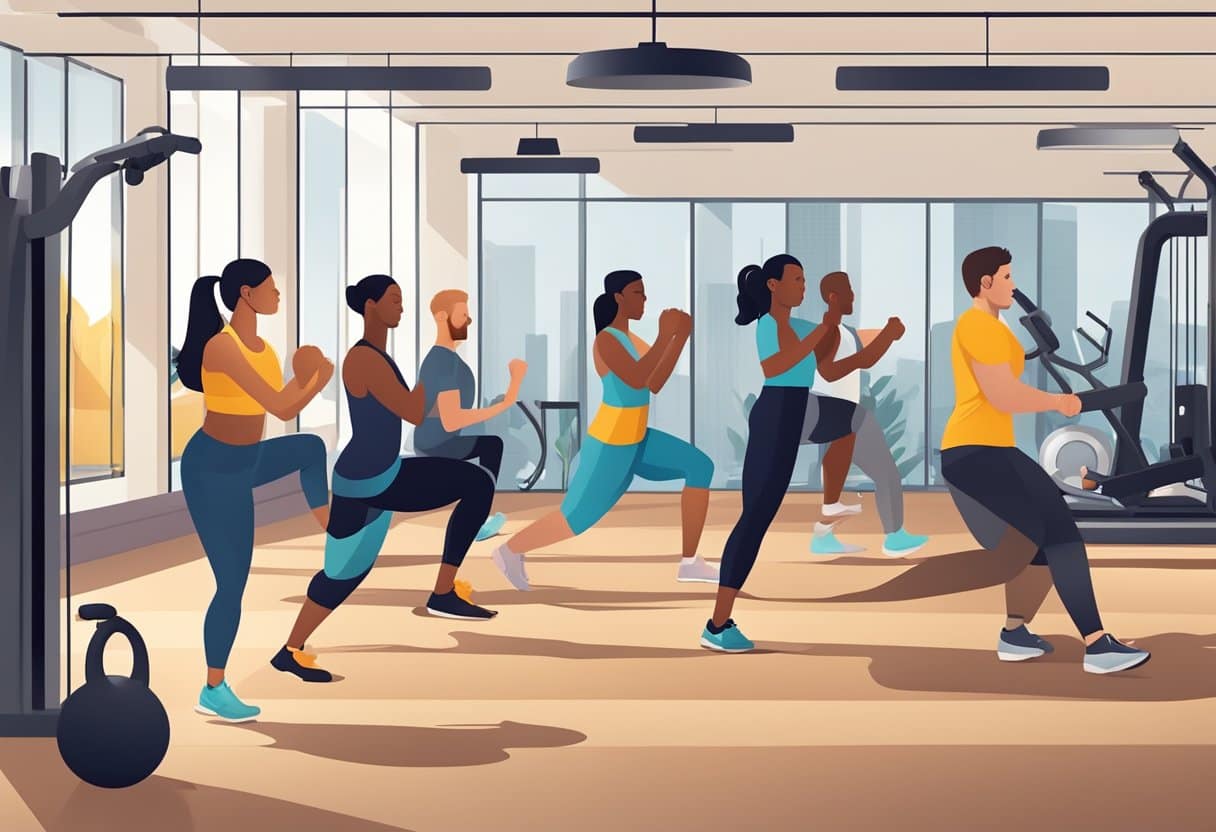
A HIIT workout repeats a simple pattern: work hard for a short interval, then recover, then work hard again. Work intervals usually last from about 10 seconds to 4 minutes, and recovery can be complete rest or easy movement such as walking or slow pedaling.
The hard intervals are meant to be genuinely hard. A useful guide is effort on a 1 to 10 scale: aim for about an 8 or 9 during work intervals, where talking is difficult, and a 3 or 4 during recovery. If you wear a heart rate monitor, work intervals often reach about 80 to 95 percent of your maximum heart rate.
Almost any activity works: running, cycling, rowing, swimming, jumping rope, or strength moves such as kettlebell swings, squats and push-ups.
Benefits of HIIT
- Heart and lung fitness: HIIT improves aerobic fitness (VO2 max) at least as much as longer, moderate cardio, in less total time.
- Time efficiency: the hard part of a session can take 10 to 20 minutes, which makes it easier to fit into a busy week.
- Blood sugar control: HIIT can improve insulin sensitivity and blood sugar control, including in people with type 2 diabetes.
- Fat loss: HIIT helps with fat loss, but when total effort is similar, results are broadly similar to steady cardio. The “afterburn” after a session is real but small.
- Variety: the many formats keep training interesting, which helps you stay consistent.
8 popular HIIT workouts
Here is a quick comparison, followed by more detail and a sample session for each.
| Workout | How it works | Sample | Good for |
|---|---|---|---|
| Tabata | 20 seconds hard, 10 seconds rest, 8 rounds (4 minutes) | Bike sprints or squat jumps | Very short, very hard efforts |
| EMOM | Set reps at the start of every minute, rest for the rest of the minute | 10 kettlebell swings and 8 push-ups on alternating minutes for 10 minutes | Steady pacing and strength endurance |
| AMRAP | As many rounds of a short circuit as possible in a set time | 5 push-ups, 10 squats, 15 sit-ups for 12 minutes | Tracking progress |
| Classic intervals | Fixed work and rest, such as 30 seconds on and 30 seconds off | 10 rounds of mountain climbers | Beginners and any equipment |
| Sprint intervals | Short, very hard efforts with longer easy recovery | 30 seconds hard, 90 seconds easy, 6 to 8 rounds | Speed and cardio fitness |
| Pyramid intervals | Hard efforts that get longer, then shorter | 1, 2, 3, 2, 1 minutes hard with equal easy recovery | Variety and runners |
| 10-20-30 | 30 seconds easy, 20 seconds moderate, 10 seconds near max, 5 times in a row | 2 to 4 five-minute blocks with 2 minutes rest | Runners and cyclists |
| Circuit-style HIIT | Strength and cardio stations back to back | 5 stations, 40 seconds each, 20 seconds to switch | Full-body strength and conditioning |
1. Tabata
Tabata uses 20 seconds of very hard work and 10 seconds of rest, repeated 8 times for a total of 4 minutes. It is named after Izumi Tabata, whose 1990s study had physically active young men do all-out intervals on an exercise bike and found gains in both aerobic and anaerobic fitness.
True Tabata intervals are close to all-out, which is very demanding. Most gym and home versions use the same timing at a lower intensity, and string together a few 4-minute rounds with a minute or two of rest between them.
Try it: after a warm-up, do 4 minutes of Tabata on a bike, then rest 2 minutes, then 4 minutes of alternating squat jumps and mountain climbers.
2. EMOM (every minute on the minute)
At the start of each minute, you do a set number of reps. Whatever time is left in that minute is your rest. As you tire, the rest gets shorter, so choose reps you can finish in about 30 to 40 seconds.
Try it: for 10 minutes, alternate minutes of 10 kettlebell swings and 8 push-ups.
3. AMRAP (as many rounds as possible)
You set a timer and repeat a short circuit as many times as you can, keeping good form. Writing down your rounds makes it easy to see progress when you repeat the workout a few weeks later. For more sample sessions, see our guide to AMRAP workouts.
Try it: 12 minutes of 5 push-ups, 10 bodyweight squats and 15 sit-ups.
4. Classic intervals
The simplest format: a fixed work period and a fixed rest period, repeated. Common ratios are 30 seconds on and 30 seconds off, or 40 seconds on and 20 seconds off. Beginners can use more rest, such as 20 seconds on and 40 seconds off.
Try it: 10 rounds of 30 seconds of mountain climbers or fast step-ups and 30 seconds of rest.

5. Sprint intervals
Sprint intervals are short, very hard efforts with longer, easy recovery. They work well on a bike, rowing machine, treadmill, track or hill. On a treadmill, you can raise the incline instead of the speed to make efforts harder with less pounding.
Try it: 6 to 8 rounds of 30 seconds hard and 90 seconds of easy pedaling, jogging or walking.
6. Pyramid intervals
The hard efforts build up and then come back down, which keeps the session interesting and teaches pacing.
Try it: 1, 2, 3, 2 and 1 minutes hard, each followed by the same amount of easy recovery. That is 18 minutes, plus a warm-up and cool-down.
7. 10-20-30 training
Developed by Danish researchers, each 5-minute block is five 1-minute cycles of 30 seconds easy, 20 seconds at a moderate pace and 10 seconds near your maximum. In their study of recreational runners, it improved 5K times and lowered blood pressure even though total training volume was cut by about half.
Try it: 2 to 4 blocks of 10-20-30 running or cycling, with 2 minutes of easy movement between blocks.
8. Circuit-style HIIT
Circuit-style HIIT moves you through strength and cardio stations with little rest, so you work your muscles and your heart in the same session. For more on building circuits, see our guide to circuit training.
Try it: 40 seconds each of goblet squats, push-ups, kettlebell swings, reverse lunges and jumping jacks, with 20 seconds to switch. Rest 1 to 2 minutes, then repeat 2 or 3 times.
How often and how long

- How often: two or three HIIT sessions a week, on non-consecutive days, is plenty for most people. Fill the other days with strength training, easier cardio, walking or rest.
- How long: the hard part of most sessions takes 10 to 20 minutes. With a warm-up and cool-down, plan on 20 to 30 minutes.
- How it fits the guidelines: US guidelines call for 150 to 300 minutes of moderate activity or 75 to 150 minutes of vigorous activity a week, plus muscle-strengthening work on at least 2 days. Hard HIIT intervals count as vigorous activity.
A simple beginner session
- Warm up for 5 to 10 minutes with easy cardio and dynamic moves such as leg swings, arm circles and bodyweight squats.
- Do 6 rounds of 30 seconds at a hard effort (such as fast pedaling, brisk step-ups or marching with high knees) and 90 seconds easy.
- Cool down for 5 minutes with easy movement and some gentle stretching.
Every week or two, add a round or shorten the recovery a little. Change only one thing at a time.
Low-impact HIIT
HIIT does not have to involve jumping. If you have sore joints, carry extra weight or are returning from an injury, these options keep the intensity high and the impact low:
- Stationary bike or rowing machine intervals
- Swimming or pool running
- Elliptical intervals
- Fast step-ups, marching with high knees or speed squats instead of jumps
- Uphill or incline walking intervals. Our progressive walking plan is a good place to start.
Equipment
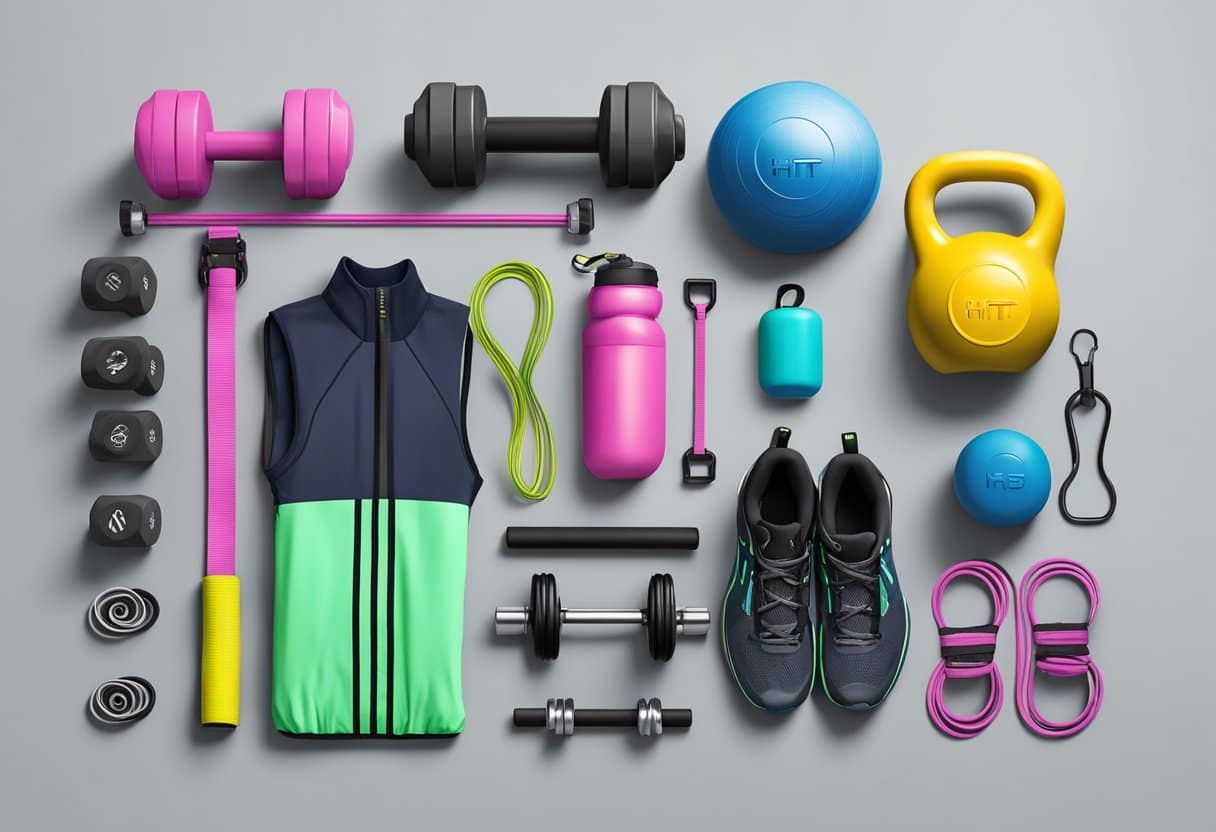
You can do HIIT with no equipment at all. Bodyweight moves such as squats, lunges, push-ups, mountain climbers and burpees are enough to start. For ideas, see our guide to calisthenics for beginners.
A few items add variety:
- A kettlebell or a pair of dumbbells for swings, goblet squats and presses
- Resistance bands for rows, presses and squats
- A jump rope for quick cardio bursts
- A bike, rowing machine or treadmill if you have one at home or in your building gym
- An interval timer, either a free phone app or a watch. A heart rate monitor helps you check your effort; see our guide to heart rate monitors.
Safety: who should be careful
HIIT is safe for most healthy adults, but it is hard work. Talk to your doctor before starting if you:
- Have heart disease, high blood pressure or heart rhythm problems
- Have diabetes or another chronic health condition
- Are pregnant
- Have joint problems or a recent injury
- Have been inactive for a long time
Research shows HIIT can be adapted for many older adults and people with heart conditions when it is supervised and built up gradually, as in cardiac rehabilitation. If you are an older adult, see also our guide to cardio exercise for seniors.
A few rules keep HIIT safe for everyone:
- Always warm up first.
- Keep good form. When form breaks down, slow down or rest.
- Build up gradually and leave at least a day between hard sessions.
- Stop and get medical help for chest pain or pressure, dizziness, unusual shortness of breath or an irregular heartbeat.
Recovery
- Cool down with a few minutes of easy movement to let your heart rate come down gradually.
- Sleep: most adults need 7 or more hours a night. Sleep is a big part of how your body recovers from training. See our sleep guide.
- Eat and drink: a meal or snack with protein and carbohydrates, plus fluids, helps you recover. See our guide to whether to have a protein shake before or after a workout.
- Use easy days: walking, easy cycling or gentle yoga between HIIT sessions help you feel fresher.
- Listen to your body: lasting soreness, poor sleep or performance that keeps dropping are signs to back off for a few days.
Working with a trainer
HIIT works best when the intensity matches your fitness and the exercises suit your body. A Type A Training trainer comes to your home, your building gym or a park in Manhattan, builds HIIT sessions around the space and equipment you have, coaches your form and adjusts the plan as you get fitter. Learn more about in-home personal training.
Frequently asked questions
Is HIIT good for beginners?
Yes, if you scale it. Start with longer recovery periods, such as 20 to 30 seconds of work and 60 to 90 seconds of rest, use low-impact moves, and begin with one or two sessions a week.
How many times a week should I do HIIT?
Two or three times a week, on non-consecutive days, is enough for most people. More is not better, because hard sessions need recovery.
How long should a HIIT workout be?
The hard part usually takes 10 to 20 minutes. With a warm-up and cool-down, most sessions take 20 to 30 minutes.
What is the difference between HIIT and Tabata?
HIIT is the general approach of alternating hard work and recovery. Tabata is one specific HIIT format: 20 seconds of very hard work and 10 seconds of rest, repeated 8 times.
What is the difference between EMOM and AMRAP?
In an EMOM, you do a set number of reps at the start of each minute and rest until the next minute starts. In an AMRAP, you repeat a circuit as many times as you can in a set time, resting only when you need to.
Does HIIT burn more fat than regular cardio?
Not by much when total effort is similar. HIIT’s main advantage is that it gets similar results in less time. Your overall diet, strength training and consistency matter more than the format.
Can I do HIIT at home without equipment?
Yes. Squats, lunges, push-ups, mountain climbers, high knees and burpees are enough for a full session. All you need is a timer and a little floor space.
Is HIIT safe for older adults?
It can be. Many older adults do well with HIIT when it uses low-impact exercises, builds up gradually and starts with supervision. Check with your doctor first, especially if you have a heart condition or other health concerns.
Work with a certified trainer who comes to you: home, building gym, or park. Matched to your goals, not just whoever’s available.
Get matched with a trainer