Boxing for Fitness: Benefits, Basic Punches, a Beginner Workout and Gear
Boxing is a true full-body workout. A few rounds of shadowboxing, bag work or mitt work train your heart and lungs, your legs, core, shoulders and arms, and your coordination all at once. You don’t need to step into a ring or get hit to get the benefits.
This guide covers why boxing works so well as exercise, the stance and six basic punches, a beginner boxing workout you can do at home, the gear you need, how to stay safe, tips for fighting a taller opponent if you start sparring, and when to work with a trainer.
The short version
- Fitness boxing (shadowboxing, bag work and mitt work) gives you a hard full-body workout with no contact.
- Learn your stance, guard, jab and cross first, then add hooks and uppercuts.
- Train in rounds: 2 to 3 minutes of work, then 30 to 60 seconds of rest.
- Wrap your hands and wear padded gloves whenever you hit a bag or mitts.
- Start with 2 or 3 sessions a week and keep strength training on other days.
Why boxing is a great workout
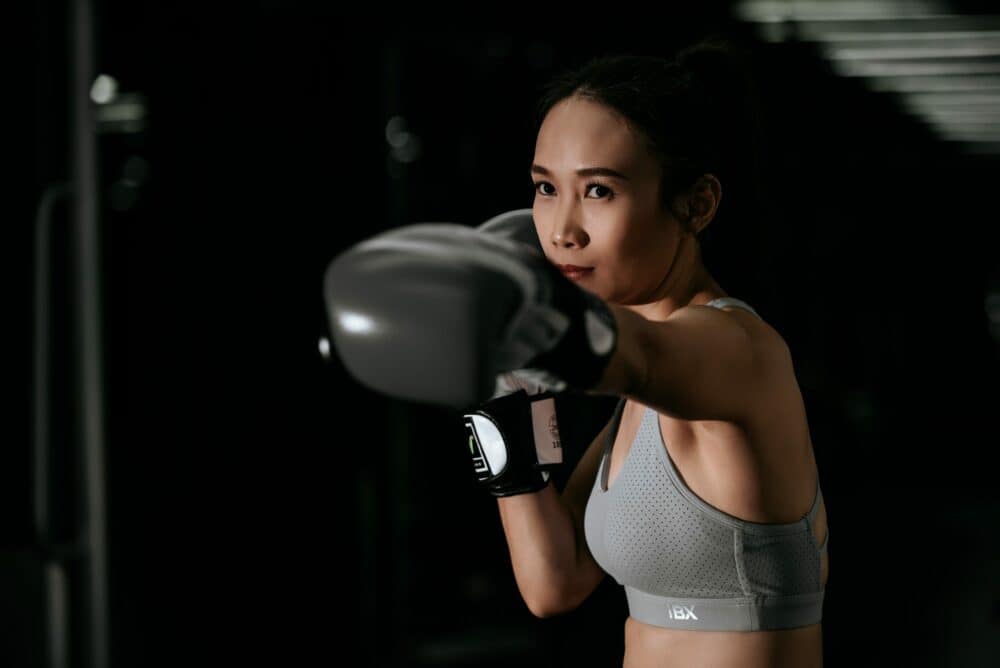
- It works your whole body. A good punch starts from your feet and travels through your legs, hips and core before it reaches your shoulder and fist, and footwork keeps your legs busy the whole round.
- It builds heart and lung fitness. Hard rounds with short rests are a natural form of interval training. Depending on how hard you work, boxing counts as moderate or vigorous exercise.
- It sharpens coordination. Putting punches, footwork and defense together trains balance, timing and hand-eye coordination.
- It relieves stress. Hitting a bag or mitts takes your full attention, and like other exercise it can lift your mood.
- It stays interesting. There is always a new combination or drill to learn, which makes it easier to keep showing up.
For overall health, the CDC recommends that adults get at least 150 minutes of moderate-intensity activity or 75 minutes of vigorous-intensity activity a week (or a mix of both), plus muscle-strengthening activity that works all major muscle groups on 2 or more days. Boxing workouts count toward the activity goal. Pair them with strength work such as resistance training or calisthenics.
Wondering whether boxing will help you lose weight? We cover that in does boxing help you lose weight.
Boxing basics: stance, guard and footwork
- Stance: stand with your feet about shoulder-width apart, lead foot forward and rear foot back and turned out slightly, knees soft and weight balanced. Right-handed boxers usually lead with the left foot (orthodox). Left-handed boxers often lead with the right (southpaw).
- Guard: keep your hands up by your cheeks, your elbows in to protect your body and your chin tucked slightly.
- Footwork: move in small steps without crossing your feet. To go forward, step with your lead foot and follow with your rear foot. To go back, step with your rear foot first. Pivot on the ball of your lead foot to change angles.
- Breathing: breathe out with a short, sharp exhale on each punch, and bring each hand straight back to your guard.
The six basic punches
Coaches number the punches so they can call out combinations quickly. Numbering varies a little between gyms, and this is a common system. The descriptions are for an orthodox stance; southpaws use the same numbers with the hands reversed.
| Number | Punch | How to throw it |
|---|---|---|
| 1 | Jab | A fast, straight punch with your lead hand. Extend without locking your elbow, then snap it straight back to your face. |
| 2 | Cross | A straight punch with your rear hand. Turn your rear hip and pivot on your rear foot so the power comes from your legs and core. |
| 3 | Lead hook | A short, curved punch with your lead hand. Keep your elbow bent and turn your lead hip and foot with the punch. |
| 4 | Rear hook | The same curved punch with your rear hand, turning your rear hip and foot. |
| 5 | Lead uppercut | An upward punch with your lead hand. Dip slightly, then drive up from your legs with your palm facing you. |
| 6 | Rear uppercut | An upward punch with your rear hand, driving up from your rear leg and hip. |
Good first combinations are 1-2, 1-1-2, 1-2-3 and 1-2-3-2. Go slowly until the form is right, then add speed, and add power last.
Basic defense: a slip moves your head just off the line of a straight punch, a roll (also called a bob and weave) dips under a hook by bending your knees, and a block catches a punch on your gloves and forearms. Practice them in shadowboxing and mitt work.
A beginner boxing workout
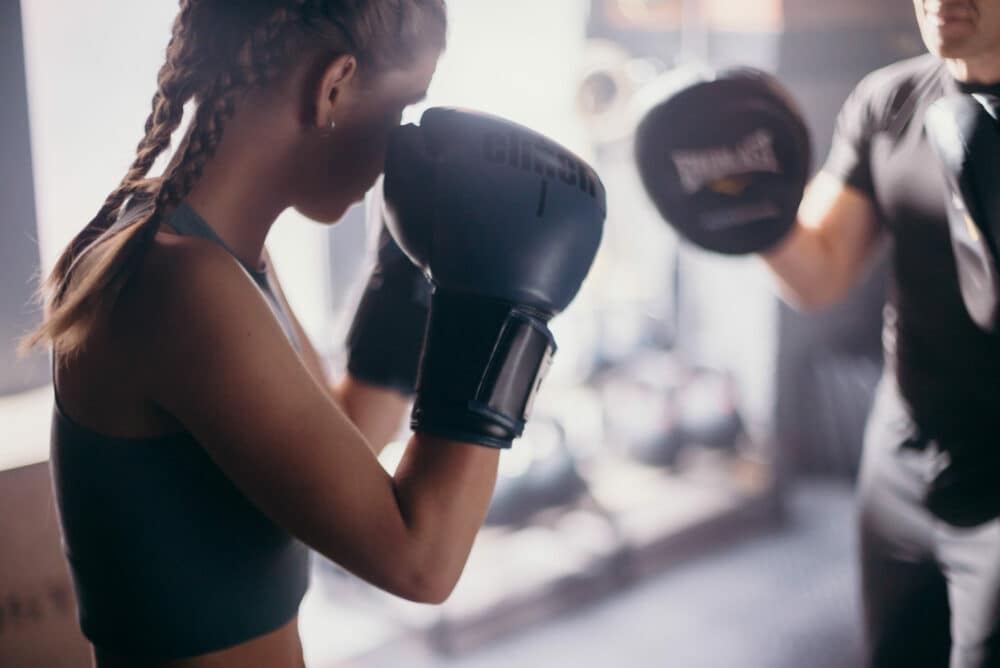
This 30 to 45 minute workout needs only room to move. A heavy bag or a partner with focus mitts is a bonus, not a must. Do it 2 or 3 times a week on days that are not back to back.
| Part | What to do | Time |
|---|---|---|
| Warm-up | Jump rope or skip in place, then arm circles, hip circles and easy shadowboxing | 5 to 8 minutes |
| Shadowboxing | Stance, footwork and the 1-2. Add hooks and uppercuts in later rounds. | 3 rounds of 2 minutes, 1 minute rest |
| Bag or mitt rounds (or more shadowboxing) | Combinations at a steady pace. Finish each round with 10 to 15 seconds of fast straight punches. | 3 to 6 rounds of 2 minutes, 1 minute rest |
| Conditioning | Squats, push-ups, plank and mountain climbers, 30 to 40 seconds each | 2 to 3 rounds |
| Cool-down | Easy walking, then stretch your shoulders, chest, hips and calves | 5 minutes |
- Weeks 1 to 2: fewer rounds and slow combinations. Focus on stance and form.
- Weeks 3 to 6: add rounds, longer combinations and more movement between punches.
- Weeks 7 and on: try 3-minute rounds and shorter rests, and build slips and rolls into your combinations.
Many boxing coaches advise against shadowboxing with hand weights. They can strain your wrists, elbows and shoulders and throw off your timing, so do your strength work separately. For more interval ideas, see our guides to popular HIIT workouts and circuit training.
Gear for boxing workouts
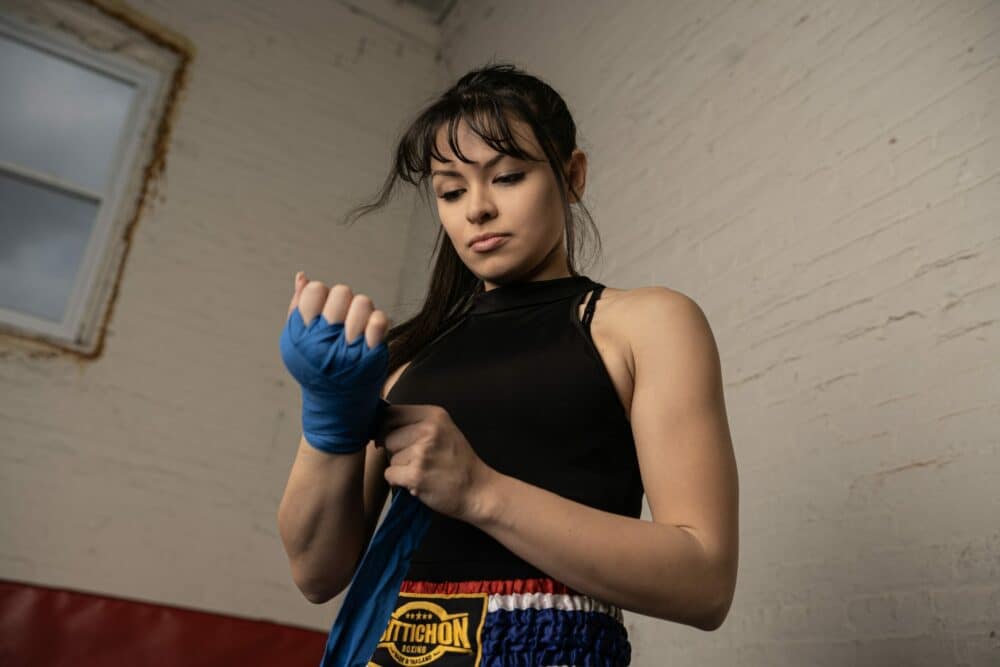
- Hand wraps: wear them under your gloves every time you hit a bag or mitts. They support your wrists and the small bones in your hands.
- Boxing gloves: 10 to 16 ounce training gloves cover most adults for bag and mitt work, depending on your size. Lighter adults often use 10 or 12 ounces, and 16 ounces is the usual choice for sparring. Our boxing gloves buying guide covers sizing, fit and more picks.
- Jump rope: the classic boxing warm-up and a great conditioning tool.
- A bag or mitts: a hanging heavy bag needs a solid ceiling mount or stand. In an apartment, a free-standing bag is usually easier, but check your building’s rules and think about the noise for your neighbors.
- A mouthguard: a must once you start sparring.
Type A Training may earn a commission when you buy through links on this page, at no extra cost to you.
Everlast Elite Pro Style Training Gloves
TITLE Boxing Gel Suspense Training Gloves
Venum Boxing Hand Wraps
Crossrope Get Lean Jump Rope Set
Shock Doctor Pro Mouth Guard
Century Original Wavemaster Free-Standing Bag
Everlast Power Core Free-Standing Bag
Staying safe
- Protect your hands. Hitting a heavy bag without wraps and gloves can injure your wrists and knuckles.
- Build up power slowly. Start with light, controlled punches on the bag and hit harder over a few weeks.
- Land with a straight wrist on the knuckles of your index and middle fingers.
- Don’t snap your elbows straight at full speed, especially when shadowboxing.
- Treat sparring seriously. Sparring involves head contact, which carries a risk of concussion. Only spar under a qualified coach, with a partner at your level, a mouthguard, headgear and sparring gloves. Headgear helps prevent cuts but has not been shown to prevent concussion.
- Check with your doctor first if you have heart disease, high blood pressure, diabetes or kidney disease, if you get chest pain, dizziness or unusual shortness of breath when you exercise, or if you have a recent injury or joint problems.
If you start sparring: how to fight a taller opponent

A taller boxer with a longer reach wants to keep you at the end of their jab, where they can reach you and you can’t reach them. As the shorter boxer, your job is to get through that range safely and do your work up close.
- Don’t stand at the end of their jab. Stay just out of range or in close, and move through the middle distance quickly.
- Close the distance behind your own punches. Step in behind a jab, a feint or a body jab instead of walking straight in with nothing coming.
- Use head movement. Slip the jab and step in as it comes back, then counter.
- Cut off the ring. Step to the side they are moving toward instead of following them, so they run out of room.
- Work the body. Body shots are closer to you, and they wear a taller boxer down over the rounds.
- Use short punches inside. Hooks and uppercuts are the natural punches at close range. Keep your guard tight and your head off the center line.
- Change angles after you punch. Step or pivot off to the side instead of backing straight out in front of their long punches.
Drills that help include slipping slow jabs from a partner (or a slip rope), shadowboxing focused on stepping in and pivoting out, and mitt rounds where your coach throws back. Do this kind of work in supervised sessions with a coach.
Common mistakes
- Dropping your hands. Bring every punch straight back to your guard.
- Punching with only your arms. Turn your hips and feet so your legs and core add power.
- Holding your breath. Breathe out on every punch.
- Leaning or reaching. Keep your head over your stance instead of leaning past your front foot to land a punch.
- Going all out in round one. Pace yourself so your form holds up in the later rounds.
- Skipping wraps or the warm-up. Both protect your hands, wrists and shoulders.
Working with a trainer
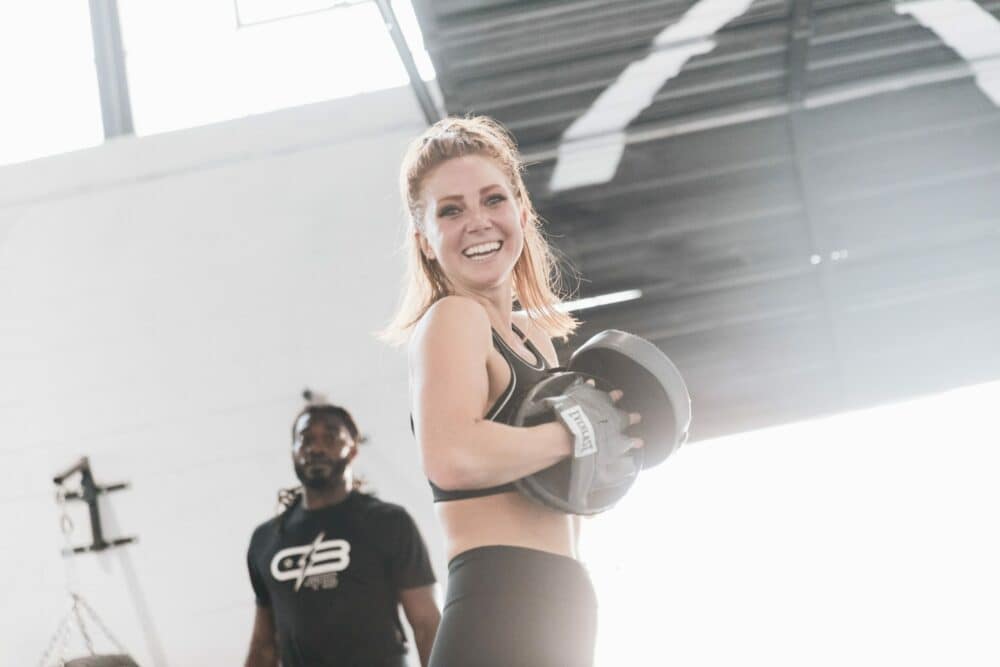
A trainer can teach you the stance and punches correctly from the start, hold mitts so you practice combinations and defense with real timing, and build boxing rounds into a balanced plan with strength training. A Type A Training trainer comes to your home, your building gym or a park in Manhattan, and boxing needs very little equipment. Learn more about in-home personal training.
Frequently asked questions
Is boxing a good workout for beginners?
Yes. Fitness boxing (shadowboxing, bag work and mitt work) involves no contact, and you can make it easier or harder by changing the pace, the length of each round and the rest between rounds.
How often should I do boxing workouts?
Two or three sessions a week is a good start, with strength training on 2 days. Leave a day between hard bag sessions so your hands, wrists and shoulders can recover.
Can I box at home without a bag?
Yes. Shadowboxing is how boxers learn and sharpen their technique, and it is a good workout on its own. Add a jump rope and bodyweight exercises for conditioning.
Do I need to spar?
No. Many people box only for fitness and never spar. If you want to try it, do it under a qualified coach with the right protective gear.
What size boxing gloves should I get?
Most adults train in 10 to 16 ounce gloves, depending on their size, and 16 ounces is the usual choice for sparring. Our boxing gloves buying guide explains how to choose.
Is boxing good for kids?
Kids can learn boxing basics with no-contact drills like shadowboxing and mitt work, using gloves sized for them, which build coordination and focus. Pediatric groups advise against sparring or any head contact for children and teens. See our guide to workouts that teach kids discipline and focus.
Work with a trainer who comes to you: home, building gym, or park. Matched to your goals, not just whoever’s available.
Get matched with a trainer