Calisthenics for Beginners: Exercises, Progressions and a Starter Workout Plan
Calisthenics is strength training with your own body weight: push-ups, squats, lunges, rows, pull-ups, planks and the harder versions you work up to. You can do it at home, in a park or in your building gym with little or no equipment, and it builds real strength and muscle when you train with enough effort and keep making the exercises harder.
This guide covers what calisthenics is and what it can do, how to start, the key exercises with step-by-step progressions, a beginner workout plan, how to train your legs so they don’t fall behind, the equipment worth having, common mistakes, and when to work with a trainer.
The short version
- Start with 3 full-body sessions a week on days that are not back to back.
- Pick a version of each exercise you can do for about 8 to 15 good reps, and finish most sets with only 1 to 3 reps left in the tank.
- Progress by moving to harder versions (for example, incline push-up to floor push-up), not only by adding reps.
- Train push, pull, legs and core every week. Most beginners need to build up to pull-ups with rows and assisted versions.
- Bodyweight leg exercises get easy fast, so use single-leg moves, slower reps or added weight to keep your legs growing.
What is calisthenics?
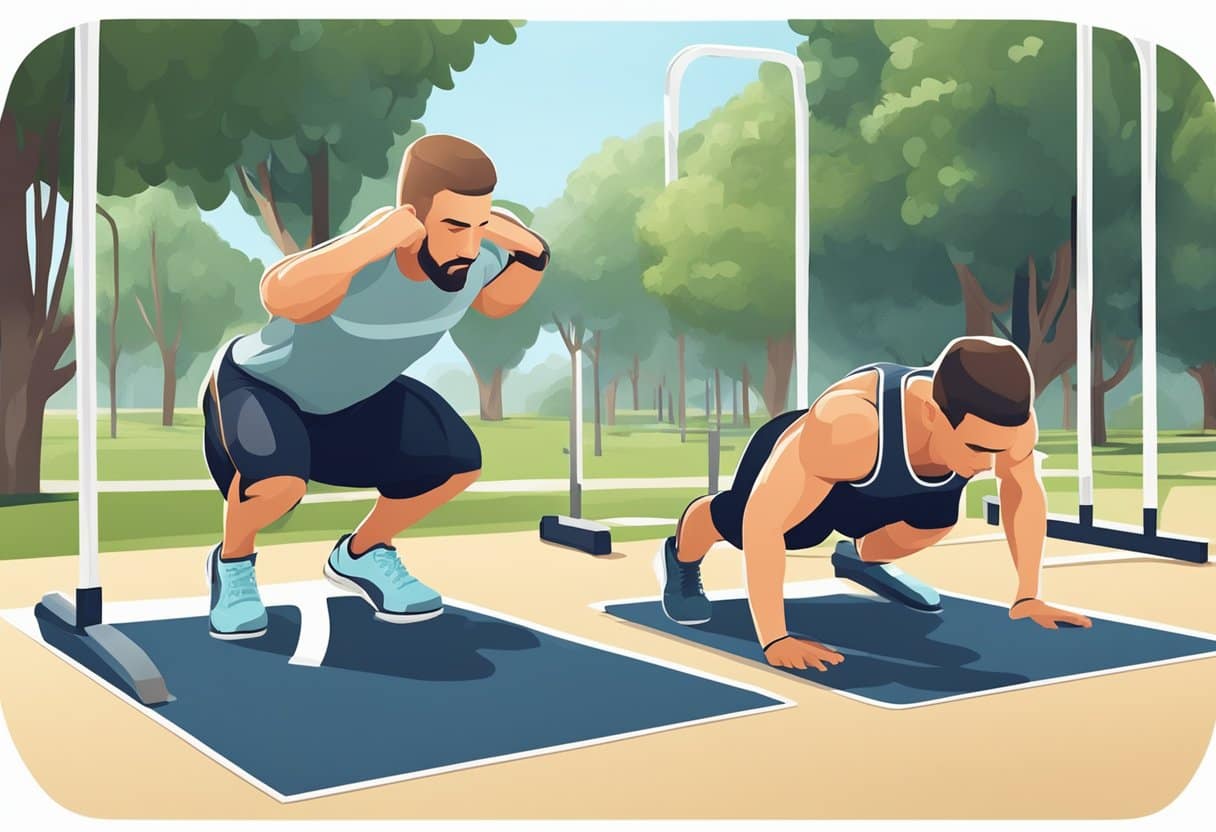
Calisthenics means exercises that use your own body weight as the resistance instead of weights or machines. The word comes from the Greek words for beauty (kallos) and strength (sthenos). It ranges from simple moves like squats and push-ups to advanced skills like handstands, muscle-ups and front levers.
Benefits of calisthenics
- It builds strength and muscle. Lighter loads can build muscle about as well as heavy ones when you take your sets close to failure, so bodyweight training works if the effort is real.
- You can do it almost anywhere. A floor, a sturdy chair or step, and a bar at a park are enough to train your whole body.
- It costs little or nothing. No gym membership or equipment is required to start.
- It teaches body control. Moving your own body well builds coordination, balance and a strong core, and makes a good base for any other training.
- It scales to any level. Every exercise has easier and harder versions, so beginners and advanced athletes can do the same basic moves.
For why strength training matters at every age, see the importance of resistance training.
How to start
- Train 3 days a week, such as Monday, Wednesday and Friday, with a full-body workout each day.
- Warm up for 5 to 10 minutes with easy cardio, arm circles, leg swings, and a few easy reps of the first exercises. Warm up your wrists before push-ups and planks.
- Choose the right version. Pick a version of each exercise you can do for 8 to 15 reps with good form. If you can do more than 15 clean reps, move to a harder version.
- Work hard, but stop before form breaks. End most sets with 1 to 3 good reps left. Stop a set when your form starts to slip.
- Rest 60 to 90 seconds between sets, or longer on the hardest exercises.
- Write it down. Track the version, sets and reps so you know when to move up.
The key exercises and how to progress them
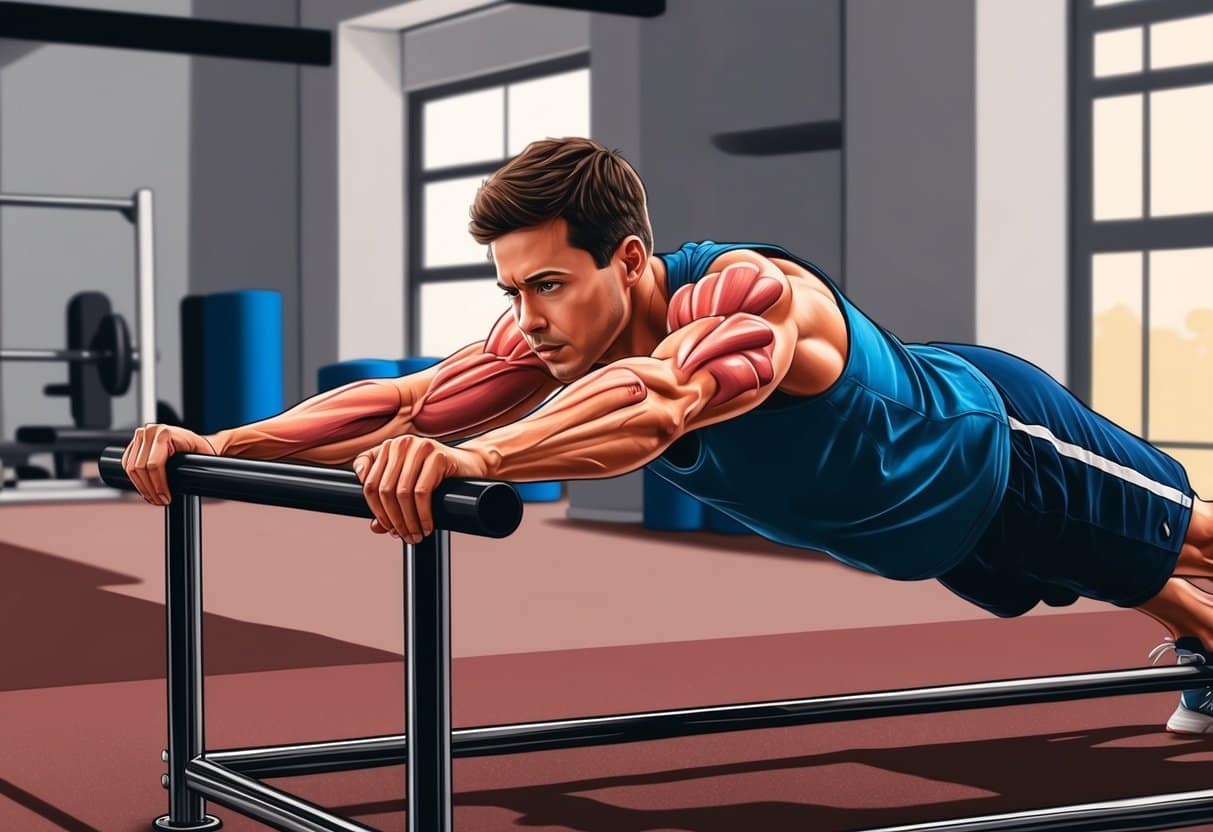
Each row starts with the easiest version. Move one step to the right when you can do about 3 sets of 12 to 15 clean reps (or the listed hold) at your current step. Slow negatives are the exception: keep them to a few careful reps per set.
| Movement | Easier | Middle | Harder |
|---|---|---|---|
| Push | Wall push-up, then incline push-up on a counter or bench | Floor push-up | Feet-elevated push-up, then dips on parallel bars (build up with slow lowering, and only go as low as is comfortable for your shoulders) |
| Pull | Inverted row on a sturdy bar or rings at chest height | Inverted row with the bar lower, band-assisted pull-up | Slow lowering (negative) pull-ups, then full pull-ups and chin-ups |
| Squat | Squat to a chair | Bodyweight squat, then split squat | Rear-foot-elevated split squat, then single-leg squat to a box (start with a high box and lower it over time) |
| Hinge | Glute bridge | Single-leg glute bridge | Single-leg hip thrust with your back on a bench, single-leg Romanian deadlift |
| Core | Dead bug | Plank and side plank (20 to 45 seconds) | Hollow body hold, then hanging knee raises |
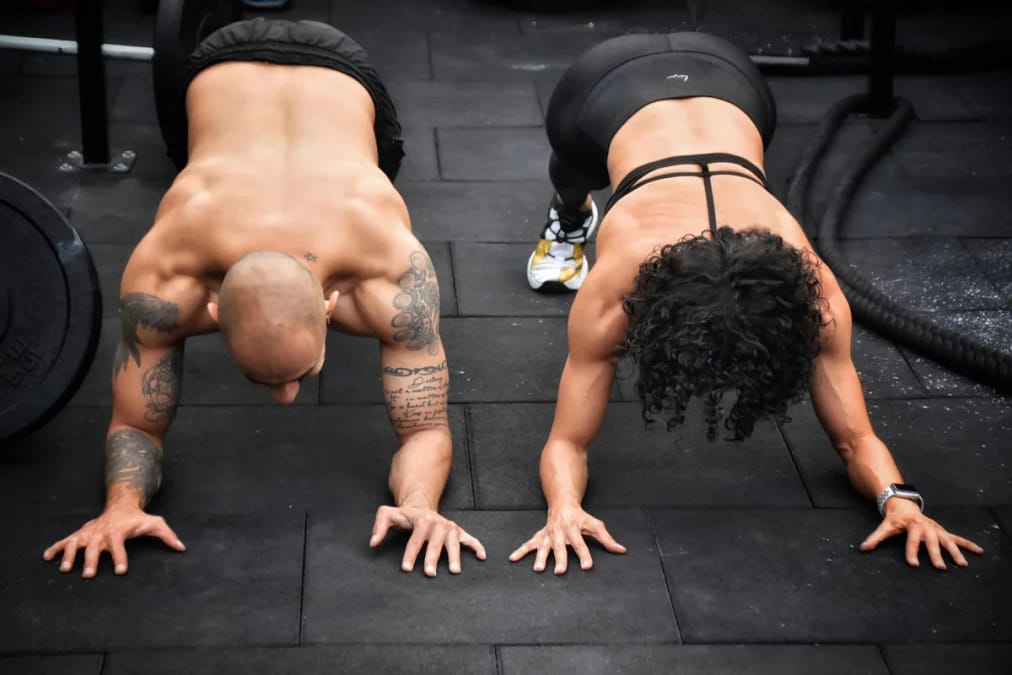
Push-up tips: keep your body in a straight line from head to heels, hands slightly wider than your shoulders, and elbows angled back about 45 degrees rather than flared straight out. Incline push-ups with your hands on a bench are a great way to build up, because your body stays in the same straight line as a floor push-up and you can lower the bench a little at a time. Knee push-ups work too.
Pull-up tips: most beginners can’t do a pull-up yet, and that is normal. Inverted rows, band-assisted pull-ups and slow 3 to 5 second lowering from the top build the strength you need. Start each rep hanging with your arms straight, pull your shoulders down away from your ears, and then pull until your chin clears the bar.
A beginner calisthenics workout plan
Do this full-body workout 3 times a week. Use the version of each exercise from the table that fits your level today.
| Exercise | Sets and reps |
|---|---|
| Squat (your level) | 3 sets of 8 to 15 |
| Push-up (your level) | 3 sets of 8 to 15 |
| Inverted row or assisted pull-up | 3 sets of 8 to 12 |
| Split squat or reverse lunge | 2 to 3 sets of 8 to 12 each leg |
| Glute bridge (your level) | 2 to 3 sets of 10 to 15 |
| Plank or hollow body hold | 2 to 3 holds of 20 to 45 seconds |
- Weeks 1 to 2: 2 sets of each exercise. Focus on form and finding the right version.
- Weeks 3 to 6: 3 sets. Add reps each week until you reach the top of the range, then move to the next version.
- Weeks 7 and on: keep moving up the progressions, add slower lowering (3 seconds down) to make reps harder, and add a fourth set to the exercises you want to improve most.
Short on time? Do the same exercises as a circuit, moving from one to the next with little rest. See our guides to circuit training, AMRAP workouts and popular HIIT workouts.
Don’t skip legs: why calisthenics legs can fall behind
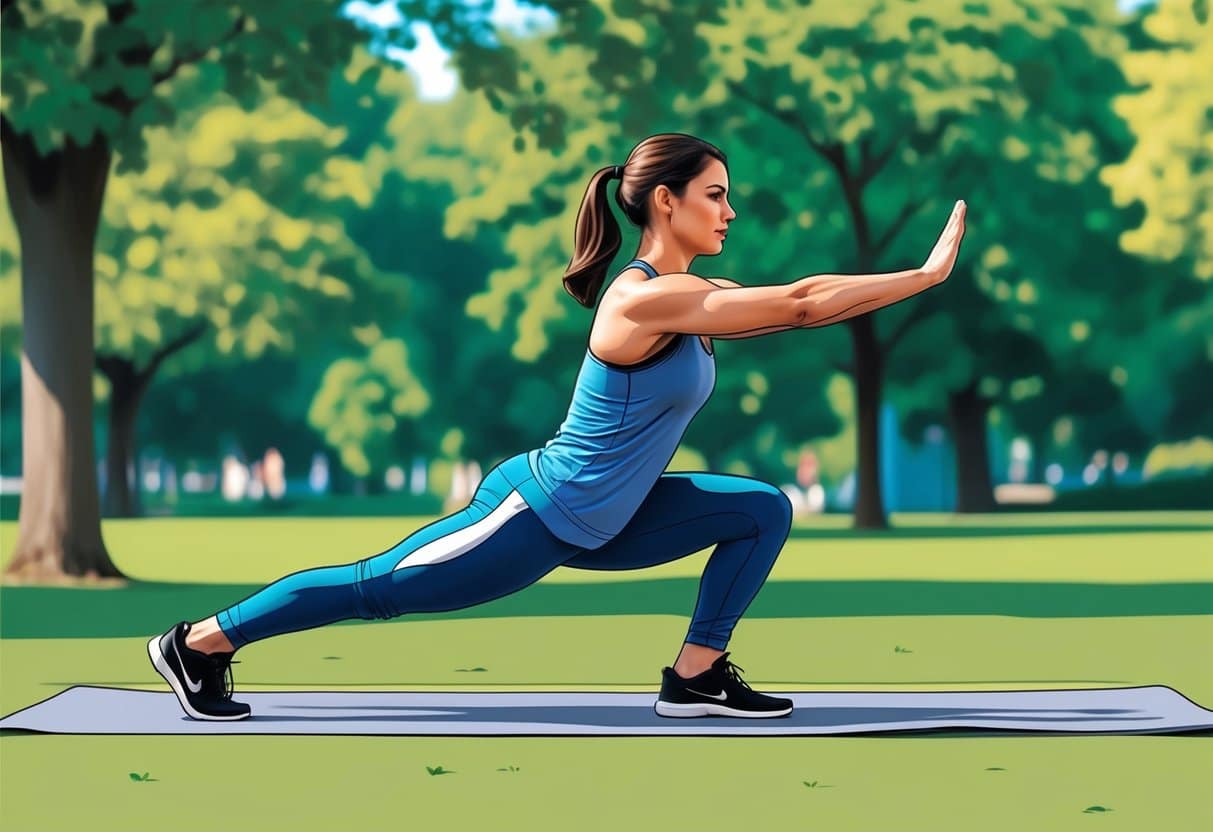
People who only do bodyweight training sometimes have strong upper bodies and smaller legs. Your leg muscles are large and strong compared with your body weight, so a regular bodyweight squat soon becomes too easy to keep them growing, while upper-body moves like push-ups and pull-ups stay hard for much longer.
- Go single-leg. Split squats, rear-foot-elevated split squats, step-ups, single-leg bridges and single-leg squats to a box put more load on each leg.
- Slow down. Take 3 to 4 seconds to lower each rep and pause at the bottom.
- Take sets close to failure. Higher-rep leg sets still build muscle if the last few reps are truly hard.
- Add load. A backpack with books, a weight vest or a pair of dumbbells makes leg exercises harder without leaving calisthenics behind.
- Add jumps once you are ready: squat jumps and skater hops build power, as long as you land softly.
Equipment worth having
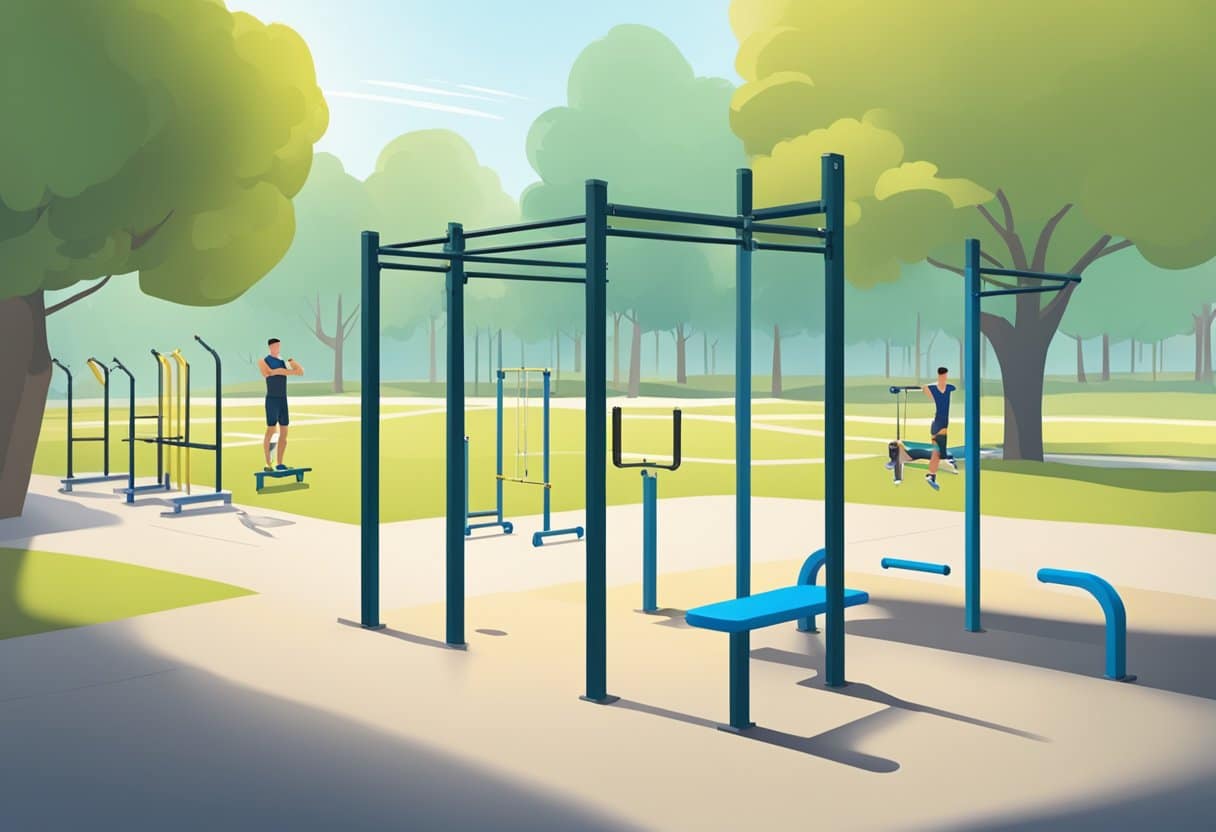
You can start with nothing but the floor. A few simple items open up more exercises:
- A pull-up bar: a doorway bar at home (make sure your door frame and body weight are within what the bar is made for, install it exactly as the instructions say, test it before hanging your full weight, and don’t swing on it) or the bars at a park.
- Resistance bands: for assisted pull-ups, warm-ups and extra resistance.
- Gymnastic rings or a sturdy low bar: for rows and, later, dips.
- Parallettes or a dip station: optional, for dips, L-sits and push-up variations.
- An exercise mat: for core work and floor exercises.
Many New York City parks have outdoor fitness equipment with pull-up and dip bars, which makes calisthenics an easy way to train outside in good weather.
Common mistakes
- Jumping to advanced moves too soon. Muscle-ups and handstands come after solid push-ups, pull-ups and core strength.
- Doing endless easy reps. Once you can do more than 15 clean reps, move to a harder version.
- Letting form slide. Sagging hips in push-ups and swinging in pull-ups shift the work away from the muscles you want to train.
- Skipping pulling and legs. Balance push and pull exercises, and give your legs real work.
- Ignoring wrist and shoulder pain. Warm up your wrists, use parallettes or fists if flat hands hurt, and stop an exercise that causes sharp pain.
For flexibility work to go with your training, see our guide to stretching and mobility exercises. Teens can start with our teen home workout plan.
Working with a trainer
A trainer helps you pick the right version of each exercise, fixes your form and lays out the progressions so you keep getting stronger without stalling or getting hurt. A Type A Training trainer comes to your home, your building gym or a park in Manhattan, which suits calisthenics well since you need very little equipment. Learn more about in-home personal training.
Frequently asked questions
Can you build muscle with calisthenics?
Yes. Bodyweight exercises build muscle when you take your sets close to failure and keep making the exercises harder over time. Legs usually need single-leg work, slower reps or added weight to keep growing.
How often should beginners do calisthenics?
Three full-body workouts a week on days that are not back to back is a good start. Each session takes about 25 to 45 minutes including the warm-up, or less if you do it as a circuit.
What if I can’t do a pull-up yet?
That is normal for most beginners. Build up with inverted rows, band-assisted pull-ups and slow lowering from the top of the bar.
Is calisthenics better than lifting weights?
Neither is better for everyone. Both build strength and muscle when you train hard and progress. Calisthenics is convenient and builds body control; weights make it easier to add small, precise amounts of load, especially for the legs. Many people do both.
How long until I see results?
Most beginners notice they are getting stronger within a few weeks, as reps go up and harder versions become possible. Visible changes in muscle usually take a couple of months of consistent training.
Work with a trainer who comes to you: home, building gym, or park. Matched to your goals, not just whoever’s available.
Get matched with a trainer