Physical Activity Guidelines for Children | Age-Based Tips
TL;DR
Children need at least 60 minutes of daily physical activity combining aerobic, muscle-strengthening, and bone-strengthening movements. Regular activity supports healthy growth, improves academic performance, and builds lifelong fitness habits. Parents can encourage movement by being active role models, limiting screen time, and incorporating physical activity into daily routines.
Children need at least 60 minutes of moderate to vigorous physical activity every day to stay healthy and strong. These activities help build muscle, strengthen bones, and keep weight in a healthy range.
Making movement part of daily life is honestly one of the best ways for your kid to build lifelong healthy routines. Sure, it’s not always easy, but it pays off.
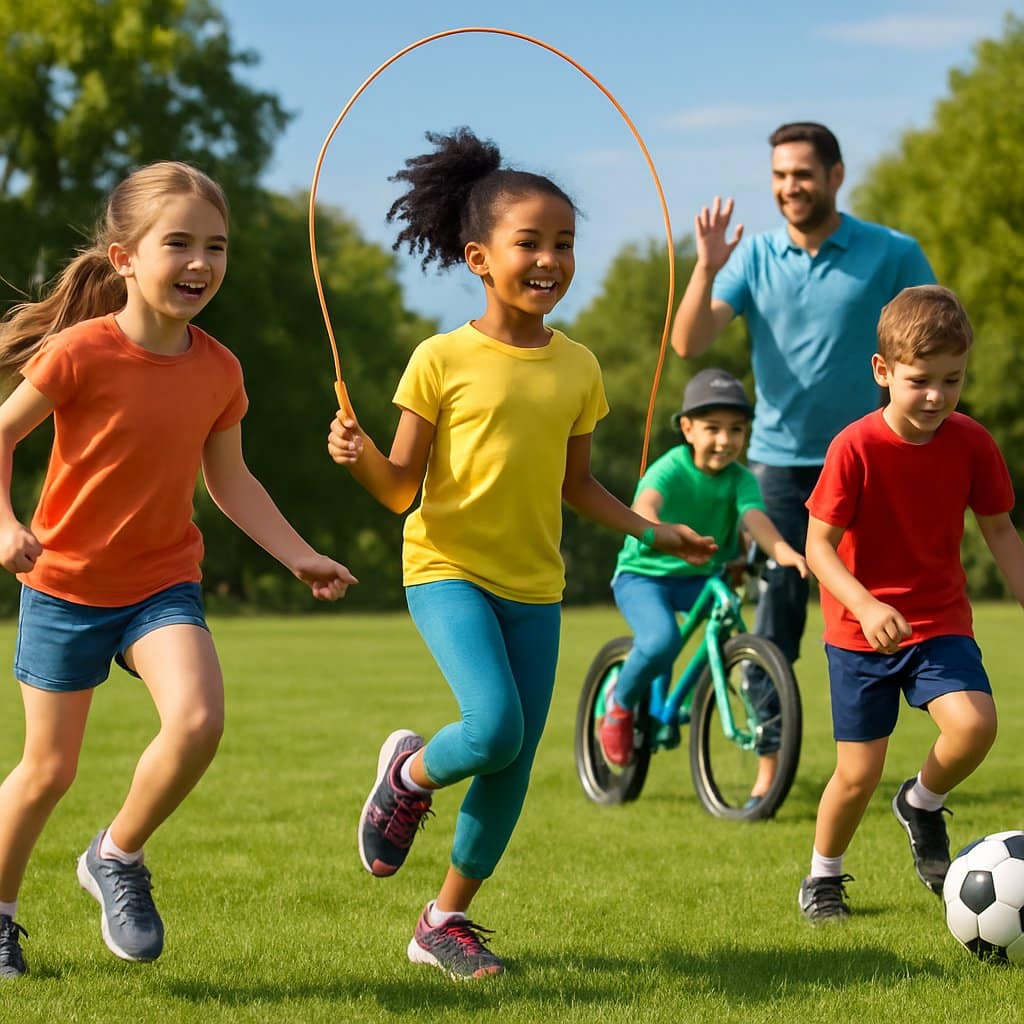
Physical activity isn’t just formal exercise—it’s play, sports, and even everyday stuff like walking or biking to school. Knowing the basic guidelines for kids’ activity can help you support your child’s growth and overall well-being.
Key Takeaways
- 60 minutes daily: Kids ages 6-17 need at least one hour of moderate to vigorous physical activity every day
- Three activity types matter: Include aerobic activities (running, biking), muscle-strengthening (climbing, gymnastics), and bone-strengthening (jumping rope, basketball) at least 3 days per week
- Start early: Toddlers need 60 minutes daily while preschoolers should get 3 hours of varied movement throughout the day
- Beyond physical health: Regular activity improves academic performance, attention span, sleep quality, and mental health
- Limit barriers: Reduce screen time to under 2 hours daily and create safe spaces for active play
- Parents are key: Children whose parents are active role models are significantly more likely to maintain healthy movement habits
- Make it routine: Incorporate movement into daily life through active transportation, family walks, and playful activities rather than relying solely on structured sports
What Is Physical Activity for Children?
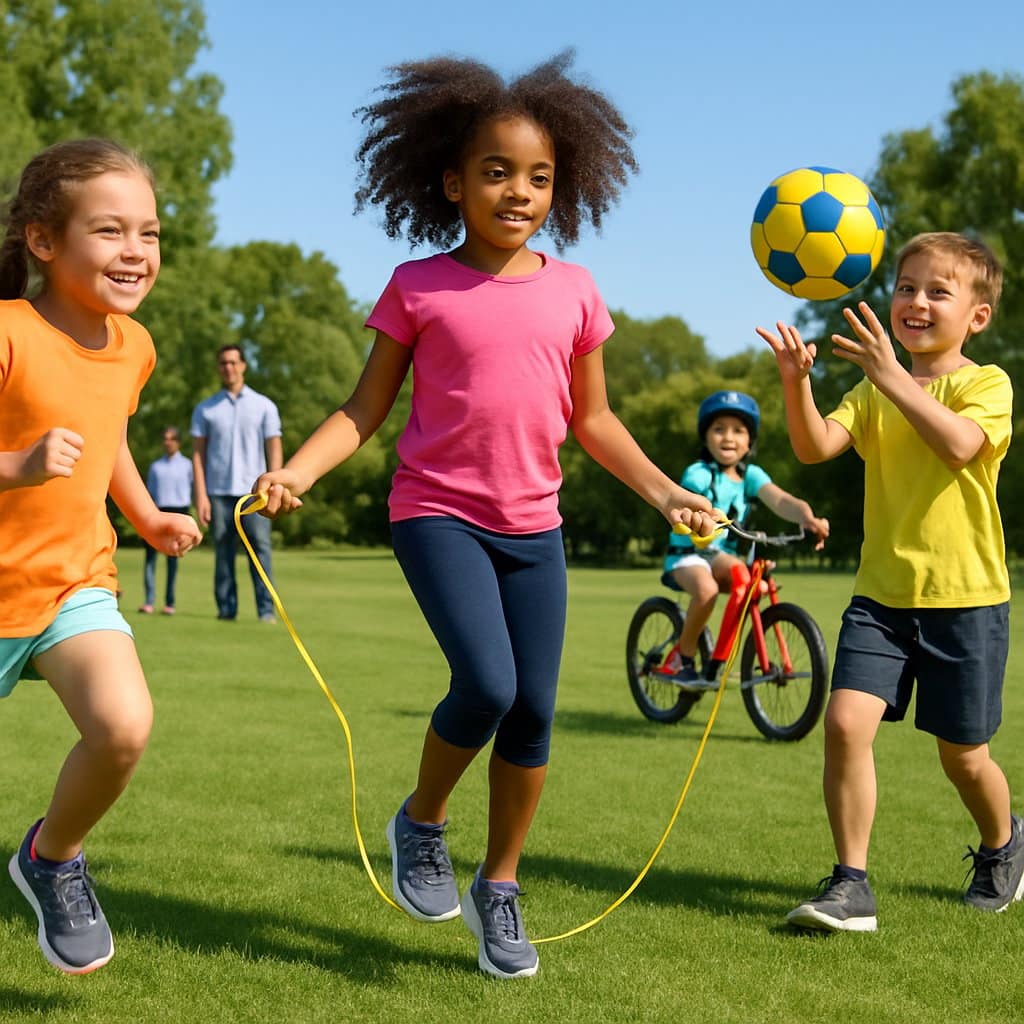
Physical activity for children is any movement that gets the body moving and burns energy. It can be play, sports, or even routines, and it’s a mix of both unplanned and planned activities.
Both exercise and casual movement help build healthy bodies and minds. You don’t have to overthink it—just get them moving.
Types of Physical Activity
Children benefit from three main types of physical activity: aerobic, muscle-strengthening, and bone-strengthening activities.
Aerobic activities are the most common. These make your child’s heart beat faster and include running, biking, swimming, and brisk walking.
Muscle-strengthening activities can be climbing, gymnastics, or playing on monkey bars.
Bone-strengthening activities involve jumping rope, hopping, or playing basketball. These help bones grow strong.
A healthy mix of these activities keeps children fit and supports good sleep. The Centers for Disease Control and Prevention explains these main activity types and their benefits for children.
Physical Activity vs. Exercise
Physical activity is any movement that works the muscles and uses more energy than resting. Exercise is a specific kind of physical activity.
Physical Activity:
- Can include walking to school, dancing, playing tag, or helping with chores.
- Is often unplanned and part of daily life.
Exercise:
- Is planned, structured, and repetitive.
- Aims to improve or maintain physical fitness, such as a set routine or sports practice.
Both forms support a child’s health. The key difference is that exercise is more organized, while other activities can be playful and informal.
Active Play and Structured Physical Activity
Active play is child-led, spontaneous, and usually outdoors. It can involve running, climbing, chasing, or jumping with friends.
Structured physical activity is adult-led, planned, and follows a set routine. This includes physical education classes, dance lessons, or team sports.
Encouraging kids to join both helps them build different skills. Active play helps improve creativity, teamwork, and problem-solving.
Structured activities focus on techniques, rules, and skill-building in a particular sport or movement. Allowing a mix of active play and structured physical activity creates a varied and enjoyable routine.
This variety keeps children motivated and supports lifelong healthy habits. You can learn more about ways to help children be active from the American Heart Association.
Physical Activity Guidelines by Age Group
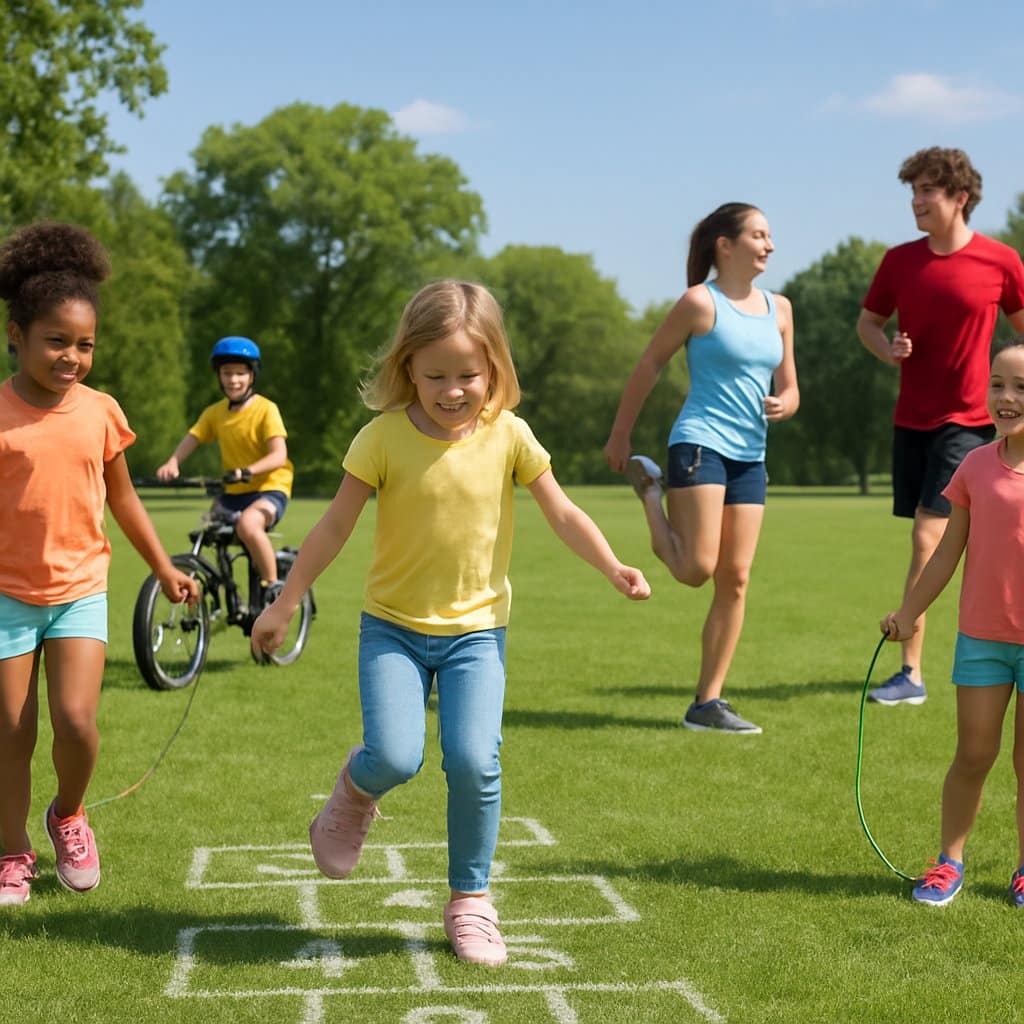
Physical activity needs change as children grow. Young kids, older children, and teens all need regular movement, but the types and amounts of activity are different.
Understanding these guidelines helps keep kids healthy and active. It’s not always obvious what’s best, so here’s a breakdown.
Toddlers and Preschoolers
Toddlers (ages 1-2) and preschoolers (ages 3-5) need plenty of movement each day. For toddlers, aim for at least 60 minutes of active play over the day.
This could include walking, climbing, dancing, or just moving around. Preschoolers need even more—try for at least 3 hours of activity spread throughout the day.
This should be a mix of light movement, active play, and more challenging stuff like jumping or running. Screen time should be kept very low at this age.
Try to build routines that include movement, indoors and outdoors. Simple activities like chasing bubbles, playing tag, or using climbing toys can support healthy growth.
School-Age Kids
Children ages 6 through 12 should get at least 60 minutes of moderate to vigorous physical activity every day. Activities that raise the heart rate, like biking, swimming, running, or playing soccer, are especially helpful.
At this age, try to include physical activities that are fun and social. Key recommendations:
- Aerobic activities: Encourage most of the daily hour to be aerobic, such as running or bicycling.
- Muscle-strengthening: Include climbing or swings at least 3 days a week.
- Bone-strengthening: Games that involve jumping or skipping boost bone health at least 3 days a week.
You can learn more about these guidelines from the CDC’s recommendations. Limit recreational screen time, aiming for less than two hours each day.
Teens
Teens (ages 13-17) should also get at least 60 minutes of moderate to vigorous activity every day. Activities that increase their heart rate—like jogging, team sports, or swimming—are important for overall health.
At least three days a week, teens should do activities that build muscle strength and bone strength. Examples include push-ups, weight lifting, climbing, or jumping sports like basketball and volleyball.
Teens are often busy, but encourage them to find movement they enjoy, such as dance, skateboarding, or cycling. Being active can help manage stress, improve sleep, and boost concentration.
The American Heart Association also stresses the importance of making exercise a regular habit during the teen years.
Components of Fitness and Activity
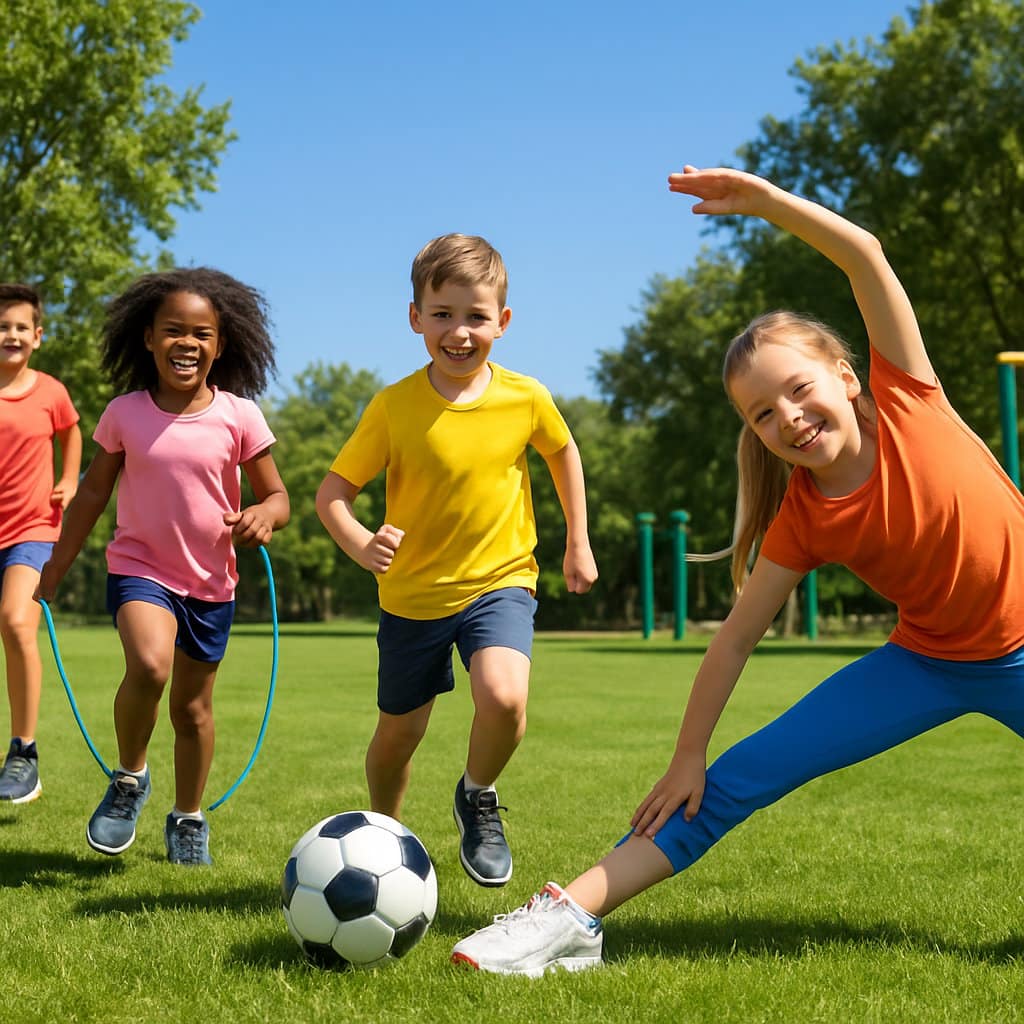
Children’s fitness comes from doing a mix of activities that boost endurance, increase muscle strength, and improve bone health and flexibility. These different types of movement support healthy growth and help kids feel good.
Aerobic and Vigorous-Intensity Activities
Aerobic activities increase heart rate and breathing, making the heart and lungs stronger. Examples include running, biking, swimming, and fast-paced playground games.
Some activities, like jumping rope or playing soccer, also count as vigorous-intensity—they make you breathe hard and your heart beats much faster. Children and adolescents should get at least 60 minutes or more of moderate-to-vigorous aerobic activity daily to support heart health and build endurance and physical fitness.
Mixing moderate and vigorous activities during the week is important. Vigorous-intensity activities should be included at least 3 days per week.
Below is a list of aerobic activities for kids:
- Brisk walking
- Dancing
- Active play (games like tag)
- Running and sprinting
- Cycling
Strengthening Activities
Strengthening activities improve muscle strength by making muscles work against resistance. These activities are important for healthy growth and supporting good posture.
Muscle-strengthening activities can include body-weight exercises, such as:
- Push-ups or sit-ups
- Climbing on playground equipment
- Gymnastics
- Resistance bands
These activities should be part of children’s routines at least 3 days each week, along with aerobic activity. According to the CDC’s guidelines, both structured exercises (like sports) and unstructured play (such as climbing trees) count as muscle-strengthening activities.
Bone-Strengthening and Flexibility
Bone-strengthening activities help bones grow strong and durable. High-impact movement where the body works against gravity is key, such as jumping or running.
Examples are basketball, jumping rope, hopping, and skipping. These activities should also be included at least 3 days a week to help children develop stronger bones as they grow.
Flexibility, though often overlooked, allows children to move easily and lowers the chance of injury. Kids can practice flexibility with:
- Stretching routines
- Yoga
- Dance
Including flexibility activities helps with balance and a wider range of motion, which supports both play and sports.
Health Benefits of Physical Activity in Childhood
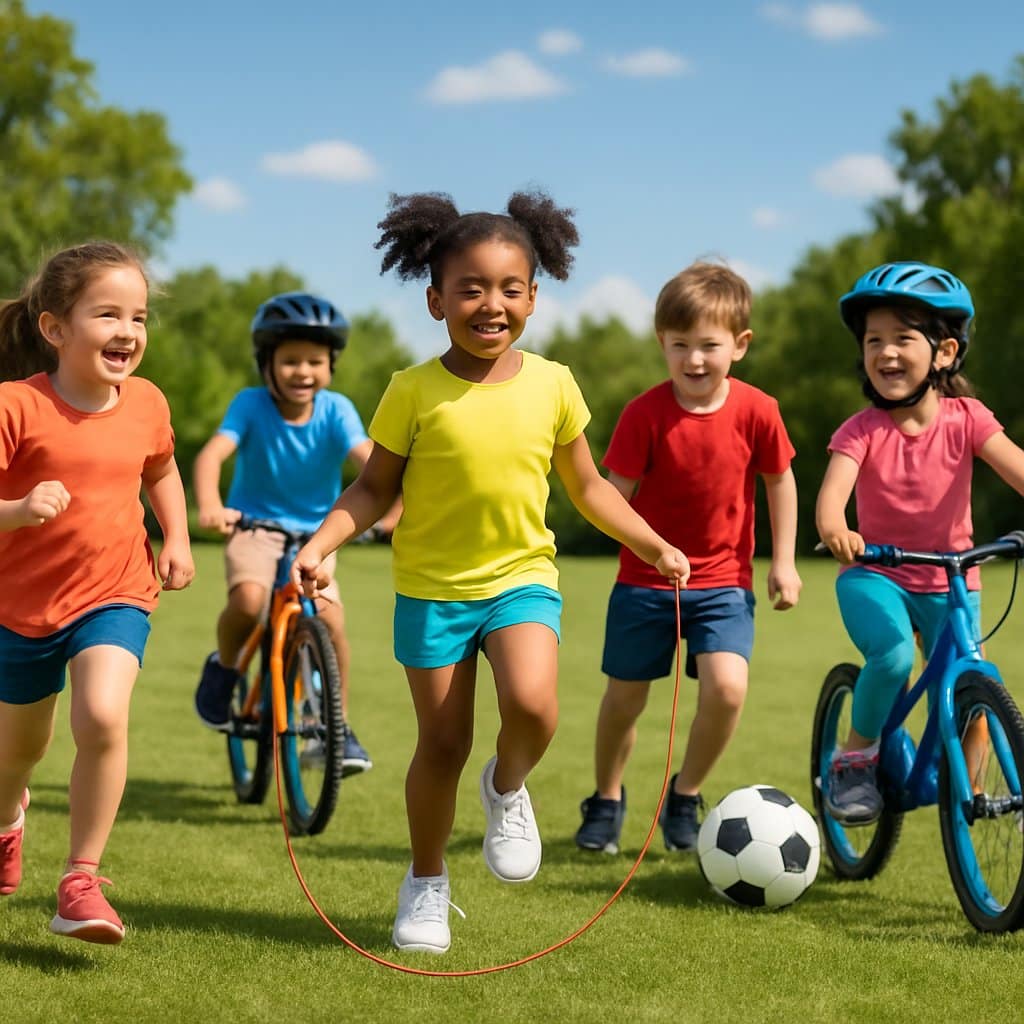
Regular physical activity gives your child stronger bones, muscles, and a healthier heart. Activity also supports the body’s natural growth and helps with attention, mood, and school performance.
Healthy Growth and Development
Kids who move a lot are more likely to keep a healthy weight. Active play builds up muscles and bones, which is pretty important as they grow.
Physical activity lowers the risk of type 2 diabetes and high
For ages 3–5, being active throughout the day gives early development a real boost. Older kids should aim for at least 60 minutes of movement daily to support steady growth and a stronger body.
The CDC has more to say on activity guidelines by age if you want details.
Physical and Mental Health Outcomes
Moving around helps the heart and brain work better. Being active is linked to lower rates of obesity, healthier blood sugar, and an improved mood.
Active kids usually sleep better and stress less. More movement means lower risks for cardiovascular disease and diabetes, and it even helps with handling emotions and mental health challenges.
Curious about the science? Check out these risk reduction benefits.
Academic Performance and Attention
Physical activity is tied to better focus and school performance. Kids who move more often find it easier to pay attention and finish their work.
Exercise sends more blood to the brain, which helps with memory and learning. Even short activity breaks during the school day can help your child get back to work feeling refreshed.
Staying active can also improve sleep, which is surprisingly helpful for attention and school success. More on that here: how activity helps academic performance.
Barriers and Challenges
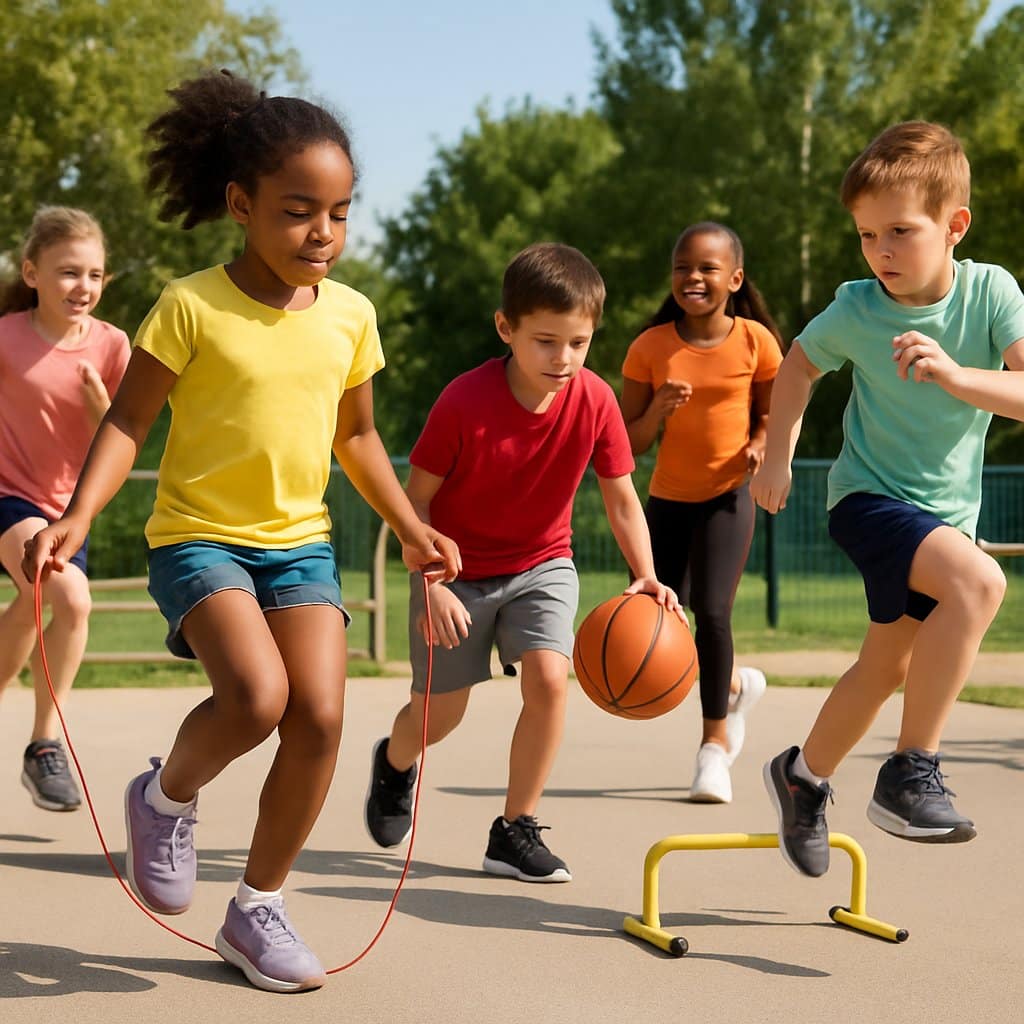
Lots of kids run into obstacles that keep them from getting enough activity. Stuff like too much screen time or not having safe places to play can really get in the way.
Screen Time and Sedentary Behaviors
Too much time with screens—TV, video games, phones, tablets—makes it harder for kids to move around. Those hours in front of a screen often replace sports, active play, or even just a walk outside.
Studies show that sitting too much is linked to poor physical health and a higher risk of being overweight. Cutting down on sedentary screen time is key for building healthy habits.
The American Heart Association suggests limiting non-educational screen time and taking breaks from sitting every hour. Try turning off devices at meals and setting some family rules about daily screen limits.
Tips to reduce screen time:
- Hang out outdoors together
- Encourage hobbies that don’t need devices
- No screens in bedrooms at night
Access to Safe Activity Spaces
If your neighborhood doesn’t have parks, sports fields, or safe sidewalks, it’s tough for kids to stay active. Safety worries—like heavy traffic or bad lighting—can keep them indoors, too.
Some families live far from community centers or playgrounds, which makes getting to activities harder. Neighborhood safety and nearby facilities really shape kids’ physical activity habits.
Walking paths, green spaces, and organized sports make regular movement easier. Community support helps, too—carpooling to practices or organizing group walks can go a long way.
Trying to get around these barriers? Finding safe indoor spaces or joining local activity groups can help your child get the movement they need. For more tips, see Overcoming Barriers to Physical Activity.
Supporting and Encouraging Physical Activity
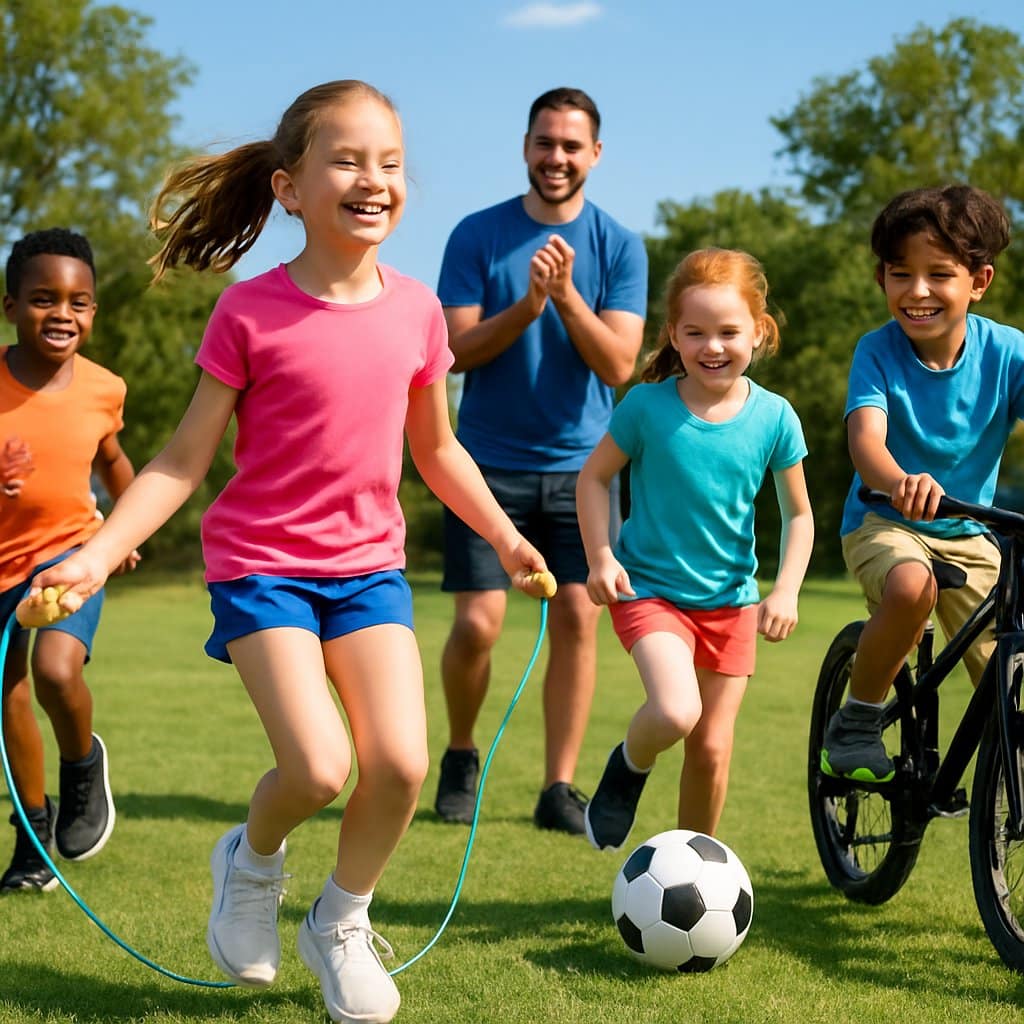
Kids are way more likely to stay active if adults make moving part of the daily routine. Creating a positive vibe, being a good example, and making activity easy to fit in really matter.
Role of Parents and Caregivers
What you do and say counts. When you give your child time, encouragement, and a safe spot for play, you help them build confidence and skills.
Try to set up routines where your child can play outside, go for walks, or join a dance or sports class. Offer choices so they get to pick what sounds fun.
Sample daily activities:
| Activity | Time (minutes) |
|---|---|
| Walking to school | 15 |
| Playing outdoors | 30 |
| Biking or skating | 20 |
Making movement a daily thing helps develop key motor skills and coordination. Support from adults also makes it less likely kids will skip exercise as they get older.
Want more ideas? Check these ways to support physical activity.
Role Models and Positive Reinforcement
Kids notice what you do. If you’re active, there’s a good chance your child will be, too.
Join them—kick a ball, jump rope, ride bikes together. Give praise for effort, not just for winning or being the best.
Say stuff like, “You did a great job playing outside today,” or “I like how you kept trying to catch the ball.” That kind of encouragement builds confidence and makes trying new things less scary.
Positive reinforcement—whether it’s a kind word or a little extra playtime—really helps. Your support can even make kids more interested in PE and team sports, which are great for coordination and social skills.
Incorporating Activity into Daily Routines
You can sneak movement into your day without a ton of planning. Even little things—like picking stairs over elevators or walking to grab coffee—actually add up.
Ideas for adding activity:
- Kick off the morning with some stretching, or just put on a song and dance around for a few minutes.
- Turn family time into a nature walk, or get outside for a quick game together.
- Try to make chores more active—rake some leaves, wash the car, or just get moving however you can.
If you weave physical activity into your daily routine, kids start to see movement as just a regular part of life. It doesn’t always have to be organized sports—sometimes, goofy play or everyday choices do just as much for coordination and motor skills.
For more ideas, check out the American Heart Association’s guidelines.
Frequently Asked Questions About Children’s Physical Activity
What counts as moderate to vigorous physical activity for children?
Moderate physical activity makes your child breathe harder and their heart beat faster, but they can still talk comfortably. Examples include brisk walking, bike riding on level ground, active playground games, and dancing. During moderate activity, kids might break a light sweat but aren’t completely out of breath.
Vigorous physical activity makes children breathe hard and fast, with their heart pounding noticeably. They’ll find it difficult to talk without pausing for breath. Activities like running, fast swimming, playing soccer or basketball, jumping rope vigorously, and active games like tag at full speed qualify as vigorous intensity. Most of your child’s daily 60 minutes should include a mix of both intensities, with vigorous activity included at least 3 days per week for maximum health benefits.
Can my child break up the 60 minutes of daily activity into shorter sessions?
Yes, absolutely. The 60 minutes of recommended daily physical activity doesn’t need to happen all at once. Children can accumulate this time throughout the day in shorter bursts of 10-15 minutes or more. For example, your child could walk or bike to school for 15 minutes, have 20 minutes of active recess, play outside after school for 15 minutes, and participate in a 10-minute family walk after dinner.
Breaking activity into shorter sessions actually works better for some kids, especially younger children with shorter attention spans. What matters most is that the total time adds up to at least 60 minutes and includes a variety of activity types throughout the week. Even brief movement breaks between homework or screen time sessions contribute to overall daily activity goals and help maintain energy and focus.
How do I get my child motivated to be physically active when they prefer video games?
Start by finding a middle ground with active video games that require movement, like dance games, virtual sports, or motion-controlled gaming systems. These can be gateway activities that get sedentary kids moving while still engaging their interest in gaming. Set up a reward system where outdoor playtime or physical activity “unlocks” screen time privileges rather than positioning movement as punishment.
Help your child discover physical activities that match their interests—if they like fantasy games, try archery or martial arts; if they enjoy competitive gaming, introduce individual or team sports with similar competitive elements. Invite their friends over for active play rather than video game sessions. Most importantly, participate alongside your child rather than just directing them to go play. When kids see parents genuinely enjoying movement and making it social, they’re more likely to view physical activity as fun rather than a chore that competes with their preferred entertainment.
What physical activities are appropriate for overweight or obese children?
Start with low-impact activities that don’t put excessive stress on joints while building confidence and endurance. Swimming is excellent because water supports body weight while providing resistance for muscle building. Walking at a comfortable pace, cycling, dancing, and active play like throwing or kicking a ball work well for children carrying extra weight. Avoid activities that involve jumping or running on hard surfaces initially, as these can cause joint discomfort.
Focus on making movement enjoyable rather than weight loss or performance. Overweight children often feel self-conscious in competitive sports or group activities, so consider starting with family-based activities or one-on-one instruction before joining team settings. Gradually increase duration and intensity as fitness improves—even 10 minutes daily is a good starting point. Consult your child’s pediatrician for personalized recommendations, especially if your child has related health conditions like asthma or joint problems. The goal is building positive associations with movement that will last a lifetime, not achieving rapid physical changes.
Are there physical activity guidelines for children with disabilities or chronic health conditions?
Yes, children with disabilities should also aim for 60 minutes of daily physical activity appropriate to their abilities. The type and intensity of activity should be determined in consultation with healthcare providers who understand your child’s specific condition. Many activities can be modified to accommodate different abilities—wheelchair sports, adaptive swimming programs, seated exercises, and therapeutic horseback riding are just a few examples.
Children with chronic conditions like asthma, diabetes, or heart conditions typically benefit greatly from regular physical activity when properly managed. Work with your child’s medical team to understand any necessary precautions, such as keeping an inhaler nearby or monitoring blood sugar levels. Many communities offer adaptive recreation programs specifically designed for children with special needs. The physical, social, and emotional benefits of activity are just as important for children with disabilities—sometimes even more so. Focus on what your child can do rather than limitations, and celebrate all movement achievements regardless of how they compare to typical guidelines.
What should my child eat before and after physical activity?
Before activity, children should eat a light snack containing carbohydrates and a small amount of protein about 30-60 minutes beforehand. Good options include a banana with peanut butter, yogurt with granola, whole grain crackers with cheese, or apple slices with almond butter. Avoid heavy, fatty, or high-fiber foods immediately before exercise as these can cause stomach discomfort. Make sure your child is well-hydrated before starting physical activity.
After activity, focus on recovery with a combination of carbohydrates to replenish energy and protein to support muscle repair. Chocolate milk is actually an excellent post-exercise choice for kids, providing the ideal ratio of carbs to protein. Other good options include a turkey sandwich, trail mix with nuts and dried fruit, hummus with vegetables and pita, or a smoothie with fruit and protein powder. Hydration is equally important—encourage your child to drink water throughout and after activity. For activities lasting less than an hour, water is sufficient; longer or more intense activities may benefit from sports drinks that replace electrolytes.
How can I tell if my child is getting too much physical activity or overtraining?
Warning signs of overtraining include persistent fatigue, decreased performance despite regular practice, frequent injuries or lingering soreness, changes in mood like increased irritability or depression, loss of interest in activities they previously enjoyed, difficulty sleeping, and frequent illnesses due to weakened immune function. Children who specialize in a single sport year-round face higher risks of overuse injuries and burnout compared to those who play multiple sports seasonally.
Most children won’t overtrain through normal play and varied activities—the concern mainly applies to young athletes in intensive training programs. Kids need at least one full rest day per week from organized sports, and experts recommend limiting organized sports participation to no more hours per week than their age in years. For example, an 8-year-old shouldn’t exceed 8 hours of organized sports weekly. Build in recovery time, ensure adequate sleep and nutrition, and watch for signs your child is no longer enjoying their activities. If you notice multiple warning signs, consult your pediatrician or a sports medicine specialist who can assess whether activity levels are appropriate.
Background-checked coaches who make training fun and consistent — at home, parents welcome.
See kids & teens training