Poor posture is a daily reality for tons of people, especially in Manhattan. Long hours at desks and endless subway rides set you up for all sorts of spinal misalignment.
Incorporating corrective exercises for posture improvement into your daily routine can significantly enhance your spinal health.
Whether you’re a Wall Street pro hunched over spreadsheets or a Chelsea local fighting off tech neck, your body’s probably making up for it in ways that lead to pain and weird movement patterns.
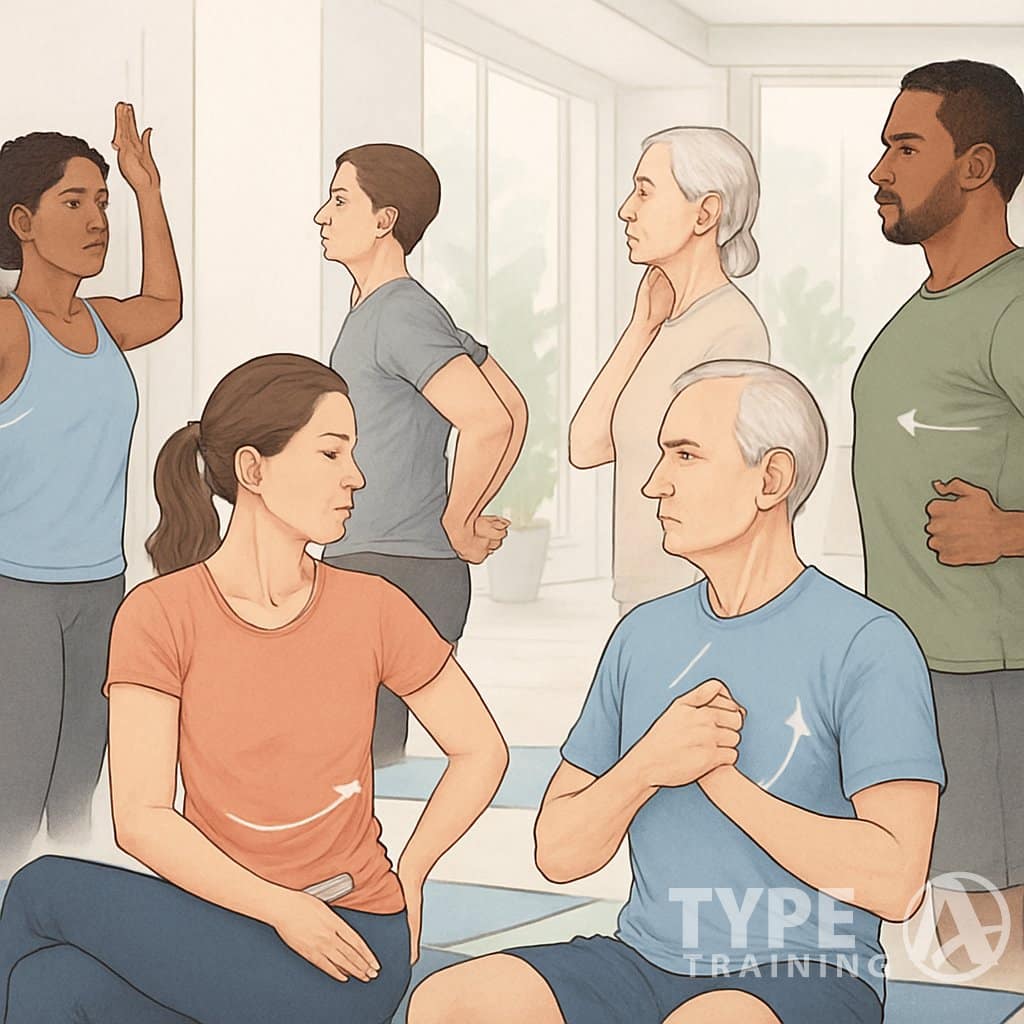
A mix of targeted stretching, strength work, and mobility drills can do wonders for your posture. You’ll start to feel less pain and move better within just a few weeks if you stick with it.
Engaging in corrective exercises for posture improvement is essential for anyone facing discomfort due to their work habits.
The trick is figuring out which muscles are tight or weak from your everyday habits. Then you can actually do something about it with specific corrective exercises.
Many people can benefit from corrective exercises for posture improvement to alleviate strain and improve mobility.
Getting better posture doesn’t mean you need fancy gear or hours at the gym. Moves like chest openers and planks are easy to do anywhere—your apartment, your office, wherever.
Simple corrective exercises for posture improvement can be performed anywhere, making them accessible for everyone.
Let’s run through some of the best exercises and strategies to fight off the postural problems that come with being a busy New Yorker.
Key Takeaways
Incorporating corrective exercises for posture improvement into your lifestyle is a proactive step towards a healthier spine.
- Postural problems usually come from muscle imbalances caused by habits like sitting too much or bad ergonomics.
- Targeted exercises that strengthen weak muscles and stretch tight ones can noticeably improve your posture in just a few weeks.
- Building daily habits and staying aware of your body are crucial for keeping your posture on track.
Understanding Posture and Common Issues
Understanding the importance of corrective exercises for posture improvement is the first step in your journey to better alignment.
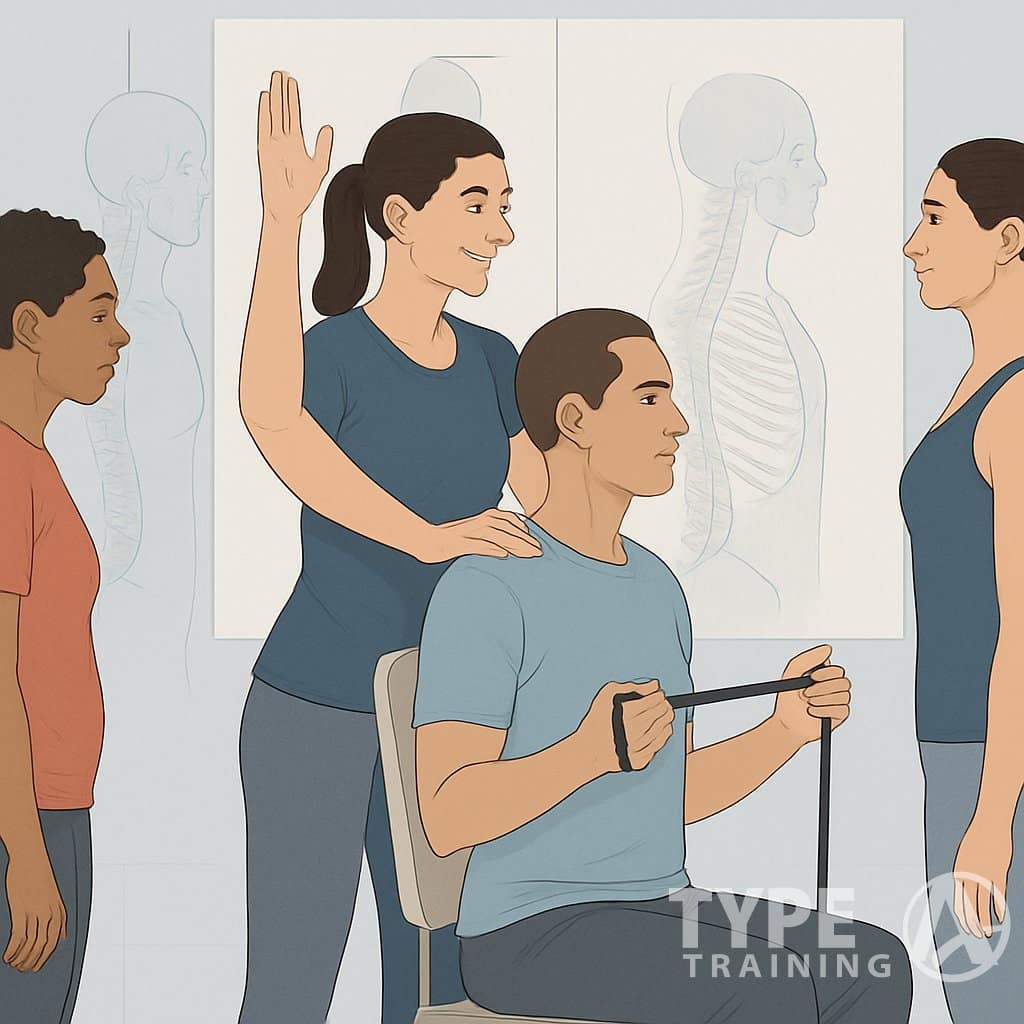
Good posture is all about proper alignment—your spine and joints stacked just right. Bad posture throws your muscles off balance and, yeah, it hurts.
Practicing corrective exercises for posture improvement allows you to maintain proper alignment throughout your daily activities.
If you’re in Manhattan, desk work and commuting stress don’t help.
What Is Good Posture?
Good posture means your body keeps its natural spinal alignment with as little effort as possible. Your ears should line up over your shoulders, shoulders stack over hips, and hips over ankles.
Key Elements of Proper Alignment:
Popular posts:
- Head position: Ears right above your shoulders, not poking forward.
- Shoulders: Relaxed, level, and slightly pulled back.
- Spine: Keeps its natural curves—no extra rounding.
- Pelvis: Neutral, not tipping forward or backward.
- Feet: Weight spread evenly.
When your posture’s on point, your core and postural muscles work together. Your glutes help stabilize your pelvis, and your rhomboids plus middle traps keep your shoulder blades where they belong.
This setup takes pressure off your joints and lets you move with less effort. Your muscles don’t have to overwork just to keep you upright, so you’re less tired and sore.
Common Types of Poor Posture
Certain posture problems show up again and again, especially for Manhattan’s on-the-go crowd. Most of these come down to muscle imbalances.
Forward Head Posture is when your head sticks out past your shoulders. It’s super common if you stare at screens all day.
Rounded Shoulders happen when your shoulders roll in and forward. Tight chest muscles and weak upper back muscles are usually to blame.
Kyphosis is that exaggerated curve in your upper back—a hunched look that makes moving your shoulders harder.
Addressing conditions like kyphosis through corrective exercises for posture improvement is vital for long-term relief.
Lordosis means your lower back arches too much. Usually, tight hip flexors from sitting a lot are the culprit.
Scoliosis is a sideways curve in your spine. Genetics play a role, but bad habits can make it worse.
Impact of Poor Posture on Health
Bad posture messes with your whole body, not just your appearance. Manhattan’s fast pace and long workdays can make these problems even worse.
The health impacts of poor posture can be mitigated through consistent corrective exercises for posture improvement.
Physical Health Effects:
- Chronic neck or back pain
- Headaches, jaw tension
- Reduced lung capacity, sometimes trouble breathing
- Digestion issues from compressed organs
- Higher risk of injury just doing everyday stuff
Slouching puts extra stress on your joints and ligaments. Over time, this wears down your spine and shoulders.
Your core gets weaker the longer you sit or slouch. That leads to lower back pain and makes you less stable during movement.
Mental and Professional Impact:
Research even shows that posture affects your confidence and energy. In NYC, where everyone’s hustling, that can make a difference at work.
Key Muscles and Structures Involved
Knowing which muscles control your posture helps you target the right spots. Postural muscles basically keep you upright all day.
Primary Postural Muscles:
Engaging your primary postural muscles through corrective exercises for posture improvement will support better overall alignment.
| Muscle Group | Function | Common Issues |
|---|---|---|
| Core muscles | Stabilize spine and pelvis | Weak from sitting too much |
| Glutes | Support pelvis and hips | Inactive from long hours sitting |
| Rhomboids | Pull shoulder blades together | Weak, overstretched |
| Middle trapezius | Stabilize shoulder blades | Weak from slouching |
| Deep neck flexors | Hold your head up right | Weak from forward head posture |
Common Muscle Imbalances:
Chest muscles and hip flexors get tight from desk work and commuting. Meanwhile, your glutes, rhomboids, and deep neck flexors weaken and basically check out.
When one muscle group slacks off, others work overtime to keep you stable.
Causes and Risk Factors for Postural Problems
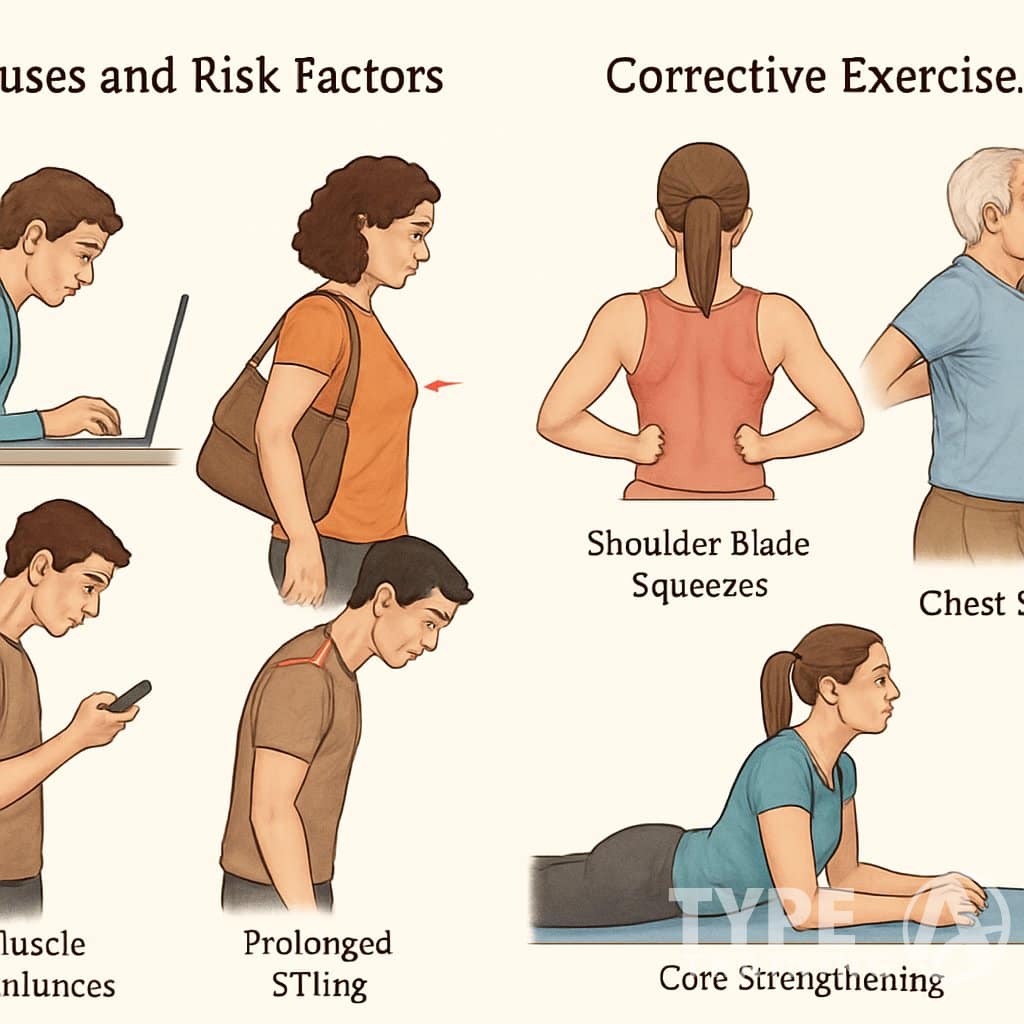
To counteract daily habits that harm your posture, consider integrating corrective exercises for posture improvement into your routine.
Poor posture comes from a mix of daily habits, your environment, and muscle imbalances. Manhattan’s crowd is especially at risk, but honestly, it can happen to anyone.
Sedentary Lifestyle and Prolonged Sitting
Your body adapts to whatever position you’re in most. If you’re in a Midtown office all day, your muscles start to think sitting is “normal.”
Sitting for more than 6 hours daily can lead to:
Practicing corrective exercises for posture improvement can help reverse the effects of prolonged sitting.
- Tight, shortened hip flexors
- Weak glutes
- Core muscles that don’t do much
- Stiff, less flexible spine
Most office workers in Manhattan sit 8-10 hours a day. No wonder forward head posture and rounded shoulders are everywhere.
If you can, get up every 30-45 minutes. Walk around, or try quick stretches. Even a minute or two helps reset your posture.
Working from home can make things worse if your setup isn’t great. A lot of people notice more neck and back pain after switching to remote work.
Ergonomics and Workspace Setup
How you set up your workspace matters a ton. Bad ergonomics force your body into awkward positions, which just piles on more muscle tension.
Common workspace issues:
- Monitor too low, making you crane your neck
- Chair at the wrong height
- No lumbar support for your lower back
- Keyboard and mouse too far away or too high
“Text neck” is real—everyone in NYC is glued to their phone. Looking down at your device strains your neck muscles big time.
Try to get your monitor at eye level, keep your feet flat, and bend your elbows at 90 degrees when typing. A standing desk can help, but alternating between sitting and standing works best.
Bad lighting makes you lean in or tilt your head, which just adds to the strain.
Muscle Imbalances and Flexibility Issues
Monitoring muscle imbalances can guide you towards effective corrective exercises for posture improvement.
Muscle imbalances show up when some muscles are way too tight and others are just weak. This throws your alignment off and forces your body to compensate.
Typical imbalances:
- Tight chest, weak upper back
- Overactive hip flexors, weak glutes
- Tense neck, weak deep neck flexors
- Short hamstrings, weak core
Imbalances often mess with your pelvis, causing it to tip and throwing off your whole spine. That’s a recipe for lower back and hip pain.
Doing the same movements day after day makes it worse. And, let’s be honest, stress doesn’t help—plenty of Manhattanites carry tension in their neck and shoulders.
Regular stretching and strength work can help balance things out. Focus on opening up tight spots like your chest and hips, and strengthening neglected areas in your back and core.
Essential Corrective Exercises for Posture Improvement
Incorporating corrective exercises for posture improvement into your fitness routine is essential for maintaining alignment.
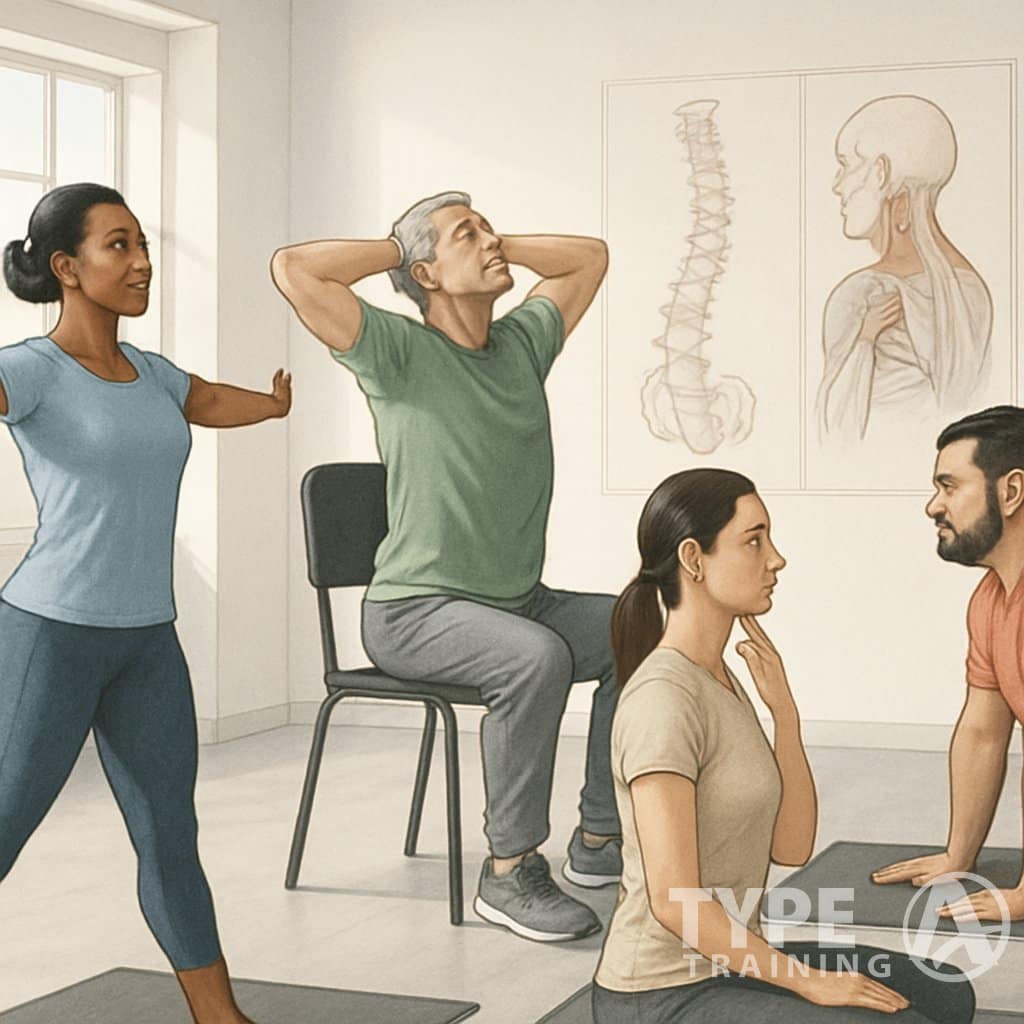
If you want better posture, you need to strengthen your upper body, wake up your core, and stretch the right spots. Effective posture correction is all about mixing these three things.
Upper Body Strengthening and Mobility
Your upper body takes a beating from sitting and typing all day. Wall angels are a great way to get your shoulders moving and fire up your back.
Stand with your back against a wall. Put your arms in a “goal post” shape, then slowly slide them up and down, keeping contact with the wall.
Shoulder blade squeezes hit the rhomboids and middle traps—muscles that get lazy with forward head posture. Just squeeze your shoulder blades together, like you’re trying to hold a pencil between them.
For that classic NYC neck slump, try chin tucks. Gently pull your chin back and lengthen your neck. This simple move helps strengthen your neck and brings your head back in line.
Doorway chest stretches are perfect for opening up tight pecs. Place your forearm on a doorframe and step forward until you feel a stretch across your chest.
Core and Lower Body Activation
Your core and glutes are the foundation for good posture. If they’re not working, everything else struggles.
Strengthening your core with corrective exercises for posture improvement is key to maintaining good posture.
Planks build core strength and teach you to keep your spine straight. Start with 30 seconds and work up. Focus on keeping a straight line from head to heels.
Glute bridges wake up those sleepy glutes. Lie on your back, knees bent, feet flat. Squeeze your glutes and lift your hips to make a straight line from knees to shoulders.
Deadlifts (done with good form!) strengthen your whole backside—glutes, hamstrings, lower back. These muscles help keep you upright and fight gravity.
If you’ve got tight hip flexors from sitting or commuting, add in hip flexor stretches to balance things out.
Flexibility and Stretching Techniques
Strategic stretching tackles the tight muscles that show up after a long day in Manhattan’s fast-paced grind. These flexibility exercises help relieve tension in overworked muscle groups.
Cat-cow stretches mobilize your thoracic spine and ease tension from hunching over laptops. Start on hands and knees, then alternate between arching and rounding your back while focusing on your breath.
Child’s pose gives your spine, shoulders, and hips a restorative stretch. This yoga move helps undo the compression you get from sitting in those tiny NYC apartments.
Thoracic spine rotation exercises loosen up your mid-back, which gets stiff from too much sitting. Just sit in a chair and rotate your upper body left and right, keeping your hips forward.
Even quick 5-minute stretching breaks between meetings in Midtown can make a difference. Squeeze them in, and you’ll keep the mobility you’ve earned from your strengthening routine.
Regularly practicing corrective exercises for posture improvement can enhance your overall mobility and flexibility.
Building Long-Term Posture Habits and Support Strategies
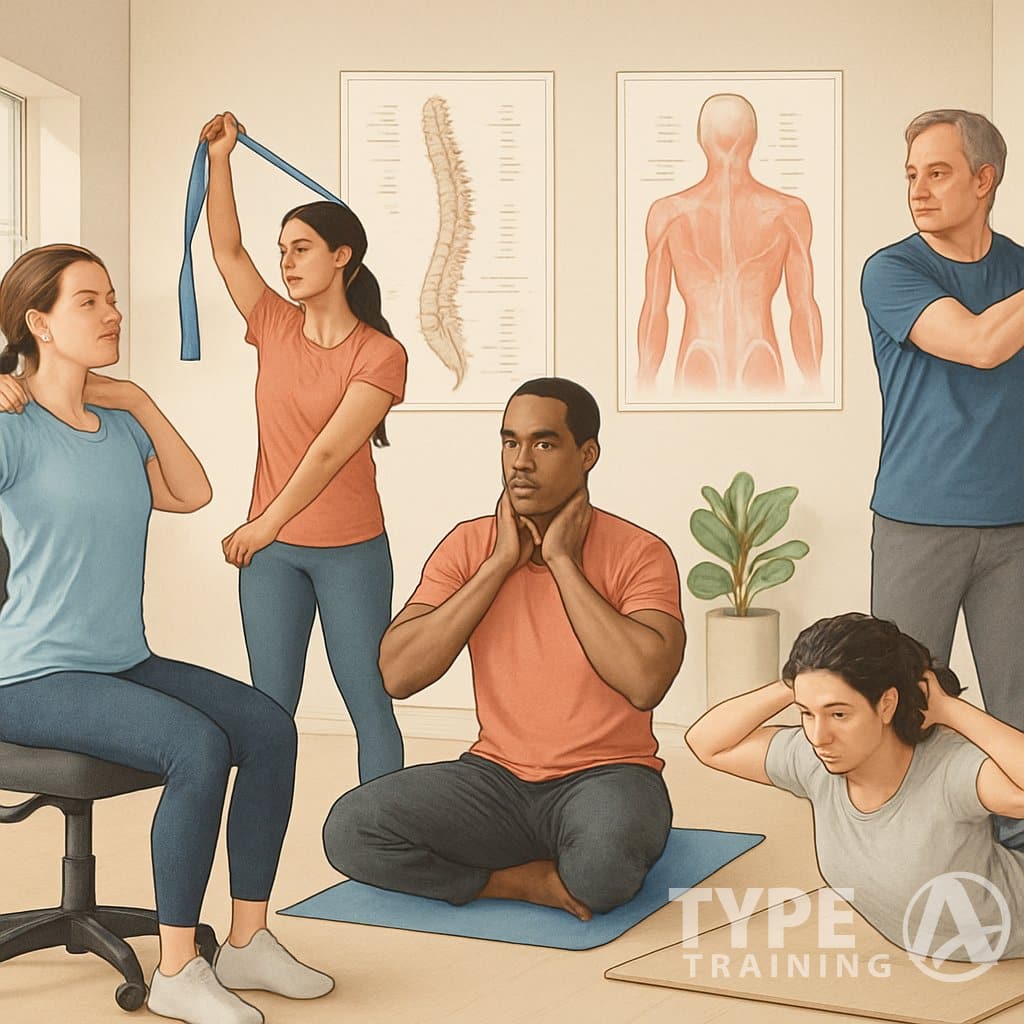
If you want lasting change, you’ll need structured routines that fit your Manhattan life. Smart tweaks to your environment and a few proven strategies can keep you on track, even when the city gets hectic.
Designing an Effective Routine
Your posture routine should fit your NYC schedule, not make it harder. Try 10-15 minutes of targeted exercises three times a week, focusing on strengthening your upper back and stretching out tight chest muscles.
Morning Activation (5 minutes)
- Shoulder blade squeezes: 2 sets of 15
- Wall angels: 2 sets of 10
- Cat-cow stretches: 10 reps
Midday Reset (3 minutes)
Building a routine of corrective exercises for posture improvement will help you stay mindful of your posture throughout the day.
- Neck rolls and shoulder shrugs
- Doorway chest stretches
- Quick spine checks
Set movement break reminders every 30 minutes during your workday. Use your phone to nudge you to move and reset your posture.
This helps fight the forward head posture that’s so common among Financial District pros. A simple app or calendar can help you track your routine.
Manhattanites who stick to a plan see better results than those who exercise randomly.
Lifestyle Modifications for Lasting Change
Your environment shapes your posture way more than you think. Make some ergonomic adjustments to your workspace—start with your monitor at eye level and your feet flat on the floor.
Workspace Setup
-
- Monitor 20-26 inches from your eyes
Smart ergonomic adjustments combined with corrective exercises for posture improvement can greatly enhance your workspace comfort.
- Keyboard at elbow height
- Chair supports your lower back
- Use a headset for long calls
Daily Habits
- Switch which shoulder you carry bags on
- Sleep with one pillow to keep your spine neutral
- Supportive
shoes are a must for those Midtown walks
Movement Integration
Incorporating movement throughout your day complements the benefits of corrective exercises for posture improvement.
- Take the stairs if you can
- Hold walking meetings in Central Park
- Stand up during phone calls
- Stretch while you watch TV
Upper East Siders, if you’re struggling with “text neck,” try holding your device at eye level. Take breaks every 20 minutes to let your neck and shoulders relax.
Maintaining Progress and Preventing Relapse
Consistency matters way more than perfection here. You’ll probably hit rough patches, but having a plan helps you bounce back.
Weekly Check-ins
Maintaining progress with corrective exercises for posture improvement requires ongoing commitment and adjustment.
- Look at your posture in the mirror
- Notice any new tight spots
- Tweak your routine based on how you feel
- Snap a monthly progress photo
Common Relapse Triggers
- Extra work stress
- Long commutes or travel
- Less time to exercise
- Bad sleep
Keep resistance bands in your Tribeca office for a quick fix. Some SoHo pros swear by lunchtime posture classes or seeing a movement specialist who gets city life.
Having a support system can help you stay motivated to continue your corrective exercises for posture improvement.
Accountability helps too. Join a posture-focused fitness class in Chelsea or check in with a friend daily.
If you catch yourself slouching again, just go back to the basics—don’t overdo it. With practice, muscle engagement gets easier.
Most West Village clients notice big changes in 6-8 weeks if they stick with it.
Frequently Asked Questions
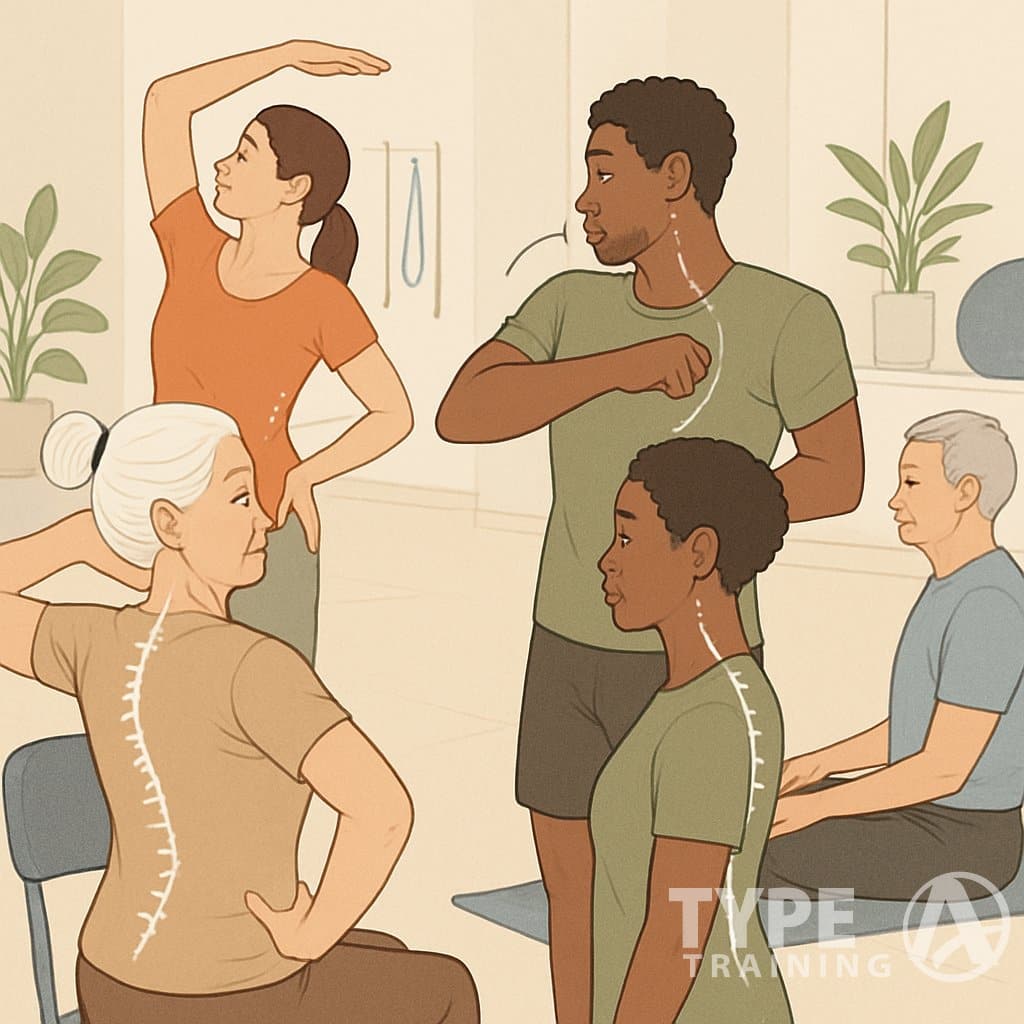
Manhattan professionals and NYC residents have plenty of questions about corrective exercises and posture improvement. Here are some answers to common concerns about what works, how long it takes, and how to get started at home.
Frequently Asked Questions About Posture Correction in NYC
What types of posture correction services are available in NYC?
NYC offers a comprehensive range of posture correction services tailored to different needs and budgets:
- Chiropractic Care: Spinal adjustments and alignment correction (average $75-150/session)
- Physical Therapy: Evidence-based exercise programs and manual therapy ($100-200/session, often insurance-covered)
- Specialized Posture Clinics: Comprehensive assessments using digital posture analysis technology
- Pilates Studios: Core strengthening and body alignment focus (Gramercy Pilates, BodyEvolve)
- Alexander Technique: Movement reeducation for performers and professionals ($100-150/session)
- Rolfing/Structural Integration: Deep tissue work for postural patterns (10-session series, $150-250/session)
- Yoga Therapy: Therapeutic yoga with certified instructors specializing in alignment
Most popular in NYC: Physical therapy for insurance coverage, chiropractic for quick relief, and Pilates for long-term maintenance.
How much do posture correction services cost in NYC in 2026?
- Physical Therapy: $100-200/session (often $20-50 copay with insurance)
- Chiropractic: $75-150/session ($25-40 copay with insurance)
- Posture Assessment: $150-300 (one-time comprehensive evaluation)
- Pilates/Yoga Therapy: $80-150/private session, $25-45/group class
- Complete Treatment Program: $1,200-3,500 (8-12 sessions over 3 months)
Insurance Coverage in NYC:
- Most accepted: Aetna, BlueCross BlueShield, Cigna, United Healthcare, Oxford
- Physical therapy: Typically covered with medical necessity (doctor referral required)
- Chiropractic: Many plans cover 12-20 visits annually
- Out-of-network: Expect to pay full price upfront, then file for partial reimbursement
💡 Money-saving tip: Start with one physical therapy evaluation ($100-150) to get professional assessment, then combine with free home exercises. Many NYC providers offer package deals (10 sessions for price of 8).
HSA/FSA eligible: All physical therapy, chiropractic, and medically-prescribed posture services qualify.
How long does it take to see results from posture correction in NYC?
- 2-3 weeks: Reduced daily pain/stiffness, improved body awareness
- 4-6 weeks: Visible posture improvements, better movement patterns
- 8-12 weeks: Significant structural changes, 60-80% symptom reduction
- 3-6 months: Full correction, new posture feels natural and automatic
Factors affecting timeline:
- Severity: Mild forward head = 4-6 weeks; severe kyphosis = 4-6 months
- Consistency: Daily home exercises speed results by 40-50%
- Age: Younger patients (under 40) typically see faster improvements
- Workplace habits: NYC desk workers need ongoing maintenance (ergonomic setup crucial)
- Treatment frequency: 2x/week = faster results than 1x/week
NYC reality check: Most Manhattan professionals see noticeable improvements in 6-8 weeks with twice-weekly sessions plus daily 10-minute home routines. The key is not skipping appointments despite busy schedules.
🎯 What “results” actually means:
- Standing taller without conscious effort
- Reduced neck/shoulder pain by end of workday
- Better breathing and less fatigue
- Clothes fitting differently (shoulders back)
- Others commenting you look taller/more confident
What are some easy-to-perform posture exercises that can be done at home?
See detailed answer above ⬆️ – Includes wall angels, chin tucks, hip flexor stretches, glute bridges, and cat-cow stretches with full instructions and 15-minute daily routine.
Does insurance cover posture correction services in NYC?
Insurance typically covers posture correction when documented as treatment for pain, dysfunction, or medical conditions (not for cosmetic reasons alone).
What’s typically covered:
| Service Type | Coverage Status | Requirements |
|---|---|---|
| Physical Therapy | ✅ Usually covered | Doctor referral required |
| Chiropractic | ✅ Partially covered | 12-20 visits/year typical limit |
| Initial Assessment | ✅ Usually covered | Billed as diagnostic evaluation |
| Pilates/Yoga Therapy | ❌ Rarely covered | May qualify with PT prescription |
| Ergonomic Consultation | ❌ Not covered | Sometimes covered by employer wellness programs |
| Massage Therapy | ❌ Usually not covered | Exception: medical massage with PT referral |
NYC insurance plans with best posture coverage (2026):
- BlueCross BlueShield: Generous PT coverage (20-30 visits), wide NYC provider network
- Aetna: Strong chiropractic benefits, covers biomechanical assessments
- Cigna: Good PT coverage, requires preauthorization after 10 visits
- United Healthcare: Variable by plan, Oxford plans popular with NYC employers
- Empire: NY-specific plan with extensive Manhattan provider network
📋 How to maximize insurance coverage:
- Get a referral: Visit PCP for “neck pain,” “back pain,” or “postural dysfunction”
- Use diagnostic codes: Providers bill with ICD-10 codes (M54.2 for cervicalgia, M40.00 for kyphosis)
- Verify in-network status: Out-of-network costs 40-60% more in NYC
- Request preauthorization: For 6+ sessions to avoid claim denials
- Document medical necessity: Pain, limited range of motion, work limitations
Questions to ask your NYC provider:
- “Do you accept my insurance plan?”
- “What’s my estimated copay per session?”
- “How many sessions do you recommend?”
- “Will you handle insurance billing or do I pay upfront?”
How do I choose the right posture correction specialist in NYC?
With 1,000+ posture specialists across NYC’s five boroughs, selecting the right provider requires evaluating credentials, experience, and fit with your specific needs.
🎓 Essential credentials to verify:
- ✅ NY State licensed (DPT – Doctor of Physical Therapy)
- ✅ Certified in orthopedics (OCS) or manual therapy
- ✅ Continuing education in postural assessment
- ⭐ Bonus: Fellowship in orthopedic physical therapy (FAAOMPT)
For Chiropractors:
- ✅ NY State licensed (DC – Doctor of Chiropractic)
- ✅ Board certified by NBCE
- ✅ Additional training in postural correction/rehabilitation
- ⭐ Bonus: CCSP (Certified Chiropractic Sports Physician)
For Pilates Instructors:
- ✅ Comprehensive certification (500+ hours): STOTT, Balanced Body, or Polestar
- ✅ Anatomy/kinesiology education
- ⭐ Bonus: PT background or postural assessment training
🔍 Red flags to avoid:
- ❌ Promises “instant” or “permanent” fixes
- ❌ Requires long-term contracts (6+ months upfront payment)
- ❌ Only focuses on adjustments without exercise/education
- ❌ No clear treatment plan or goals
- ❌ Pushes expensive equipment or supplements
- ❌ Negative online reviews mentioning billing issues
- ❌ Refuses to coordinate with your other healthcare providers
✅ Green flags of quality NYC providers:
- ✅ Performs comprehensive initial assessment (60-90 minutes)
- ✅ Creates personalized treatment plan with measurable goals
- ✅ Teaches home exercises and self-care strategies
- ✅ Accepts insurance and transparent about costs
- ✅ Flexible scheduling (early morning/evening for NYC workers)
- ✅ Multiple locations or telehealth options
- ✅ 4.5+ star average on Google Reviews (100+ reviews)
- ✅ Active in professional organizations (APTA, ACA)
📍 Location considerations for NYC:
| Borough/Area | Best For | Typical Pricing |
|---|---|---|
| Midtown Manhattan | Lunch-break appointments, corporate workers | $$$ (Premium) |
| Financial District | Early morning/after work, finance professionals | $$$ (Premium) |
| Upper East/West Side | Residential, weekend availability | $$ (Moderate-High) |
| Brooklyn (Williamsburg/Park Slope) | More affordable, holistic approach | $$ (Moderate) |
| Queens (Astoria/LIC) | Value-conscious, local residents | $ (Budget-Friendly) |
❓ Questions to ask during consultation call:
- “What’s your experience treating [your specific issue – tech neck, scoliosis, etc.]?”
- “What does a typical treatment plan look like? How many sessions?”
- “Do you use technology/tools for posture assessment?” (Digital analysis, video, etc.)
- “Will I get home exercises? How much daily work is expected?”
- “What’s your cancellation policy?” (Important for busy NYC schedules)
- “Can I do some sessions via telehealth?”
- “Do you coordinate with other providers?” (PCP, orthopedist, etc.)
🌟 How to research NYC providers:
- Google Reviews: Look for 4.5+ stars with 50+ reviews; read recent reviews (last 3 months)
- Zocdoc: See real-time availability, verified patient reviews, insurance acceptance
- Yelp: Good for Pilates studios and alternative providers
- Insurance directory: Filter by location, specialty, and patient ratings
- Word of mouth: Ask coworkers—many NYC offices have “go-to” providers
Can posture correction help with tech neck and forward head posture in NYC?
NYC posture specialists report 80-90% success rates treating forward head posture and tech neck, especially when caught early and treated consistently.
What is “tech neck”?
Tech neck (also called “text neck” or forward head posture) occurs when your head sits 2-4 inches forward of your shoulders, creating:
- 🔴 30-40 lbs of extra pressure on cervical spine (vs. 10-12 lbs normal)
- 🔴 Chronic neck pain, headaches, shoulder tension
- 🔴 Reduced breathing capacity by up to 30%
- 🔴 Premature spinal degeneration and disc issues
Why it’s epidemic in NYC:
- 📱 Average Manhattanite spends 5-7 hours daily looking at screens
- 🚇 Subway commutes = head-down phone scrolling (30-60 min/day)
- 💼 Tech/finance jobs = prolonged desk work with poor ergonomics
- 🏙️ Urban lifestyle = constant phone navigation, texting while walking
How NYC specialists treat tech neck:
- Manual therapy to release tight neck/shoulder muscles
- Cervical traction to decompress spine
- Heat therapy and gentle mobilizations
- Education on proper phone/computer positioning
Phase 2: Strengthening (Weeks 3-6)
- Deep neck flexor strengthening exercises
- Scapular stabilization exercises (shoulder blade control)
- Chin tucks, neck retractions (20-30 reps daily)
- Postural endurance training
Phase 3: Habit Change (Weeks 7-12)
- Ergonomic workspace optimization
- Movement breaks every 30 minutes
- Phone usage modification strategies
- Long-term maintenance exercises (5 min/day)
📊 Success rates for tech neck in NYC:
- Mild cases (1-2 inches forward): 90% improvement in 4-6 weeks
- Moderate cases (2-3 inches): 75% improvement in 8-10 weeks
- Severe cases (3+ inches): 60% improvement in 12-16 weeks, may need ongoing maintenance
🏆 Best NYC providers for tech neck:
- Active Care PT (Chelsea): Specializes in “desk worker syndrome”
- Spine & Sports PT (Multiple locations): Digital posture analysis technology
- Movement Principles (Union Square): Tech industry clientele focus
- NYDNRehab (Midtown): Advanced diagnostic equipment
💼 Office ergonomics checklist (prevent recurrence):
- ✅ Monitor at eye level, 20-26 inches from face
- ✅ Laptop on stand + external keyboard (never just laptop)
- ✅ Chair with lumbar support, feet flat on floor
- ✅ Phone at eye level for calls (never cradled on shoulder)
- ✅ Stand up every 30 minutes, walk around office
- ✅ Screen time tracking app (many NYC workers shocked by actual usage)
🎯 Quick daily exercises for tech neck (from NYC PTs):
- Chin tucks: 15 reps every hour at desk
- Wall angels: 10 reps, morning and evening
- Neck stretches: 30 seconds each side, 3x daily
- Shoulder blade squeeze: Hold 5 seconds, 15 reps, twice daily
Most NYC professionals see noticeable tech neck improvement in 3-4 weeks with combination of PT visits and daily exercises.
What causes poor posture in NYC and how can I prevent it?
Poor posture is a modern epidemic in New York City, driven by unique urban lifestyle factors. Understanding root causes helps you prevent problems before they start—much cheaper and easier than treating established patterns.
🏙️ Top NYC-specific posture killers:
- Prolonged sitting weakens core and glutes
- Forward head posture from monitors too low or far away
- Rounded shoulders from keyboard/mouse position
- Hip flexors shorten from constant sitting (leading to anterior pelvic tilt)
- NYC stat: 67% of Manhattan office workers never leave desk for lunch
2. Subway commuting:
- Head-down phone scrolling during 30-90 min daily commutes
- Standing with poor balance/asymmetric weight distribution
- Heavy backpacks/bags on one shoulder
- Slouching or hunching to read/text while seated
3. Urban walking patterns:
- Looking down at phone for GPS navigation
- Fast-paced “NYC hustle” walk creates tension
- Carrying heavy work bags, groceries, etc.
- High heels on concrete (women) or dress
shoes without support
4. Small apartment living:
- Working from couch or bed (no proper desk setup)
- Low-quality furniture (cheap chairs, poor mattresses)
- Limited space for exercise/stretching
- TV watching position = chronic slouching
5. Stress and lifestyle:
- Chronic stress causes protective “hunching” posture
- Long work hours = no time for exercise/self-care
- Poor sleep quality affects postural muscle recovery
- Shallow breathing from stress limits core engagement
🧬 Other contributing factors:
- Weak core muscles: Abs and back can’t support proper alignment
- Tight hip flexors: Pull pelvis forward, creating lower back arch
- Poor body awareness: Don’t realize posture is poor until pain starts
- Previous injuries: Compensate for old ankle, knee, or back injuries
- Genetics: Some people predisposed to scoliosis, hypermobility
- Aging: Loss of muscle mass and bone density after age 30
- Weight: Excess abdominal weight pulls spine forward
✅ NYC-Friendly Prevention Strategies:
- Ergonomic setup: Monitor at eye level, chair with lumbar support, feet flat
- Pomodoro breaks: Stand/walk every 25-30 minutes (set phone timer)
- Walking meetings: Take calls while walking around block
- Desk exercises: Chin tucks, shoulder rolls every hour
- Standing desk: Alternate sitting/standing (start with 20 min standing/hour)
- Proper laptop use: ALWAYS use external monitor or laptop stand
🚇 DURING COMMUTE:
- Phone position: Hold at eye level (yes, you’ll look silly—who cares?)
- Subway standing: Engage core, distribute weight evenly on both feet
- Backpack use: Two-shoulder backpack, not messenger bag on one side
- Subway reading: E-reader at eye level beats looking down at phone
- Commute exercise: Practice chin tucks while standing on train
🏠 AT HOME:
- No couch working: Create proper desk area even in small apartment
- Evening routine: 10-15 min stretching before bed
- Quality mattress: Replace every 7-8 years (worth the investment)
- TV setup: TV at eye level when seated, use back support
- Kitchen counter: Use as standing desk for quick tasks
💪 GENERAL FITNESS:
- Core work: 10 min daily (planks, dead bugs, bird dogs)
- Yoga/Pilates: 2-3x weekly at NYC studios or via ClassPass
- Strength training: Focus on back, glutes, core (not just chest/arms)
- Daily walks: 20-30 min with proper posture awareness
- Flexibility work: Hip flexor stretches, chest openers daily
📱 Technology tools for NYC posture prevention:
- Posture reminder apps: Nekoze, PostureScreen Mobile (vibrates when head tilts)
- Screen time tracking: iPhone Screen Time or RescueTime (awareness is key)
- Standing desk timer: Stand Up! app reminds you to alternate positions
- Ergonomic assessment: Office Ergonomics Pro (photos of setup, get feedback)
- Meditation apps: Calm or Headspace (reduce stress = better posture)
🛍️ Smart purchases for NYC apartments (under $200):
- Laptop stand: $30-50 (Roost, Nexstand) – single best investment
- External keyboard/mouse: $40-80 (if using laptop stand)
- Lumbar support cushion: $20-40 (for office chair or couch)
- Foam roller: $15-30 (release tight muscles at home)
- Resistance bands: $10-25 (for strengthening exercises)
- Door frame pull-up bar: $25-40 (for chin tucks, stretches)
🎯 Prevention habits of posture-healthy NYCers:
| Time | Habit | Takes |
|---|---|---|
| 6:30 AM | Morning cat-cow stretches in bed | 2 minutes |
| 7:15 AM | Subway: phone at eye level for scrolling | 0 extra time |
| 9:00 AM | Set up ergonomic workstation properly | 1 minute |
| Every hour | Stand, walk to water cooler, do chin tucks | 2 minutes |
| 12:30 PM | Walk outside for lunch (not at desk) | 15 minutes</t continue d> |
| 3:00 PM | Wall angels or doorway chest stretch | 3 minutes |
| 6:00 PM | Commute home: audiobook instead of phone scrolling | 0 extra time |
| 7:30 PM | 10-minute posture routine (exercises from PT) | 10 minutes |
| 10:00 PM | Foam rolling tight areas before bed | 5 minutes |
Total daily time investment: ~40 minutes spread throughout day
⚠️ Warning signs you need professional help (not just prevention):
- Daily neck/shoulder pain that worsens throughout workday
- Headaches 3+ times per week
- Numbness or tingling in hands/arms
- Can’t turn head fully left/right without pain
- Visible shoulder height difference or head tilt
- Upper back “hump” forming
- Difficulty breathing deeply
- Waking up with pain/stiffness
🎯 Bottom line: Prevention takes 30-40 minutes daily. Treatment takes 2-3 hours weekly for 8-12 weeks plus $1,500-3,000. Start prevention NOW.
📚 Free NYC resources for posture education:
- NYC Parks fitness classes: Free yoga/Pilates in Central Park, Prospect Park (summer)
- NYPL workshops: Occasional ergonomics/wellness workshops at branch libraries
- Corporate wellness: Many NYC companies offer free PT consultations or ergonomic assessments
- YouTube channels: Bob & Brad (The Famous Physical Therapists), Squat University
- Posture apps: Free versions of PostureMinder, Nekoze
🏆 Success story pattern (typical NYC case):
“Sarah, 34, finance analyst in Midtown. Started with severe tech neck after 10 years at desk job. Combined 8 weeks of PT (2x/week) with daily 15-minute exercise routine, ergonomic desk setup ($200 investment), and phone habit changes. After 3 months: 85% pain reduction, standing 2 inches taller, no more afternoon headaches. Maintenance: 5-minute daily routine + monthly PT check-in. Total investment: $1,800 + 90 hours over 3 months. Her words: ‘Should have done this 5 years ago.'”
🎓 Final prevention principle:
The 3-30-300 Rule for NYC Posture Health:
• Every 3 minutes: Check your posture (shoulders back, chin tucked)
• Every 30 minutes: Stand up, move, stretch for 2 minutes
• Every 300 minutes (5 hours): Do full 10-minute posture routine
This simple framework prevents 90% of posture-related problems in desk workers. Set phone reminders until it becomes habit (typically 3-4 weeks).
When is the best time to start posture correction in NYC?
Every month you delay treatment, poor posture patterns become more ingrained and harder to reverse. Postural dysfunction compounds over time like debt interest.
🎯 Ideal times to start in NYC:
- January/September: Post-holidays and back-to-school = easier to start new routines, better appointment availability
- When you start new job: Set up ergonomics correctly from day one, negotiate standing desk
- Before pain becomes chronic: Occasional stiffness is easier (and cheaper) to fix than daily pain
- After insurance resets: Maximize benefits early in year before deductibles kick in
- Summer (June-August): Many NYC providers offer package deals during slower season
⏰ Don’t wait for these “triggers”:
- ❌ “When the pain gets unbearable” (by then, damage is done)
- ❌ “After my busy season at work” (will there ever be a not-busy season?)
- ❌ “When I have more time” (you won’t—make time now)
- ❌ “When I lose weight first” (posture issues cause weight management problems too)
• Early intervention (first year of symptoms): 6-8 sessions, $600-1,200 total
• Moderate (2-3 years with symptoms): 12-16 sessions, $1,500-2,500 total
• Chronic (4+ years): 20-30 sessions + ongoing maintenance, $3,000-5,000+ total
Plus lost productivity, pain medication costs, reduced quality of life.
📅 NYC scheduling reality:
- Top-rated providers in Manhattan: 2-4 week wait for new patients
- Best appointment times (6am, 7am, 6pm, 7pm):
book 3-4 weeks ahead - Flexibility = faster access (mid-day appointments often same-week)
🎯 Action step:
📞 Quick start checklist:
- Call insurance to verify PT/chiropractic coverage (15 min)
- Book consultation with 2-3 providers (20 min)
- Set up ergonomic workspace today (30 min)
- Start daily 10-minute posture routine (NOW)
- Download posture reminder app (5 min)
💪 Your future self will thank you. Every NYC patient says the same thing: “I wish I’d started sooner.” Don’t be one of them.
Fix Your Posture at Home with NYC’s Top Corrective Exercise Specialists
Personalized In-Home Training • Tech Neck Relief • Pain-Free Movement
Struggling with desk-worker pain, poor posture, or limited mobility? Type A Training brings expert corrective exercise directly to your Manhattan home and nearby Brooklyn & Queens neighborhoods—no gym required.
Custom Assessment
Detailed posture & movement analysis identifying YOUR specific imbalances
We Come to You
Save commute time—train in your apartment, no equipment needed
Expert-Led Training
Certified specialists in corrective exercise & postural rehabilitation
Proven Results
Thousands of NYC professionals now pain-free with better posture
We Specialize In:
🎯 Movement & Postural Assessment
Comprehensive evaluation of your posture, movement patterns, and muscular imbalances with personalized corrective exercise plan.
Also Serving: DUMBO, Williamsburg, Long Island City & Astoria
Evening & Weekend Appointments Available