TL;DR: Running after 40 requires a smarter approach focused on injury prevention, recovery, and training adjustments rather than just piling on miles. This comprehensive guide covers 15 essential strategies—from gait analysis and heart rate training to proper nutrition and recovery protocols—that help masters runners stay strong, fast, and injury-free for years to come.
Running after 40 doesn’t mean you have to slow down or accept nagging injuries as your new normal. Sure, your body changes as you age, but that doesn’t have to be the end of your running story.
With a smart approach to training, recovery, and injury prevention, you can keep running strong and injury-free well into your 40s, 50s, and beyond.
Popular posts:

If you want to stay injury-free after 40, you’ve got to work smarter, not harder. Focus on proper gait mechanics, recovery habits, and training methods that build strength while protecting your joints.
Balancing intensity with rest becomes way more important than it used to be.
This guide shares 15 practical tips, from analyzing your running form to tweaking your nutrition for better recovery. You’ll discover why heart rate training beats chasing pace, why strength training and mobility work matter more than piling on miles, and how to spot pain signals before they turn into something serious.
Key Takeaways:
✅ Follow the 80/20 rule: Keep 80% of your weekly miles at an easy, conversational pace and save only 20% for hard efforts to reduce injury risk and improve performance
✅ Prioritize recovery over volume: After 40, adequate rest days (1-3 per week depending on age), quality sleep (8+ hours), and proper nutrition matter more than adding extra miles
✅ Use heart rate zones instead of pace: Your body’s recovery needs vary daily—heart rate training ensures you’re working at the right intensity regardless of external factors
✅ Invest in strength training: Two 30-minute strength sessions per week protect joints, maintain muscle mass, and prevent the 3-8% muscle loss that occurs each decade after 40
✅ Get a professional gait analysis: Biomechanical issues that didn’t cause problems in your 30s can lead to serious injuries after 40—identify and correct them early
✅ Listen to pain signals immediately: Sharp, localized pain that worsens during runs or causes limping requires immediate attention—don’t wait for minor issues to become major injuries
✅ Adjust your nutrition: Masters runners need 1.2-1.6g protein per kg of body weight daily and should eat within 30 minutes post-run to optimize recovery and maintain muscle mass
Tip #1: Get A Professional Gait Analysis
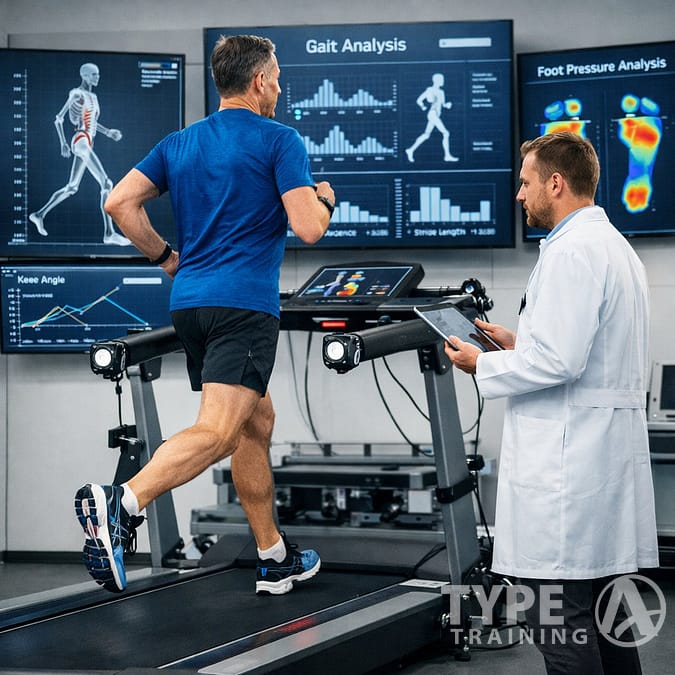
Your running form shifts as you age, and even minor biomechanical issues can lead to big injuries after 40. A gait analysis shows you exactly how your body moves so you can address problems before they set you back.
What Gait Analysis Reveals (And Why It Matters After 40)
Gait analysis checks out your biomechanics, joint angles, posture, and how force moves through your body while you run. It looks at your foot strike, stride length, hip rotation, arm swing, and overall alignment.
After 40, your body doesn’t bounce back from poor mechanics like it used to. Muscle imbalances crop up faster, tendons lose some springiness, and recovery just takes longer.
A trained pro can spot issues you don’t even notice. They’ll catch asymmetries, overstriding, heavy heel strikes, or collapsed arches—stuff that hurts both performance and injury risk.
The analysis also tells you if your
Your 4 Options: From Free To Professional ($0-$300)
Self-Recording ($0): Prop up your phone and record yourself running on a treadmill from the side and back. Watch in slow motion to spot obvious form issues.
Running Store Analysis ($0-$50): Many specialty shops offer free basic gait checks when you’re shoe shopping. They’ll put you on a treadmill and suggest
Physical Therapist Evaluation ($150-$250): A physical therapist gives you a detailed assessment—muscle strength, flexibility, movement patterns. They’ll design corrective exercises tailored to you.
Sport Performance Lab ($200-$300): Labs use tech like force plates and motion capture to measure angles, pressures, and timing. You’ll get a data-rich report and clear recommendations.
Pick what fits your budget and needs. Recurring injuries? Go pro. Just want a quick check? DIY or try a store.
What To Do With Your Results: Corrective Action Plan
Gait analysis only helps if you actually use the info. Start with the biggest issue from your assessment.
Strength Exercises: If weak glutes or hips are a problem, hit targeted strength work three times a week. Single-leg deadlifts, clamshells, and hip bridges are especially helpful for runners over 40.
Form Drills: Practice technique drills—think high knees, butt kicks, A-skips. Spend ten minutes before runs focusing on your weak spots.
Shoe Changes: Switch to
Gradual Implementation: Don’t overhaul everything at once. Your body needs time to adjust to better mechanics. Change one thing every couple of weeks and see how you feel.
Check your form every few months. As you improve, new issues might pop up—nobody’s perfect, right?
Tip #2: Invest In Proper Recovery Shoes

Recovery
Why Recovery Shoes Are Non-Negotiable After 40
Recovery just takes longer after 40. The padding in your feet naturally thins out, and your joints get a bit more sensitive to impact.
Recovery
If you slip on regular flats or go barefoot after a run, your tired muscles and joints have to work harder. That slows down recovery and ups your injury risk.
Recovery is a real part of your running lifestyle—it’s not just downtime. Recovery shoes let your feet rest while you stay active during the day.
Top 5 Recovery Shoes For 40+ Runners (2025 Rankings)
| Rank | Shoe Model | Best For | Key Feature |
|---|---|---|---|
| 1 | OOFOS OOriginal | All-day wear | 37% more impact absorption |
| 2 | Hoka Ora Recovery Slide | Wide feet | Oversized midsole platform |
| 3 | Nike Calm Slide | Quick errands | Lightweight design |
| 4 | Adidas Adilette Comfort | Budget option | Contoured footbed |
| 5 | Crocs LiteRide 360 | Indoor use | Sink-in softness |
OOFOS leads the pack with serious impact reduction. Hoka’s great if you need max cushioning. Nike’s Calm Slide is a lighter, more minimalist pick that still offers solid recovery benefits.
Your choice really depends on your foot shape and how you’ll use them. Slides are quick and easy; full
How And When To Wear Them: Your Daily Protocol
Slip on your recovery shoes within 15 minutes after your run. That’s when your feet are most in need of support.
Wear them for at least a couple of hours after your workout. A lot of runners over 40 keep them on all evening if they run in the morning.
Try this daily schedule:
- Right after your run, before you shower
- After your shower, for 2-3 hours minimum
- On rest days during light activity
- When running errands after a workout
Don’t use recovery
Tip #3: Join An Age-Appropriate Running Club

Running with folks who get what it’s like to start (or restart) after 40 helps you stay safer and more consistent. A good club brings structure, accountability, and expert guidance—all things that make injury prevention a heck of a lot easier.
Why Solo Running Increases Injury Risk After 40
When you run solo, nobody’s there to notice if your form falls apart or if you’re pushing too hard. Your body heals slower after 40, so little mistakes in pacing or technique can snowball into injuries.
It’s easy to skip warmups or rush through stretching when you’re alone. Plus, you might run the same route at the same pace every time—which can put repetitive stress on your joints and muscles.
Without feedback, you probably won’t realize if you’re heel-striking too hard or if your stride’s changed. Bad habits sneak up, and you usually don’t notice until something hurts.
How To Find The Right Club (5 Essential Criteria)
Look for these five things when picking a running club:
- Age range: Find a group with mostly 40+ members so the pace and recovery needs line up with yours.
- Access to a running coach: Clubs with certified coaches offer form feedback and personalized advice.
- Multiple pace groups: You want options that fit your current fitness level—no pressure to keep up with speedsters.
- Rest day emphasis: Good clubs build in easy days and recovery weeks.
- Injury prevention focus: Strength or stretching sessions should be part of the routine.
Check local running stores, community centers, and online groups. Ask about typical group size and if beginners are welcome. Don’t be shy—they’ve all been the new person at some point.
What To Expect: Your First 30 Days
Your first few runs might feel awkward. You’re learning the group’s rhythm and meeting new faces.
Most clubs kick off with quick intros and a rundown of the day’s route and pace. Expect to run slower than you would on your own during that first week.
Group runs focus on conversation pace. You’ll keep your breathing easy and build endurance without pushing too hard.
By week two or three, motivation gets easier. Showing up feels less like a chore because you’ve got people counting on you.
The social connection makes those early mornings a bit brighter. Suddenly, you’re not just running—you’re part of something.
Around day 30, you might notice you’re running more consistently than ever before. The group’s accountability and structure help you stick to a schedule without burning out.
Tip #4: Follow The 80/20 Rule (Easy Runs Vs. Hard Runs)

Honestly, most runners over 40 push too hard on easy days and don’t go hard enough when it counts. The fix? Try running 80% of your weekly miles at a relaxed, low intensity and save the other 20% for harder efforts like tempo runs and intervals.
Why Most 40+ Runners Train Too Hard (The Data)
Research shows runners who stick to the 80/20 principle actually improve their 10k times more than those who split their training 50/50. Your body needs more recovery after 40 because muscles and connective tissues repair slower than they did in your 20s and 30s.
The “moderate pace trap” is real. Runners often go too hard on easy days, too easy on hard days, and end up missing out on the real benefits of both.
Studies on endurance athletes confirm that about 15-20% of your total running should be high-intensity, with the rest at an easy effort. This isn’t just for elites—weekend runners see better results and fewer injuries, too.
How To Calculate Your Easy Pace (3 Simple Methods)
The Talk Test: If you can’t hold a conversation while running, slow down. You should be able to speak in full sentences during easy runs without gasping.
Heart Rate Method: Aim for 60-70% of your max heart rate. Subtract your age from 220, then multiply by 0.6 and 0.7 to get your easy zone.
Pace Calculator: Add 60-90 seconds per mile to your 5k race pace. For example, if you run a 5k at 9:00/mile, your easy pace should be 10:00-10:30/mile. It might feel weirdly slow at first, but that’s the idea.
Sample 80/20 Weekly Training Plan
Here’s what 30 miles a week looks like when you train smarter with the 80/20 approach:
| Day | Workout | Pace | Miles | Intensity |
|---|---|---|---|---|
| Monday | Easy run | Conversational | 5 | Easy (80%) |
| Tuesday | Tempo run | Comfortably hard | 6 (2 at tempo) | Hard (20%) |
| Wednesday | Rest or cross-train | – | 0 | – |
| Thursday | Easy run | Conversational | 6 | Easy (80%) |
| Friday | Easy run | Conversational | 4 | Easy (80%) |
| Saturday | Intervals | 5k pace | 6 (3 at interval) | Hard (20%) |
| Sunday | Long run | Conversational | 9 | Easy (80%) |
Total: 30 miles (24 easy, 6 hard). The hard miles come from tempo and interval work, not your recovery runs. Easy days should actually feel easy—even if your friends want to pick up the pace.
Tip #5: Prioritize Strength Training Over Extra Miles
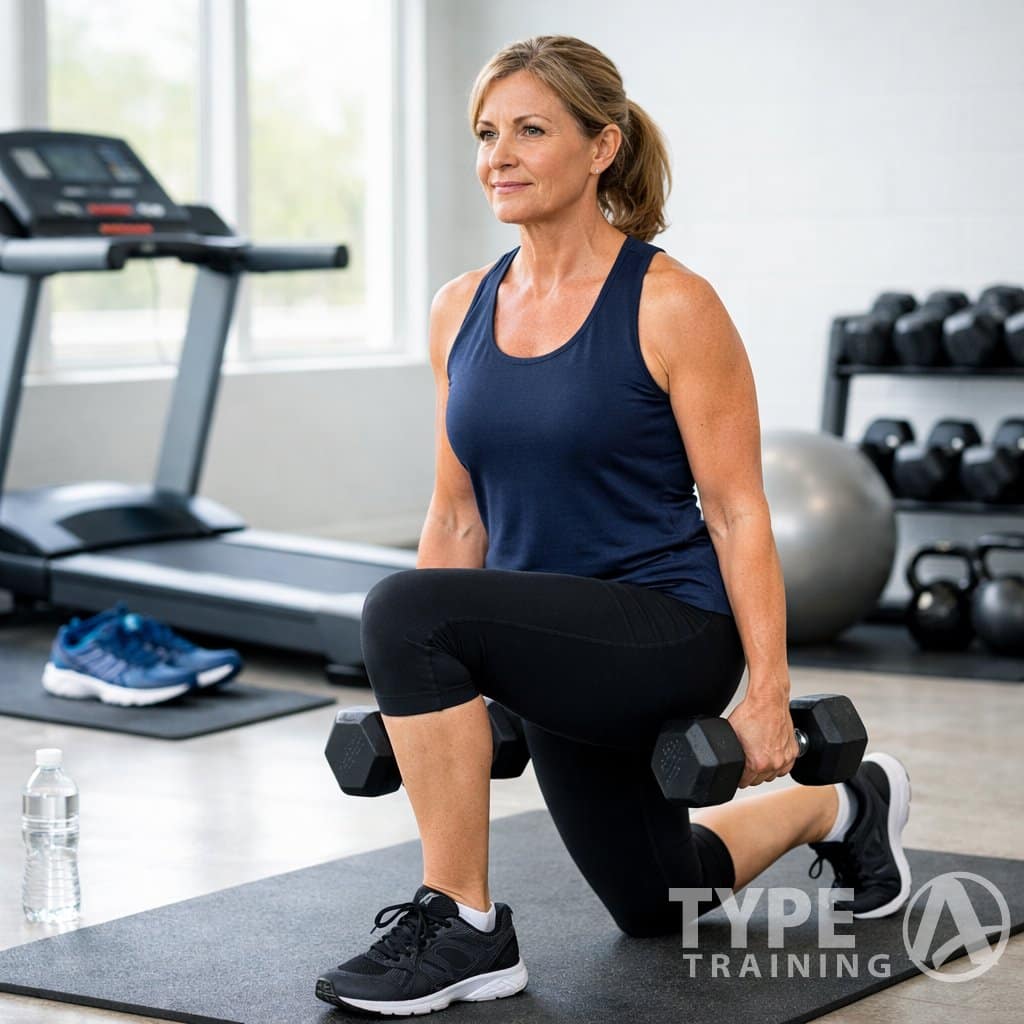
Adding more miles seems logical, but after 40, building strength matters more than piling on distance. Strength work protects your joints, keeps muscle mass, and helps you run faster with less effort.
The Muscle Loss Reality: What Happens After 40
Your body loses about 3-8% of muscle mass per decade after age 30. That loss speeds up after 40, which is honestly a little unfair.
Less muscle means weaker legs, slower recovery, and a higher risk of injury. Your tendons and ligaments lose some flexibility, too, making strains more likely.
Strength training after 40 is really the only proven way to slow this decline. Weight-bearing exercises boost bone density and rebuild muscle. Running alone just can’t maintain strength or protect you from age-related muscle loss.
The Essential 7: Strength Exercises Every Runner Needs
Focus on moves that target the muscles you use most as a runner:
- Squats: Build quad and glute strength for hill climbs
- Lunges: Improve single-leg stability and balance
- Deadlifts: Strengthen your posterior chain and lower back
- Planks: Create core stability for better running form
- Calf Raises: Prevent Achilles injuries and boost push-off power
- Glute Bridges: Activate hip muscles that often weaken with desk jobs
- Side Planks: Strengthen obliques to reduce side-to-side movement
Start with bodyweight. Add dumbbells or bands as you get stronger and more confident.
Your 30-Minute, 2x-Per-Week Routine
Add strength training twice a week. It works without eating into your running schedule. Try to schedule these on easy run days or rest days.
Do 2-3 sets of 8-12 reps for each exercise. Rest 60-90 seconds between sets. For your first session, start with squats, deadlifts, and planks. Next time, do lunges, bridges, calf raises, and side planks.
Always warm up with 5 minutes of light movement before lifting. This cross-training approach builds the kind of strength that extra miles just can’t—and it lowers your injury risk, too.
Tip #6: Master Hill Training For Joint Protection

Hill training builds strength and power while actually reducing the impact forces that can mess up your joints. Running uphill naturally shortens your stride and slows your pace, so your knees, hips, and ankles take less of a beating than with flat-ground speed work.
Why Hills Are Safer Than Speed Work After 40
Your joints take on 2-3 times your body weight with each step during flat running. That jumps to 4-5 times during track intervals and tempo runs. Hills flip the script, in a good way.
When you run uphill, your foot lands at a steeper angle. This tweaks your biomechanics to protect your body. Your stride gets shorter, cadence picks up, and your forward lean reduces the braking forces that usually stress your knees.
Hill training helps you break through fitness plateaus and builds muscle strength all over. Unlike flat speed work that can lead to stress fractures or overuse injuries, hills force you to slow down. You still work hard, but the slower pace means less pounding on your joints.
The 4 Types Of Hill Workouts (When To Use Each)
Hill Repeats mean running hard up a steep grade for 30-90 seconds, then jogging or walking down to recover. Use these once a week during your build phase to develop leg strength and power.
Long Hill Runs take you on rolling terrain for 45-90 minutes at an easy pace. Try these every other week as your long run to build endurance with less joint stress. The changing terrain keeps things interesting.
Tempo Hills mix moderate effort with sustained climbing. Run at a comfortably hard pace up gradual inclines for 20-40 minutes. These improve your lactate threshold and teach your body to handle effort on hills.
Short Sprint Hills use very steep grades for 10-20 second bursts. Do these as a warmup drill or a short strength session twice a month. They build explosive power in your glutes and hamstrings—no flat sprints required.
8-Week Progressive Hill Training Plan
| Week | Workout Type | Details |
|---|---|---|
| 1-2 | Long Hill Runs | 45 min on rolling terrain, easy pace |
| 3-4 | Hill Repeats | 6 x 60 sec uphill, jog down recovery |
| 5-6 | Tempo Hills + Repeats | 25 min tempo hills, then 4 x 45 sec repeats |
| 7-8 | Mixed Protocol | Alternate long hills and 8 x 60 sec repeats weekly |
Start with just one hill session per week. Swap your usual speed workout or tempo run for the hill workout listed for that week. Keep your other runs easy and on flat terrain.
If you feel strong and pain-free in weeks 5-8, add a second weekly hill session. Use Short Sprint Hills as a warmup before an easy run. Never schedule hard hill workouts on back-to-back days.
Your easy runs between hill sessions should stay truly easy. Recovery becomes even more important after 40—your body just needs that extra time to adapt and get stronger.
Tip #7: Use Heart Rate Zones, Not Pace

Once you hit your 40s, your body just doesn’t respond to training the way it used to. Relying only on pace can push you too hard some days and hold you back on others.
Heart rate training gives you a clearer sense of your true effort. It helps you train smarter and recover better.
Why Pace Becomes Unreliable After 40
Your running pace jumps around for all sorts of reasons—heat, humidity, how well you slept, stress—none of which reflect your actual fitness. After 40, your body needs longer to recover, so these factors hit even harder.
Maybe a pace that felt easy last week suddenly spikes your heart rate if you’re tired or a bit dehydrated. If you keep chasing pace targets no matter how you feel, you can end up overtraining when you should be taking it easy.
Heart rate training for runners uses your body’s real-time feedback instead of just numbers on a watch. Your heart rate shows how much stress your system is under, which matters more as you age because recovery gets a little trickier and injuries come easier.
Understanding Your 5 Heart Rate Zones
Heart rate zones are based on percentages of your max heart rate. The quick-and-dirty formula: 220 minus your age. So a 45-year-old would have an estimated max of 175 beats per minute—not perfect, but close enough for most people.
The five heart rate training zones look like this:
| Zone | % of Max HR | Purpose | How It Feels |
|---|---|---|---|
| Zone 1 | 50-60% | Active recovery | Very easy, can talk freely |
| Zone 2 | 60-70% | Base building | Comfortable, conversational |
| Zone 3 | 70-80% | Aerobic endurance | Moderate, short sentences possible |
| Zone 4 | 80-90% | Lactate threshold | Hard, only a few words at a time |
| Zone 5 | 90-100% | Maximum effort | Very hard, can’t talk |
If you’re over 40, you’ll want to spend about 80% of your training time in Zone 2. This zone 2 training builds aerobic capacity with less wear and tear on your joints and muscles.
You’ll see steady gains and lower your risk of injury—honestly, it’s a win-win.
Best Heart Rate Monitors For 40+ Runners (Top 3)
Garmin HRM-Pro Plus gives you the most accurate chest strap reading out there. It tracks heart rate, running dynamics, and syncs easily with Garmin watches. The strap stays put on long runs and gives real-time data you can trust.
Polar H10 delivers chest strap accuracy at a friendlier price. It works with most running apps and watches via Bluetooth, and the battery lasts up to 400 hours. That’s a lot of miles before you even think about changing it.
Apple Watch Series 9 offers wrist-based monitoring with pretty solid accuracy for most training sessions. It’s super convenient—no extra strap needed. The optical sensor works well for Zone 2 runs, though it can lag a bit during intervals.
If you’re serious about training with heart rate zones, chest straps like the Garmin and Polar are more accurate than wrist monitors, especially when you’re pushing the pace. It’s worth the investment for reliable data.
Tip #8: Schedule True Rest Days
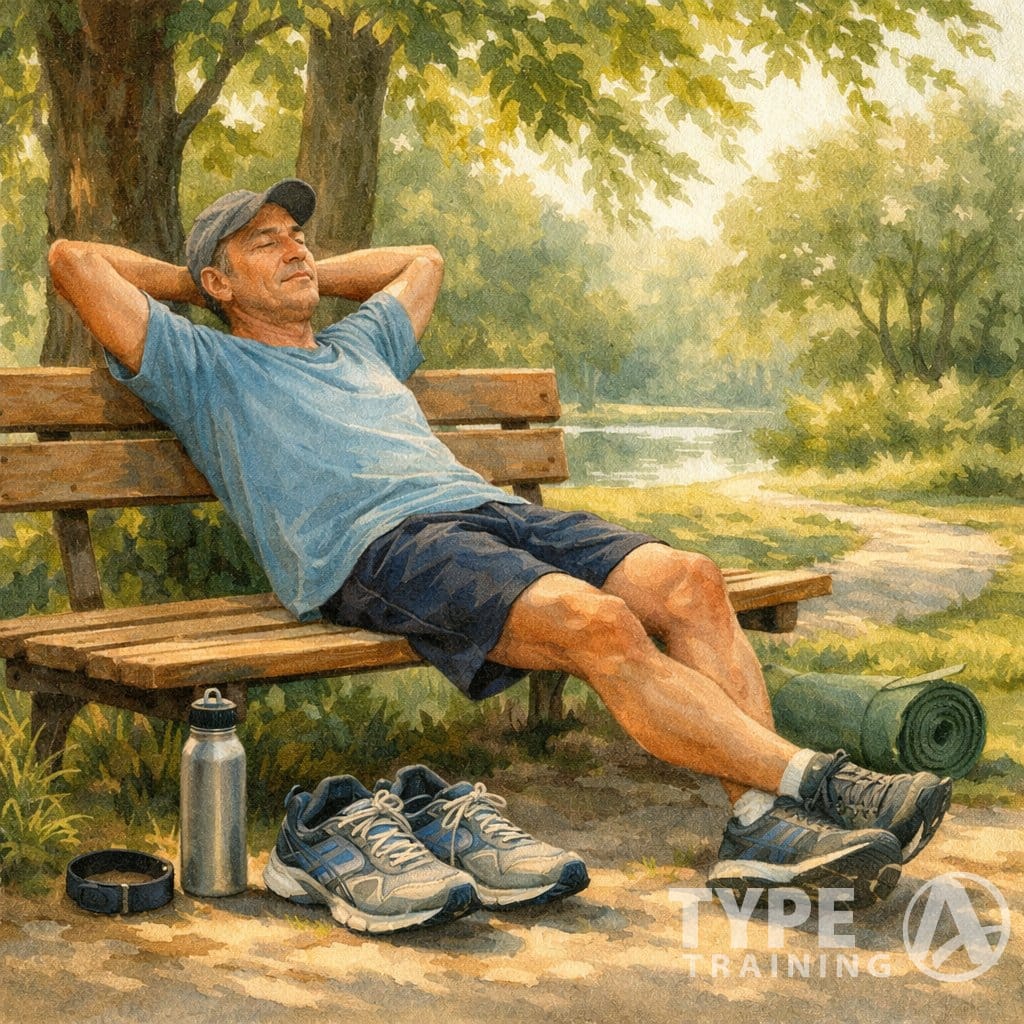
Your body needs full rest to repair muscle damage and build back stronger. After 40, recovery is more important than squeezing in extra miles.
Why “Active Recovery” Isn’t Enough After 40
Active recovery has its place, but it can’t replace a real rest day. Your muscles need time with zero running stress to heal those tiny tears from training.
After 40, your body makes less growth hormone and takes longer to clear inflammation. Walking or easy cycling helps blood flow, but those still use up energy your body could spend on repair. True rest means your systems can focus on rebuilding tissue and topping up glycogen stores.
True rest allows:
- Muscle protein synthesis to happen without interruption
- Your nervous system to recover from training stress
- A mental break from chasing numbers
- Hormone levels to reset
Gentle stretching or foam rolling is totally fine on rest days. They help recovery without adding new stress.
How Many Rest Days You Actually Need (Age-Based Guide)
Your age really does change how many rest days you need each week.
| Age Range | Recommended Rest Days Per Week | Notes |
|---|---|---|
| 40-45 | 1-2 days | One complete rest day minimum |
| 46-52 | 2 days | Two complete rest days recommended |
| 53+ | 2-3 days | Increase based on recovery needs |
These numbers work for most, though everyone’s a little different. If you’re training for a race, you still need at least one full rest day each week.
Listen to your body—persistent fatigue, crankiness, or a higher resting heart rate are all signs you might need more rest. Try spacing rest days throughout the week instead of clumping them together. That way, your body gets regular recovery breaks.
What To Do (And Avoid) On Rest Days
Prioritize recovery—treat rest days as seriously as your hardest workouts.
Do these activities:
- Aim for 8-9 hours of sleep if you can
- Eat protein-rich meals to help muscle repair
- Stay hydrated all day
- Do light stretching or yoga (keep it short—10-15 minutes)
- Use a foam roller on tight spots
- Take a short, easy walk (no more than 20 minutes)
Avoid these mistakes:
- Running “just a few easy miles” (don’t do it!)
- Hard cross-training or strength work
- Long hikes or bike rides
- Trying out new physical activities
- Cutting calories to “make up” for not working out
Your rest day is when your body actually gets stronger. The work you put in during training only pays off if you give yourself time to recover.
Tip #9: Address Mobility Issues Before They Become Injuries
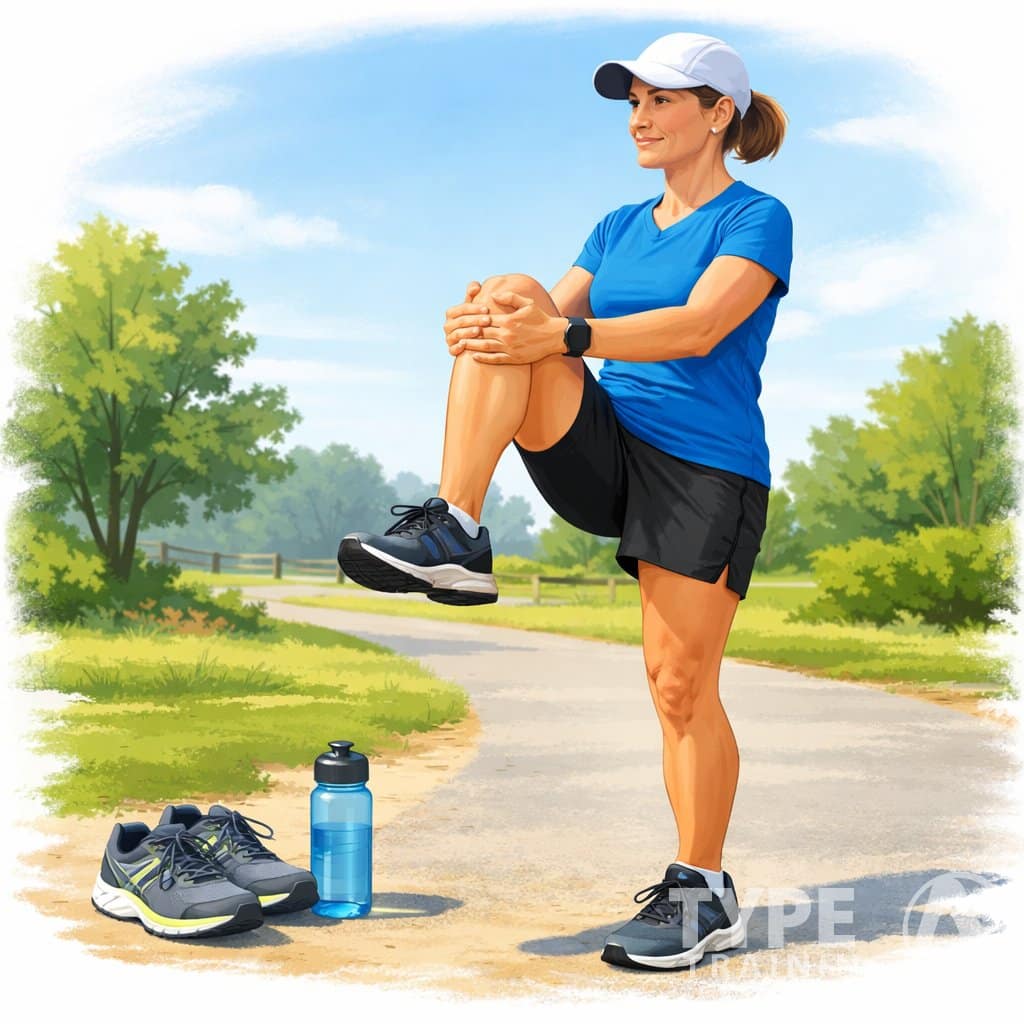
Tight hips, ankles, or spine force your body to compensate in weird ways. That leads to issues like plantar fasciitis, IT band syndrome, and other running injuries you really don’t want.
Test your mobility every week and spend just 10 minutes a day on targeted exercises. It keeps your joints moving well and helps prevent those nagging injuries.
The 5-Minute Mobility Test For Runners
You want to check three big areas to spot problems before they turn into injuries. Start with the hip flexor test: lie on your back at the edge of a bed or bench, pull one knee to your chest, and let the other leg hang down.
If your hanging leg lifts up or you feel tightness in the front of your hip, you probably have limited hip flexor mobility—this can lead to patellofemoral pain syndrome.
Next, try the wall test for ankle mobility. Stand facing a wall, toes about four inches away, and try to touch your knee to the wall without lifting your heel. If you can’t reach, you’ve got restricted ankle mobility, which puts you at risk for Achilles issues and shin splints.
Finally, check hip rotation by sitting in a chair and crossing your ankle over your opposite knee. If your raised knee points up or feels tight, poor hip rotation might be setting you up for IT band syndrome.
It’s smart to do mobility exercises before running to wake up these areas.
Your Daily 10-Minute Mobility Routine
Focus on your hips, ankles, and upper spine. Do these moves every morning or before you head out for a run.
Hip Mobility (4 minutes)
- 90/90 hip stretches: 60 seconds per side
- Hip circles: 10 each way per leg
- Leg swings: 10 forward/back and 10 side-to-side per leg
Ankle Mobility (3 minutes)
- Ankle circles: 10 each direction per foot
- Calf stretch against wall: 45 seconds each leg
- Toe raises and heel drops: 15 reps
Spine Mobility (3 minutes)
- Cat-cow stretch: 10 reps
- Thoracic rotations: 10 each side
- Child’s pose: 60 seconds
Mobility and flexibility work takes strain off your muscles and joints. It can really improve your running form, even if you’re not naturally bendy.
Best Mobility Tools For 40+ Runners (2025)
The right tools can make your mobility work more effective. They help you reach those stubborn tight spots that just won’t loosen up on their own.
You really don’t need a pile of gadgets. These four give runners over 40 the most bang for their buck.
| Tool | Primary Use | Price Range |
|---|---|---|
| Foam roller | IT band, calves, quads | $15-$40 |
| Lacrosse ball | Plantar fascia, glutes | $5-$10 |
| Resistance band | Hip mobility, ankle strengthening | $10-$25 |
| Yoga block | Balance work, assisted stretching | $8-$15 |
Grab a foam roller for your big muscle groups. It’s especially helpful for your outer thighs and hips—spending just 30-60 seconds on each spot can help fend off IT band syndrome.
The lacrosse ball digs into those tiny, stubborn knots that a foam roller just can’t touch. Try rolling it under your foot for a couple minutes a day to keep plantar fasciitis at bay.
You can also press it against a wall to target your glutes and hip muscles. It’s surprisingly effective for such a simple tool.
Resistance bands bring extra challenge and support to your mobility exercises. Loop one around your thighs for hip work or use it to help with hamstring stretches.
With band assistance, prepping your joints and muscles just feels smoother. It’s not fancy, but it works.
Tip #10: Never Skip The Cool-Down Routine

Your body needs a chance to shift from effort back to rest. If you skip this, your heart rate stays up longer and waste products linger in your muscles.
That can leave you dizzy or sore the next day. It’s just not worth the risk.
What Happens When You Skip The Cool-Down
Stop running too suddenly and blood pools in your legs instead of heading back to your heart and brain. No surprise, you might feel woozy or even nauseous.
Your muscles stay tight, too. Lactic acid and other waste products hang around, making soreness and stiffness worse.
Runners who skip cool-downs often experience prolonged muscle tightness that can wreck your next workout.
Your heart rate doesn’t drop as quickly without a cool-down. That just puts extra stress on your heart and slows down recovery.
After 40, your body just takes longer to bounce back. The cool-down helps kickstart your repair and recovery process.
The Perfect 10-Minute Cool-Down Protocol
Start with 3-5 minutes of easy walking or super light jogging. Let your heart rate drift down while you catch your breath.
You want to reach a pace where you could chat with a friend—nothing fancy.
Next, spend 5-7 minutes on static stretches for your main muscle groups:
- Calves: Hold for 30 seconds each leg
- Hamstrings: Hold for 30 seconds each leg
- Quadriceps: Hold for 30 seconds each leg
- Hip flexors: Hold for 30 seconds each side
- Glutes: Hold for 30 seconds each side
Hold each stretch until you feel a gentle pull, not pain. Your muscles are warm, so now’s the best time for static stretching.
Wrap up with some deep breathing. Take slow, deep breaths for a minute or two to help your body fully shift into recovery mode.
Cool-Down Variations By Workout Type
Easy runs don’t need much. Walk for a couple minutes, then hit 3-4 basic stretches for your calves, hamstrings, and quads.
Tempo runs and intervals demand a bit more. Walk or jog slowly for at least 5 minutes, then do the full 10-minute stretch routine.
Long runs call for a longer cool-down. Walk for 5-7 minutes, then spend around 10-15 minutes on stretches.
Throw in some gentle foam rolling if you’ve got especially tight spots.
Hill workouts stress your calves and hip flexors more than you’d expect. Add an extra 30 seconds to each stretch for those, and maybe repeat them just to be safe.
Tip #11: Listen To Pain Signals Immediately
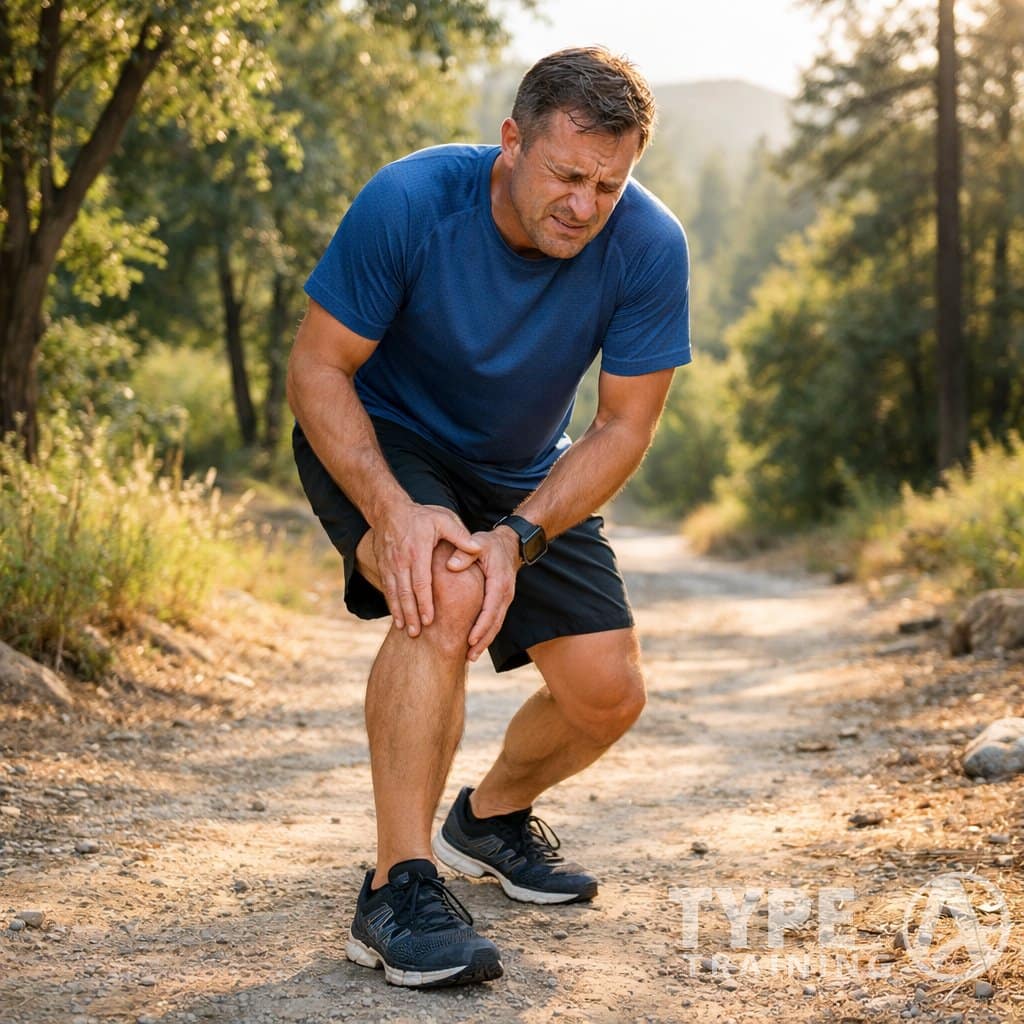
Your body’s pretty good at sending up warning flares when something’s off. If you ignore those signals after 40, small problems can become big injuries in no time.
It’s tricky, but learning the difference between normal soreness and real pain helps you stay strong and keep running.
Good Pain Vs. Bad Pain: How To Tell The Difference
Good pain feels like mild soreness or tiredness that spreads through big muscle groups. You’ll usually notice it during the last bit of your run or the next day.
It’s even on both sides and fades as you move around. That’s all normal stuff.
Bad pain is a different animal. It’s sharp, stabbing, or burning in a specific spot, and it just gets worse the more you run.
Understanding these sensations can help you make better calls about your training.
Watch out if pain pops up suddenly or forces you to change the way you run. If any ache sticks around for more than a few days or messes with your everyday life, don’t just hope it’ll go away.
The 24-Hour Pain Assessment Protocol
If something feels off, stop your run right away and rest for 24 hours. See if the pain fades, stays the same, or gets worse.
If you notice swelling, ice the area for 15 minutes every few hours. After a day, try walking or gentle movement—pain should feel noticeably better.
If it’s not, or if it’s worse, you might need more rest or a checkup. Don’t tough it out just for pride’s sake.
Listening to your body can be as simple as jotting down when pain shows up, what it feels like, and how long it sticks around.
When To Stop Running Immediately (5 Red Flags)
Drop everything and stop running if you notice any of these:
- Sharp or stabbing pain in your joints—knees, hips, or ankles
- Sudden popping or snapping sounds with immediate pain or weakness
- Pain that makes you limp or change your stride
- Chest pain or trouble breathing that’s beyond normal effort
- Numbness or tingling down your legs or into your feet
Running through serious pain just isn’t worth it. After 40, your joints and tissues need more downtime, so respond fast to pain signals to protect your long-term running health.
Tip #12: Prioritize Sleep Over Extra Training
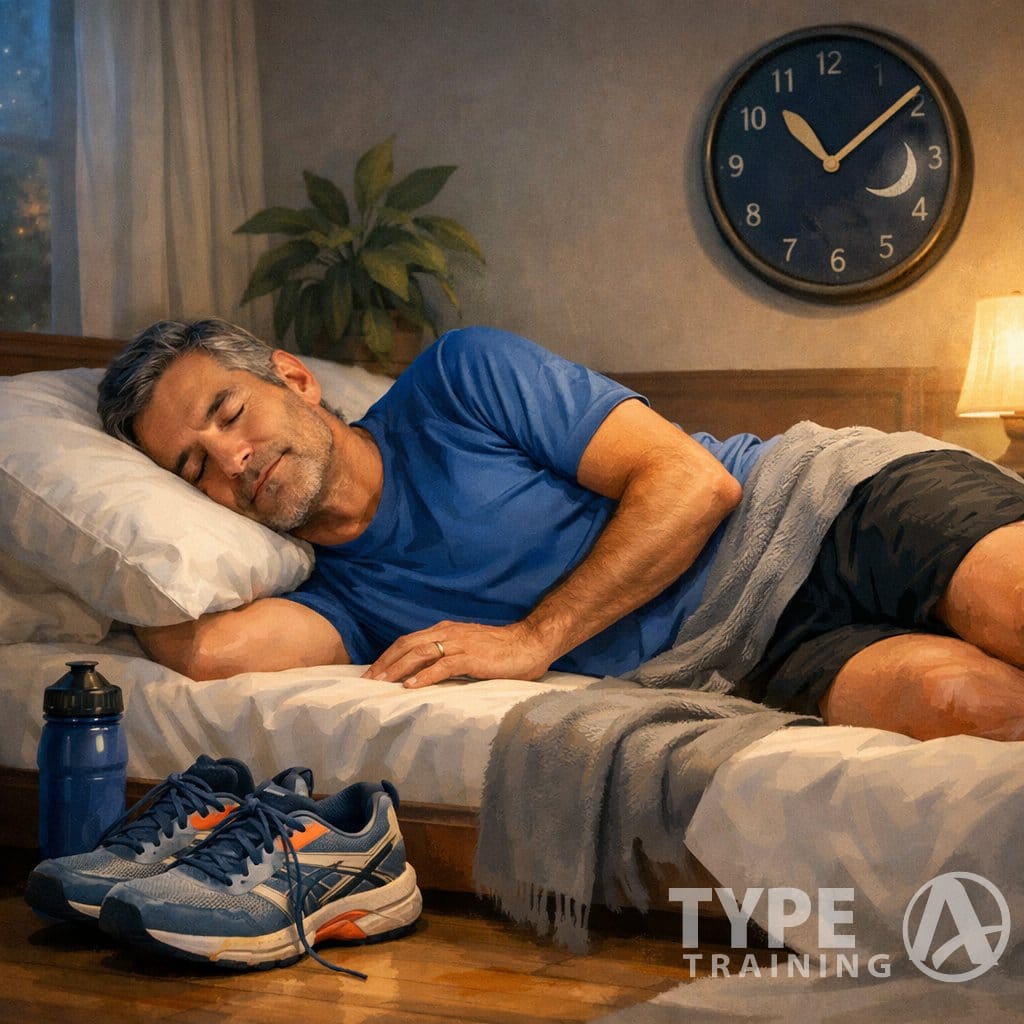
Sleep matters more for recovery as you get older. Skipping rest to squeeze in more miles usually backfires.
While you sleep, your body repairs muscle tissue, balances hormones, and locks in training gains. All of that just takes longer after 40.
Why Sleep Is Your #1 Recovery Tool After 40
Your body releases most of its human growth hormone during deep sleep. That’s what drives muscle repair and tissue regeneration.
After 40, you naturally make less of this hormone, so quality sleep matters even more.
Sleep is essential for recovery, performance, and injury prevention at any age, but especially now. If you’re not getting enough, cortisol sticks around, breaking down muscle and ramping up inflammation.
That can trap you in a cycle of training while only half-recovered. Not ideal, right?
Your immune system also needs sleep to work properly. Runners over 40 who get less than seven hours a night are three times more likely to catch upper respiratory infections than those who sleep eight or more.
The 10-Step Sleep Optimization Protocol
Try these steps to boost your sleep quality and recovery:
- Stick to a consistent bedtime—even on weekends
- Finish tough workouts by 2 PM; hard exercise keeps you wired for hours
- Cut off caffeine by noon; it lingers in your system
- Keep your room cool—aim for 65-68°F
- Use blackout curtains to make the room as dark as possible
- Avoid screens for at least an hour before bed; blue light is a sleep killer
- Take a hot shower 90 minutes before bed; the cooling off tells your body it’s time to sleep
- Eat dinner at least 3 hours before bed; late meals mess with deep sleep
- Try magnesium glycinate (300-400mg) about half an hour before bed to relax
- Practice 4-7-8 breathing: inhale for 4, hold for 7, exhale for 8—helps calm your system
Best Sleep Tracking Devices For Athletes (2025)
Sleep trackers give you insight into your sleep patterns so you can figure out what really helps your recovery. They measure things like sleep stages, heart rate variability, and overnight heart rate to show how well you’re bouncing back.
Top Devices:
| Device | Key Feature | Price Range |
|---|---|---|
| WHOOP 4.0 | Recovery score based on HRV and sleep | $30/month |
| Oura Ring Gen 3 | Lightweight design with accurate sleep staging | $299-$499 |
| Garmin Forerunner 965 | Training readiness score integrated with running metrics | $600 |
| Apple Watch Series 9 | Sleep apnea detection and respiratory tracking | $399-$799 |
The WHOOP 4.0 gives you daily strain and recovery scores to help you decide if you’re ready to push hard or need more rest. Oura Ring tracks changes in body temperature, sometimes catching overtraining or oncoming illness before you feel anything.
You don’t have to buy a high-end device to get better sleep. Even a basic tracker that logs your sleep hours and wake-ups can reveal which habits are helping—or hurting—your rest.
Tip #13: Fuel Properly For Recovery

After 40, your body handles nutrients differently. Strategic eating becomes crucial for muscle repair and restoring your energy.
The right foods at the right times can cut down recovery time and lessen soreness. But what actually changes?
Why Nutrition Needs Change After 40
Your metabolism slows about 5% each decade after 40. That means you burn fewer calories at rest and digest food a bit slower.
Muscle protein synthesis drops off too. Your muscles just don’t rebuild as quickly after runs, so you’ll need more protein than you did in your 20s or 30s to keep muscle mass steady.
Research suggests runners over 40 should aim for 1.2 to 1.6 grams of protein per kilogram of body weight each day. Your body also stores glycogen less efficiently, so fueling right is even more important for recovery and your next workout. Read more here if you’re curious.
Inflammation tends to creep up with age. Adding anti-inflammatory foods—think berries, fatty fish, leafy greens—can help you recover faster between runs.
The 30-Minute Post-Run Nutrition Window (What To Eat)
Try to eat within 30 minutes after you finish your run. Your muscles soak up nutrients best during this window, which speeds up repair and refills your energy stores.
Go for a 3:1 or 4:1 ratio of carbs to protein in your post-run meal. Carbs refill your glycogen, while protein helps rebuild muscle.
Best post-run options include:
- Greek yogurt with berries and granola
- Chocolate milk (classic for carbs and protein)
- Banana with almond butter
- Turkey sandwich on whole grain bread
- Protein smoothie with fruit
Shoot for 20 to 30 grams of protein and 60 to 90 grams of carbs, depending on how far you ran. Oh, and don’t skip fluids—drink 16 to 24 ounces of water for every pound you lost on the run.
If you sweated a ton or ran more than an hour, add some electrolytes too.
Sample Pre-Run And Post-Run Meals
Your pre-run meal should give you energy but not upset your stomach. Eating 2 to 3 hours before you head out works best for most people.
Pre-run meal ideas:
| Meal | Timing | Key Benefits |
|---|---|---|
| Oatmeal with banana and honey | 2-3 hours before | Steady energy release |
| Toast with peanut butter | 1-2 hours before | Quick carbs, some protein |
| Energy bar and water | 30-60 minutes before | Easy to digest |
| Rice with chicken | 3 hours before | For longer runs |
Post-run recovery meals:
| Meal | Protein (g) | Carbs (g) | Best For |
|---|---|---|---|
| Salmon with sweet potato and broccoli | 30 | 45 | Long runs |
| Eggs on whole wheat toast with fruit | 18 | 50 | Easy runs |
| Quinoa bowl with beans and vegetables | 15 | 60 | Vegetarian option |
| Cottage cheese with berries and granola | 25 | 55 | Quick option |
Keep some easy snacks around for days when you just aren’t hungry after a run. Your body still needs fuel, even if your appetite is lagging behind.
Tip #14: Use Compression And Massage Tools
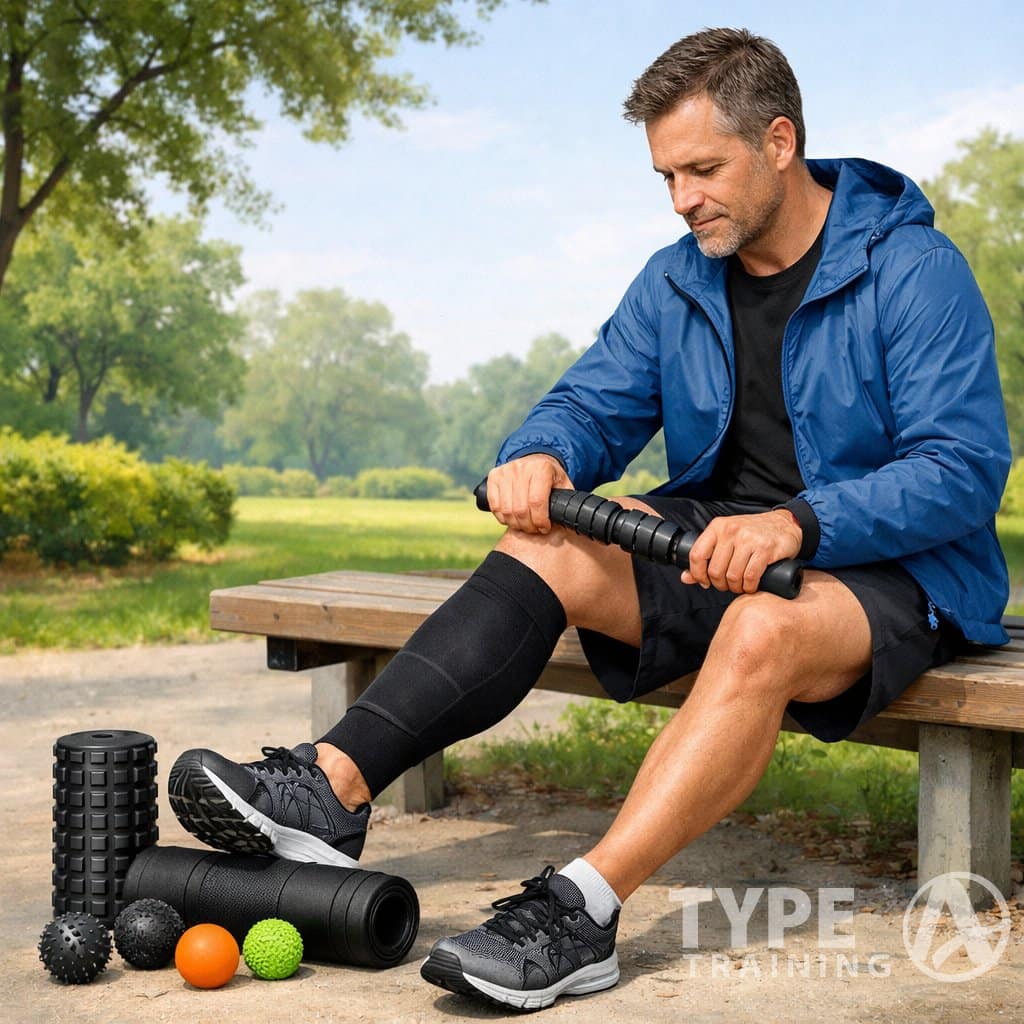
As you get older, recovery tools really start to matter. Your body needs extra help clearing out metabolic waste and calming inflammation.
Compression gear and massage tools can speed up recovery and help you avoid the kind of stiffness that leads to injuries.
Why Compression Works Better After 40
Your circulatory system slows down with age, so blood flow to your muscles isn’t as efficient. Compression therapy helps improve blood flow and cuts down on swelling, which is a big deal for runners over 40.
When you wear compression gear after a run, it gently squeezes your legs. That pressure pushes blood back toward your heart and helps flush out lactic acid from your muscles.
Less soreness and faster recovery between workouts? Yes, please. Compression boots take things further by massaging your legs from feet upward with sequential compression.
Lots of runners use them for 20-30 minutes after tough runs or workouts.
Best Compression Products For Runners (2025 Rankings)
You’ve got a bunch of compression options, each targeting different needs. Compression socks are great for daily wear and work during or after runs.
Top compression products by use case:
- Compression socks: Best for runs under 10 miles and daily recovery
- Compression tights: Ideal for long runs and race day
- Compression boots: Most effective for post-workout recovery sessions
- Compression sleeves: Perfect for calf-specific support
Pick compression levels between 15-20 mmHg for general recovery, or 20-30 mmHg if you have circulation issues. Wearing compression gear for an hour or two after running usually gives the best results.
Your 15-Minute Self-Massage Protocol
Massage guns work best when you use them right. Before running, spend about 30 seconds on each big muscle group at a low or moderate speed.
Focus on your quads, hamstrings, calves, and glutes to get them ready. After your run, bump it up to a minute per muscle group and start with the largest muscles first.
Move the massage gun slowly instead of parking it in one spot. Here’s a quick post-run sequence:
- Glutes (1 minute each side)
- Hamstrings (1 minute each leg)
- Quads (1 minute each leg)
- Calves (1 minute each leg)
- IT bands (30 seconds each side)
Foam rolling is a budget-friendly alternative. Roll each muscle group for 30-60 seconds and pause on any tight spots.
Self-massage after running helps you bounce back and avoid injury—definitely worth adding to your routine.
Tip #15: Adjust Nutrition For Masters Metabolism

After 40, your body processes food differently. You’ll probably need to tweak both what you eat and when you eat it.
Masters runners need more protein and smarter carb timing to keep muscle mass and recover well.
How Metabolism Changes After 40 (The Numbers)
Your resting metabolic rate drops by about 2-3% each decade after 40. That’s roughly 150-200 fewer calories burned per day compared to your 30s, even if you don’t change your activity level.
Muscle loss speeds up without good nutrition and strength training. You can lose 3-8% of muscle mass per decade after age 30, and it gets faster after 40.
Less muscle means a slower metabolism and a higher risk of injury. Your body also doesn’t use protein as efficiently to build and repair muscle—a thing called anabolic resistance.
You’ll need more protein per meal to get the same muscle-building effect you had when you were younger. Aging affects fueling needs for everyone, though the details can vary person to person.
Your Macro Breakdown: Protein, Carbs, And Fats
Protein really steps up as your most important nutrient if you’re a masters runner. Shoot for 0.7-1.0 grams per pound of body weight every day.
So, if you’re around 150 pounds, that means 105-150 grams of protein daily. Don’t try to cram it all into one meal—your muscles only handle about 25-40 grams per meal anyway.
Spread your protein across your meals. Protein is crucial for masters athletes because it helps you hang onto muscle and keeps injury risk down.
Carbohydrates should flex with your training. Easy run day? Go for 2-3 grams per pound of body weight.
If you’ve got a hard workout or a long run, bump that up to 3-4 grams per pound. It’s about matching fuel to effort, not just eating more for the sake of it.
Fats should land somewhere between 20-30% of your total calories. Look for omega-3 rich foods like salmon, walnuts, and flaxseed—they help with inflammation, which, let’s be honest, is a bigger deal as the years go by.
Diet quality matters more after 40 because recovery just doesn’t snap back like it did in your 20s or 30s. That’s not a reason to panic, but it’s worth paying attention.
Sample Daily Meal Plan For 40+ Runners
This plan is designed for a 150-pound runner on a moderate training day. It adds up to about 2,400 calories, which should hit the sweet spot for most folks in this range.
Breakfast (7:00 AM)
- 3 eggs scrambled with spinach
- 1 cup oatmeal topped with berries
- 1 tablespoon almond butter
- Totals: 35g protein, 55g carbs, 20g fat
Mid-Morning Snack (10:00 AM)
- Plain, full-fat Greek yogurt
- 1 banana
- A small handful of almonds
- Totals: 20g protein, 35g carbs, 12g fat
Lunch (12:30 PM)
- 6 oz grilled chicken breast
- 1.5 cups brown rice
- Mixed vegetables sautéed in olive oil
- Totals: 45g protein, 60g carbs, 15g fat
Pre-Run Snack (3:30 PM)
- Rice cake drizzled with honey
- Small apple
- Totals: 2g protein, 40g carbs, 0g fat
Post-Run Recovery (5:30 PM)
- Protein shake blended with banana
- Totals: 25g protein, 30g carbs, 3g fat
Dinner (7:00 PM)
- 6 oz salmon
- Sweet potato
- Roasted Brussels sprouts tossed with olive oil
- Side salad (honestly, add whatever greens you like)
- Totals: 40g protein, 45g carbs, 18g fat
Evening Snack (9:00 PM)
- Cottage cheese
- Berries
- Totals: 15g protein, 15g carbs, 5g fat
Daily Totals: 182g protein, 280g carbs, 73g fat (2,408 calories)
Feel free to tweak the portion sizes based on your own weight and how much you’re training. If you’ve got a tough workout, don’t be shy about bumping up those carbs. On rest days, you might want to dial it back just a bit. Listen to your body—it usually knows what’s up.
Frequently Asked Questions About Running After 40
Can you start running at 40 with no experience?
Yes, you can absolutely start running at 40 even if you’ve never run before. The key is to begin with a walk-run program that gradually builds your fitness over 8-12 weeks. Start with 20-30 minute sessions alternating 1 minute of jogging with 2-3 minutes of walking.
Get a professional gait analysis and invest in proper running
How many days a week should a 40 year old run?
Most 40-year-old runners should aim for 3-5 running days per week, depending on experience level and fitness goals. Beginners do best with 3 days, intermediate runners can handle 4 days, and experienced runners may run 5 days with proper recovery protocols.
Always include at least 1-2 complete rest days per week where you do no running at all. Your body needs more recovery time after 40, so spacing out your runs with rest days prevents overuse injuries. If you’re training for a marathon, you might run 4-5 days but should still prioritize recovery over volume.
What is the 80/20 rule for running after 40?
The 80/20 rule means running 80% of your weekly mileage at an easy, conversational pace and only 20% at moderate to high intensity. For a 30-mile week, that’s 24 easy miles and 6 hard miles from tempo runs or intervals.
This approach is especially important after 40 because your body needs more time to recover from hard efforts. Easy runs should feel comfortable enough to hold a full conversation. Research shows runners over 40 who follow the 80/20 rule improve faster and get injured less than those who run too hard on easy days.
Should I use heart rate training or pace targets after 40?
Heart rate training is far more effective than pace targets for runners over 40. Your daily pace varies based on sleep quality, stress, weather, and recovery status, but your heart rate reflects your actual effort level regardless of these factors.
Train in Zone 2 (60-70% of max heart rate) for easy runs, Zone 4 (80-90%) for tempo work, and Zone 5 (90-100%) for intervals. A chest strap heart rate monitor like the Garmin HRM-Pro Plus or Polar H10 provides the most accurate readings. This approach prevents overtraining on easy days and ensures you work hard enough on interval days.
How much protein do I need as a runner over 40?
Runners over 40 need 1.2 to 1.6 grams of protein per kilogram of body weight daily (0.55-0.73 grams per pound). For a 150-pound runner, that’s 82-110 grams of protein spread across the day in 4-5 meals.
Your body becomes less efficient at using protein to build muscle after 40, a condition called anabolic resistance. Eat 25-40 grams of protein within 30 minutes after running to maximize recovery. Good post-run options include Greek yogurt with granola, chocolate milk, a turkey sandwich, or a protein smoothie with fruit.
What are the most common running injuries after 40?
The five most common running injuries for runners over 40 are plantar fasciitis, IT band syndrome, runner’s knee (patellofemoral pain), Achilles tendinitis, and hamstring strains. These injuries typically result from reduced flexibility, muscle imbalances, and slower recovery times.
Prevent these injuries by getting a gait analysis, doing daily mobility work, following the 80/20 training rule, and adding two strength training sessions per week. Stop running immediately if you experience sharp pain, sudden popping sounds, pain that causes limping, or discomfort that doesn’t improve with 24 hours of rest.
Do recovery shoes really help runners over 40?
Yes, recovery
Put on recovery