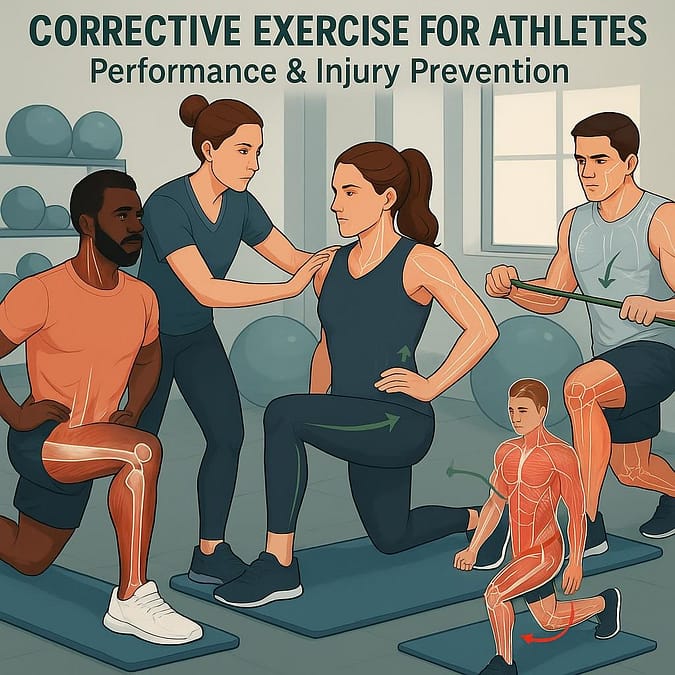
Corrective Exercise for Athletes: Performance & Injury Prevention
Athletes in Manhattan deal with some pretty unique challenges that can mess with their performance and bump up their risk of injury. Long hours hunched over Midtown desks, dodging crowds on subway platforms—NYC life just piles on the muscle imbalances and funky movement habits that most training plans totally ignore.
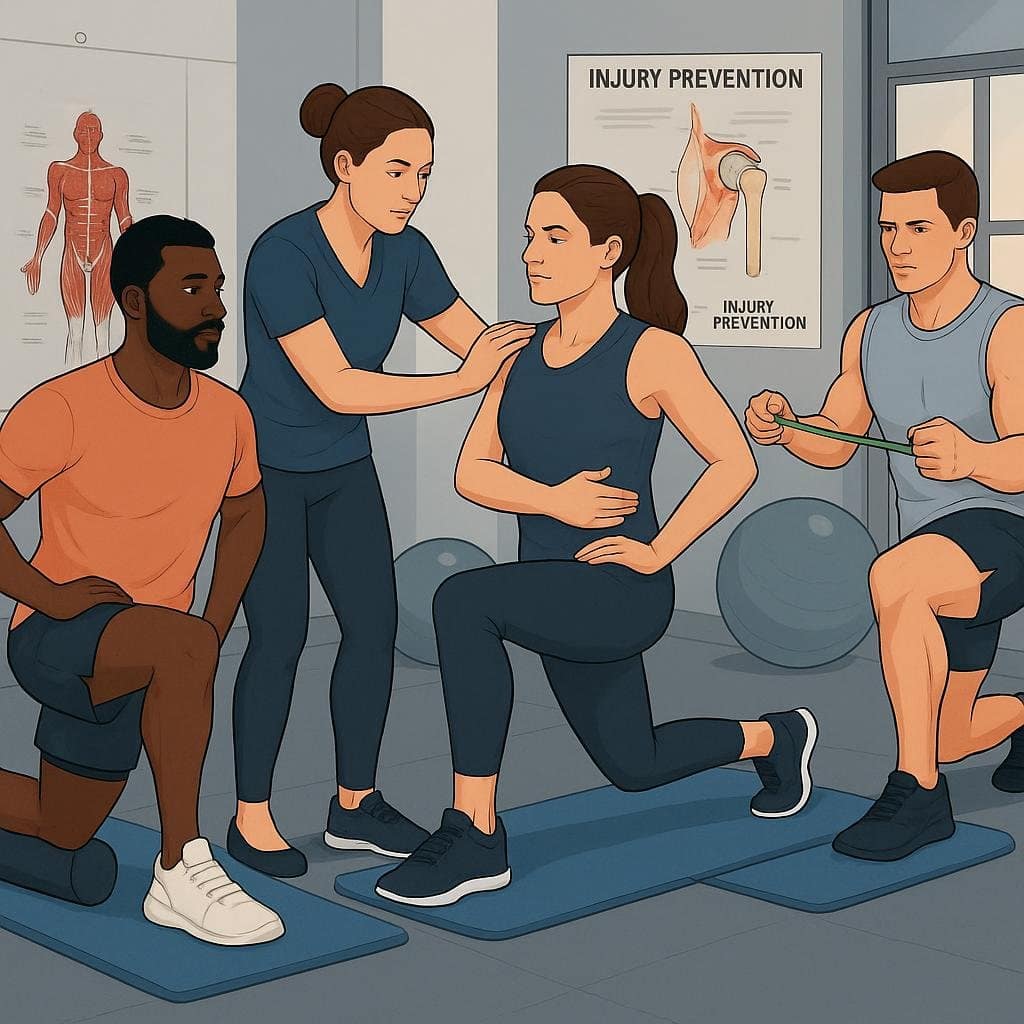
Corrective exercise goes straight to the source, hunting down and fixing the movement patterns, muscle weaknesses, and structural quirks that hold athletes back and set them up for injuries. Unlike conventional training routines that treat symptoms, this approach identifies and resolves root causes—restoring proper movement mechanics before dysfunction becomes injury.
Maybe you’re a weekend warrior tearing up Central Park, or maybe you’re training hard for your next competition. Either way, knowing how to use corrective strategies can seriously change your game.
Key Takeaways
- Corrective exercise tackles muscle imbalances and movement issues that tank performance and cause injuries.
- Good assessments pinpoint your weak spots so you can actually fix them.
- Mobility work and stability training are clutch for dodging common injuries and boosting your game.
The Role of Corrective Exercise in Athletic Performance
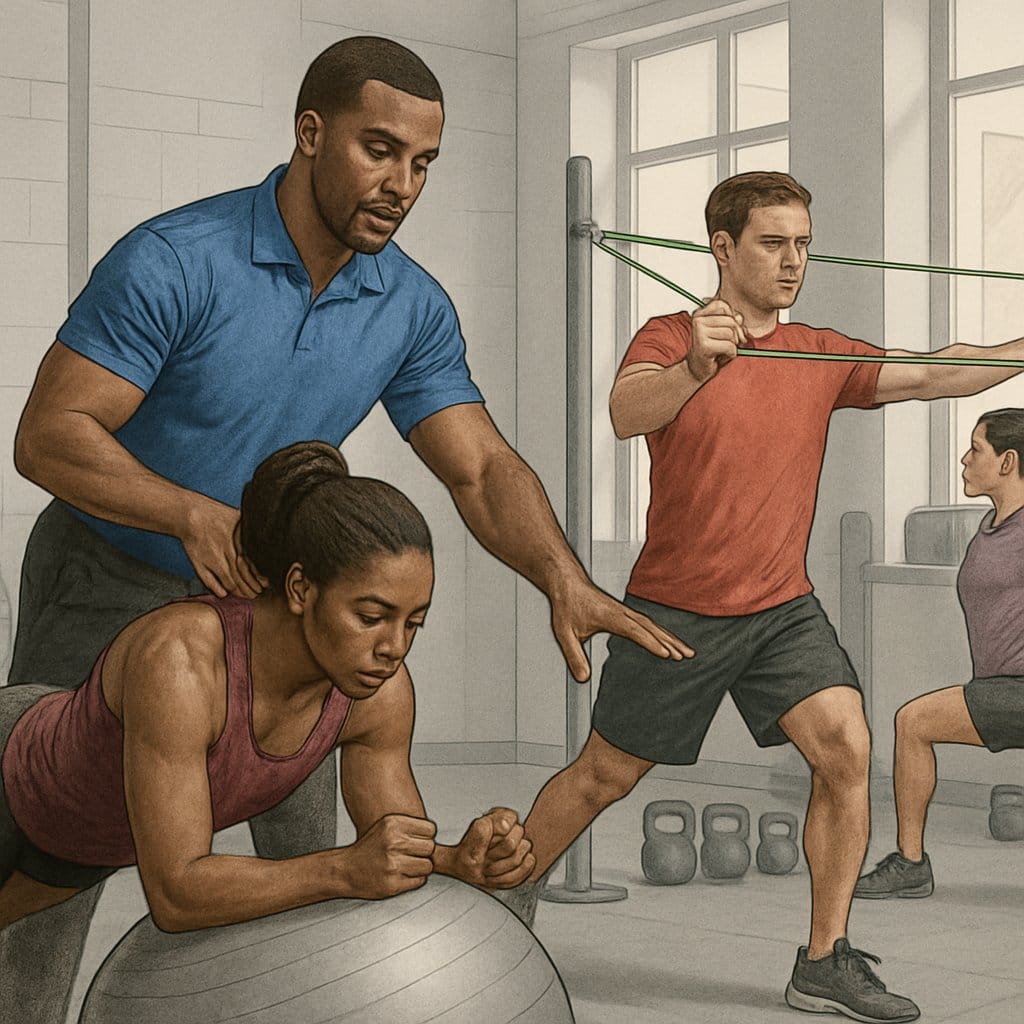
Corrective exercise lays the groundwork for top-tier movement by smoothing out muscle imbalances and fixing how you move. These exercises teach your muscles to fire in the right sequence and loosen up stiff joints, which makes it way easier to move with power and efficiency.
Defining Corrective Exercise for Athletes
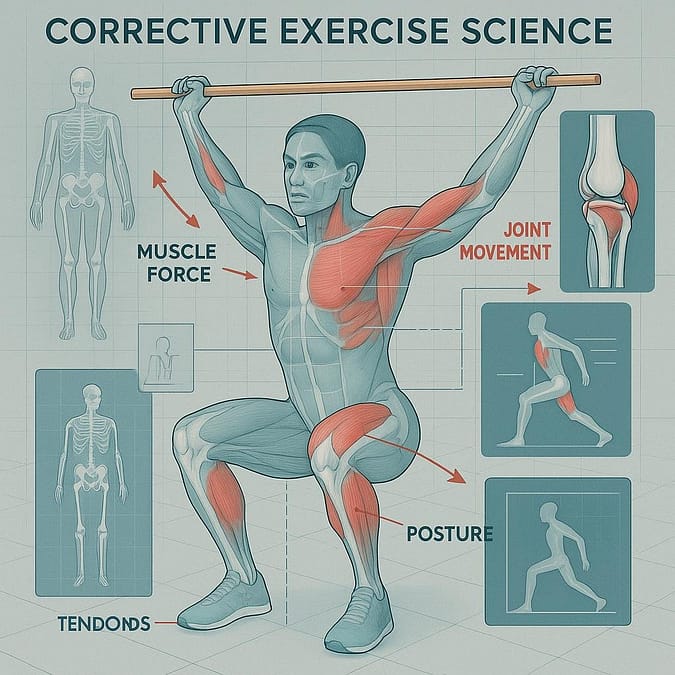
Corrective exercise is basically a system that uses movement assessments and targeted drills to fix the way your body moves. The National Academy of Sports Medicine points out these are all about cleaning up movement quality for better function.
In Manhattan’s high-stakes environment, corrective exercises go after the weak links that pop up from your sport or your daily grind. A Chelsea basketball player might have tight hip flexors from all that jumping, while a Central Park runner could be stuck with stiff ankles.
These exercises aren’t just about piling on muscle. They retrain your nervous system, getting your body to move the right way, so you’re not wasting energy or risking injury.
Key Components of Athletic Corrective Exercise:
- Movement pattern assessment
- Muscle activation drills
- Joint mobility work
- Postural correction techniques
Linking Corrective Exercise and Athletic Performance
Corrective exercises give you a solid foundation so you can train harder and compete better. When your body moves well, you can tap into more power without burning out.
If your shoulder blade isn’t gliding right during a tennis serve, you’ll lose power and probably get hurt. Corrective exercises clean up these issues before they turn into real problems.
Urban life in Manhattan brings its own set of challenges. Desk jobs and long commutes create postural messes that drag down your performance. A trainer in the Upper East Side might be working with a client who spends the week at a Financial District office and shows up with forward head posture.
Research keeps showing that corrective exercises help muscles fire at the right time, with the right oomph. That’s pretty much the secret sauce for peak performance.
Movement Patterns and the Kinetic Chain
Your body works as one big kinetic chain—move one joint, and the others feel it. The chain includes your feet, ankles, knees, hips, spine, shoulders, and arms, all working together.
If one link is off, the rest have to pick up the slack. That leads to weird compensations, which kill your efficiency and up your injury risk. A SoHo athlete with stiff ankles might start getting knee pain because their body’s trying to work around the problem.
Common Kinetic Chain Dysfunctions in Athletes:
- Ankle stiffness messing with knee tracking
- Hip weakness making your back do extra work
- Shoulder blade issues limiting arm movement
- Core instability messing with power transfer
Movement patterns are the building blocks of everything athletic. Whether you’re sprinting in Tribeca or hitting the weights in Midtown, your body’s using basic patterns like squats, lunges, pushes, and pulls.
Corrective exercises help you get back to moving well by fixing restrictions and imbalances up and down the chain. Better movement equals better performance—simple as that.
Identifying and Addressing Muscle Imbalances and Movement Dysfunctions
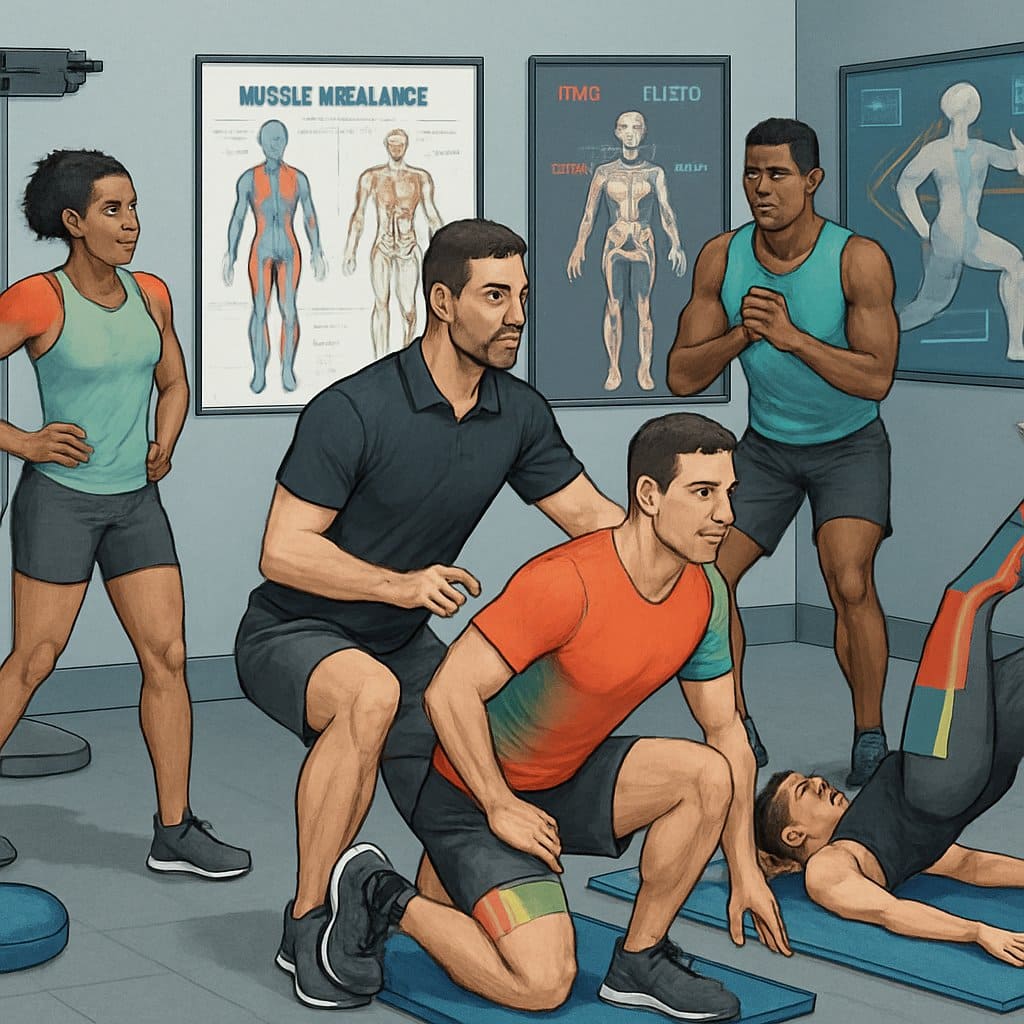
Muscle imbalances pop up when opposing muscle groups don’t match up in strength or flexibility. Movement dysfunctions show up as weird compensation patterns that mess with your athletic performance.
These problems are everywhere, especially for Manhattan pros who sit all day and then go hard on the weekends.
When movement mechanics improve through corrective training, athletes access greater power output while reducing energy waste and injury risk.
Understanding Muscle Imbalances
Muscle imbalances happen when one muscle group gets stronger or tighter than its opposite. That throws off your movement, hurts your performance, and makes injuries more likely.
Repetitive moves, bad posture, and too much sitting are the usual suspects. If you’re working in Midtown and glued to a screen all day, odds are your hip flexors are tight and your glutes are asleep.
Primary types of muscle imbalances:
- Length-tension imbalances: Muscles are either too short or too long
- Force-couple imbalances: Muscles aren’t working together right
- Reciprocal inhibition: Tight muscles shut down their opposites
Upper East Side runners often end up with tight calves and weak tibialis anterior muscles. Hello, shin splints and slower runs.
Recognizing Movement Dysfunctions in Athletes
Movement dysfunctions show up as compensation patterns in basic movements. Your body’s just trying to get the job done with whatever it’s got, but that can lead you down a bad path.
Common movement dysfunction signs:
- Knees caving in during squats
- Leaning way forward on overhead moves
- Left and right sides moving differently
- Stiff joints limiting your range
Chelsea gym regulars often have shoulder problems thanks to desk posture and too much upper body training. Maybe one shoulder hikes up during presses, or your arms drop forward on squats.
Movement dysfunctions usually come from messed up force couples and length-tension relationships. If your muscles can’t pull their weight, your body finds a workaround—and that’s rarely a good thing.
Assessment of Alignment, Mobility, and Stability
A solid assessment looks at three things: static alignment, joint mobility, and dynamic stability. A good corrective exercise specialist in Manhattan will check all of these.
Static alignment assessment checks your posture while standing or sitting. Off-kilter alignment usually points to deeper muscle imbalances.
Mobility testing checks how far your joints can actually move. Limited ankle mobility—super common for Financial District folks—often leads to knee and hip problems.
Stability assessment looks at how well you can control movement and keep joints in the right spot. Weak core? Your other muscles have to pick up the slack.
| Assessment Type | What It Reveals | Common Issues |
|---|---|---|
| Static Alignment | Postural deviations | Forward head, rounded shoulders |
| Mobility | Joint restrictions | Limited hip flexion, tight thoracic spine |
| Stability | Control deficits | Poor single-leg balance, core weakness |
Common Muscular Imbalances in Sports
Sports-specific habits create their own set of predictable muscle imbalances. Knowing the patterns helps you get ahead of injuries.
Upper crossed syndrome is everywhere among SoHo office workers who also play sports. Tight chests and weak upper backs mean rounded shoulders and neck pain.
Lower crossed syndrome? That’s for Tribeca pros who sit all day. Tight hip flexors and sleepy glutes tilt your pelvis forward and crank up back pain.
Pronation distortion syndrome is big among West Village runners. Tight calves and weak posterior tibialis muscles make your feet roll in, which can lead to plantar fasciitis.
These imbalances can seriously mess with your performance and up your injury odds. Targeted corrective exercises can bring things back in balance and clean up your movement.
Basketball players often end up with strong quads but weak hamstrings. Tennis players? They usually have dominant-side shoulder issues from all those serves and swings.
Designing Effective Corrective Exercise Programs
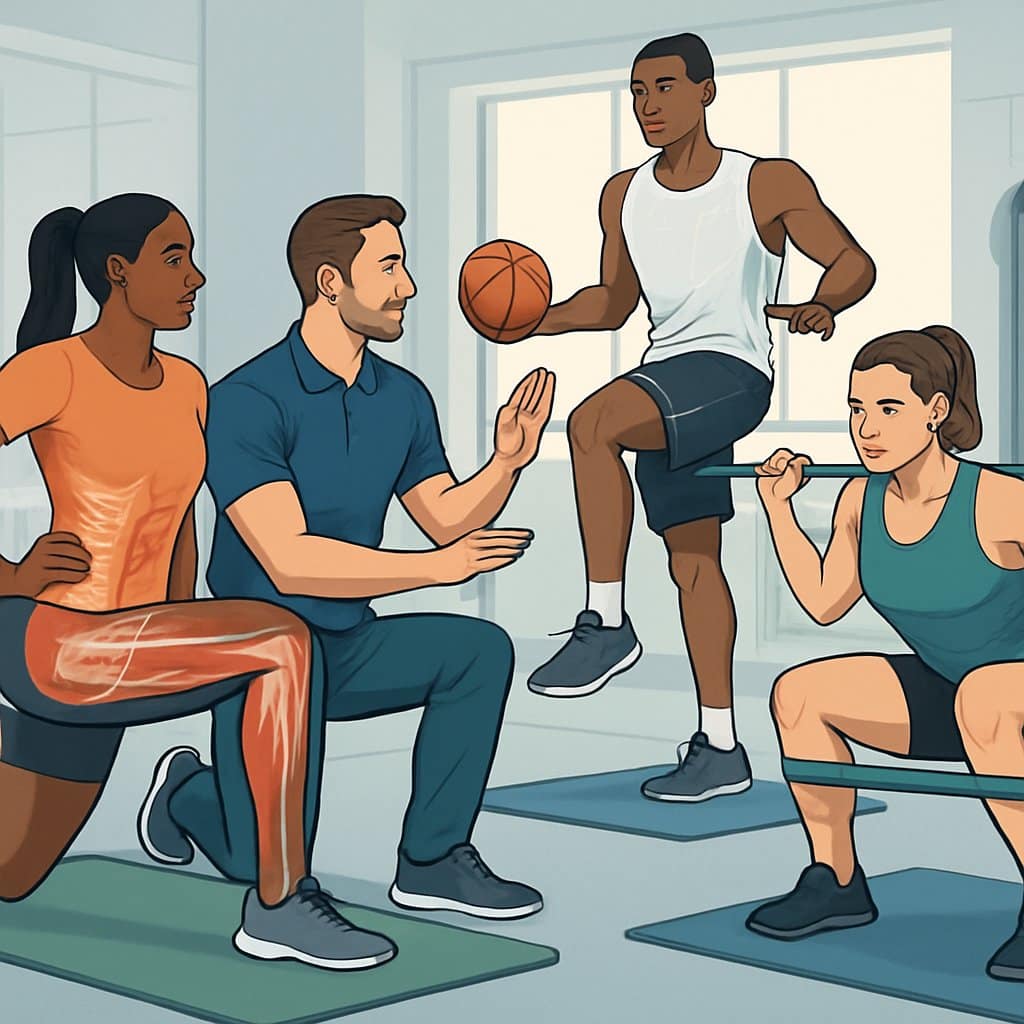
Building a corrective exercise plan that actually works means taking a systematic approach. You’ve got to address your unique movement quirks and physical limits.
The best programs lean on evidence, personal assessments, and progressive training that adapts as you improve.
Principles of Program Design
It all starts with a thorough movement screen to spot your specific imbalances. Corrective exercise is about finding those weak links and putting together a game plan that restores balance.
Follow the stability-mobility-strength order: dial in joint stability, open up your range of motion, then build strength with the right moves.
Key design principles:
- Start with the basics before getting fancy
- Fix pain or dysfunction before worrying about performance
- Mix in both corrective and preventive moves
- Balance out opposing muscle groups
Manhattan folks often have forward head posture from desk jobs. Your specialist should help you target those specific issues—think cervical retraction and thoracic extension.
Training the right physical qualities is crucial. That means picking the right exercises, intensity, frequency, and duration for you—not just some cookie-cutter plan.
The Importance of Customized Exercise Plans
Generic routines just don’t cut it. A custom exercise plan takes into account your NYC lifestyle, work stress, and all the unique stuff you deal with.
Your corrective exercise specialist should factor in your commute, work setup, and what you do for fun. Someone in the Upper East Side who walks a lot will need something different than a Financial District worker who sits all day.
Customization factors:
- Your fitness level and injury history
- The sports or activities you do
- Work posture stresses
- How much time you actually have
A tailored plan means you’re working on the real issues, not just guessing. If your hips are tight from subway rides, your program should focus on hip flexor mobility and glute activation.
Corrective exercises have to be individualized and programmed with some strategy. That’s how you get results that stick.
Progressive Training and Ongoing Assessment
Your corrective exercise plan isn’t set in stone—it needs to evolve as you do. Progressive training keeps you moving forward and helps dodge plateaus.
Progressive phases:
- Stabilization phase: Nail the basics and good form
- Strength phase: Build strength in those new, improved patterns
- Integration phase: Use your better movement in real-life activities
Regular check-ins let your specialist tweak the program as you improve. Maybe you start with basic hip bridges, and as you get stronger, you move to single-leg versions.
Life in Manhattan moves fast, so your plan should too. Your trainer should track your progress in mobility, strength, and how you move, making sure every session counts.
New challenges pop up as your life changes—maybe you start cycling instead of walking, for example. Your corrective strategy should shift with you.
Great corrective exercise programs blend mobility work with strength training, creating a flexible, full-picture approach that keeps up with whatever life (or NYC) throws your way.
Key Corrective Techniques for Injury Prevention and Pain Relief
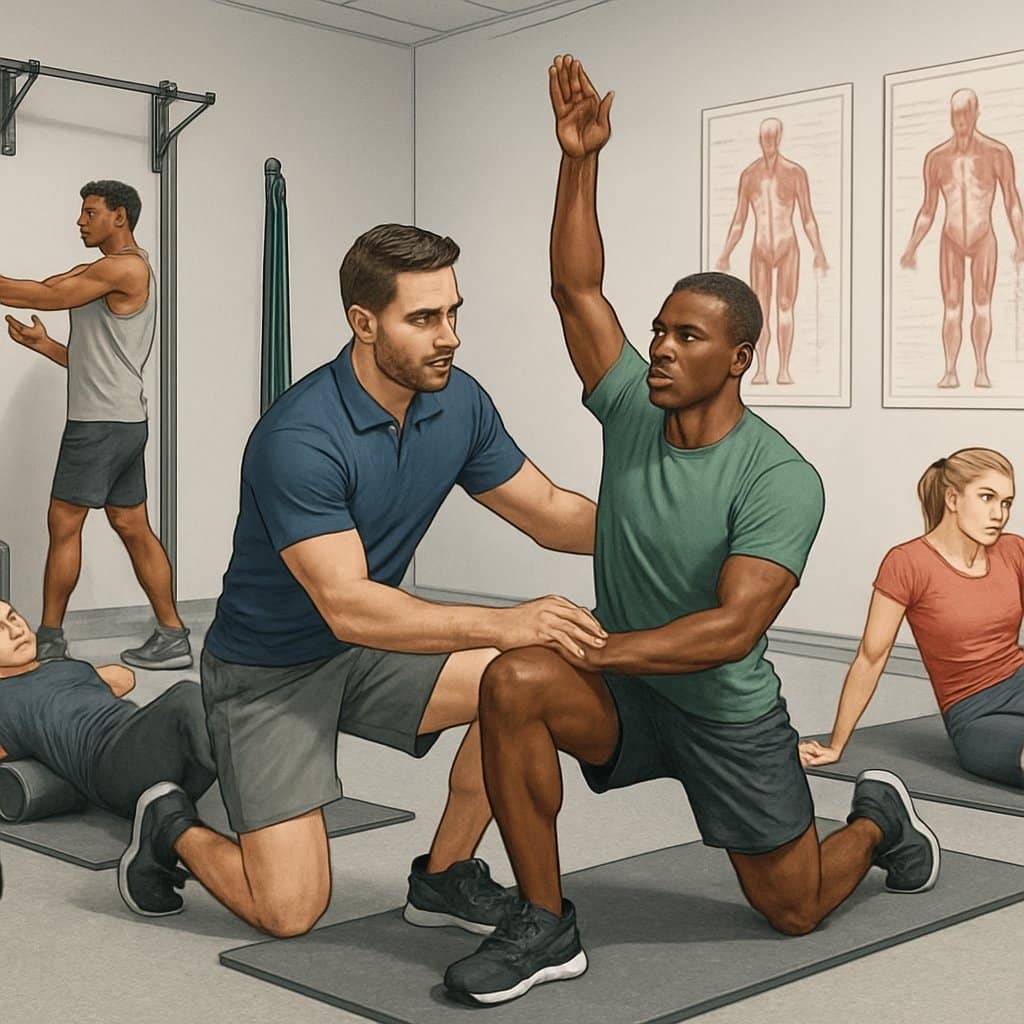
Corrective exercise techniques zero in on movement patterns and muscle imbalances that trip up so many Manhattan professionals and athletes. These methods dig into pain right at the source, while also building up your body’s resilience for the long haul.
Targeted Exercises for Pain Relief
Chin tucks are a lifesaver for Manhattan office workers dealing with neck and upper back pain. That forward head posture from endless screen time? Chin tucks help reset it.
Just sit up tall, gently pull your chin back, and lengthen the back of your neck. Hold for five seconds and aim for 10-15 reps during your workday.
Scapular retractions fight rounded shoulders—a classic issue in Chelsea and SoHo. Squeeze your shoulder blades together, arms relaxed by your sides.
Hip flexor stretches loosen up tight hips from all that sitting on commutes. The couch stretch really gets into those deep hip flexors that mess with your lower back.
Glute bridges wake up sleepy glutes and take pressure off your lower back. These corrective exercises help restore proper alignment and cut down on those weird compensation patterns.
Strategies for Injury Prevention
Movement screening spots injury risks before they turn into problems. Upper East Side athletes get a lot out of these assessments—they reveal hidden asymmetries and dysfunctions.
Progressive loading is all about slowly ramping up the challenge. It lets your tissues adapt, which keeps weekend warriors from overdoing it after long desk days.
Muscle imbalance correction takes aim at strength gaps between muscle groups. You see this a lot:
- Tight chest, weak upper back
- Overactive hip flexors, lazy glutes
- Wobbly core, poor spinal stability
Postural awareness training teaches you the right way to move through daily life. Folks in the Financial District learn to sit better and transition smoothly to avoid building up stress injuries.
Injury prevention exercises target those stabilizer muscles that protect your joints when life throws surprises at you.
Self-Myofascial Release and Foam Rolling
Foam rolling breaks up stubborn knots and improves tissue quality in tight spots. Tribeca fitness fans use it for IT bands and calves—city walking takes a toll.
Here are some common areas to focus on:
| Body Region | Common Issues | Rolling Technique |
|---|---|---|
| Thoracic spine | Desk posture stiffness | Gentle extension over roller |
| Hip flexors | Sitting tightness | Prone with sustained pressure |
| Calves | Walking/standing fatigue | Slow, controlled passes |
| Quadriceps | Cycling/running tension | Multiple angles, pause on sore spots |
Keep the pressure at a level that’s just a bit uncomfortable—never sharp pain. West Village athletes usually spend 30-60 seconds per area, moving slowly and steadily.
Timing actually matters. Pre-workout foam rolling helps you move better, while post-workout rolling speeds up recovery and cuts down on next-day soreness.
And don’t forget to breathe. Focusing on your breath during myofascial release helps your body relax and lets the tissue loosen up.
Practical Corrective Exercise Examples
Daily movement breaks fit right into a busy Manhattan day. Set a phone reminder every half hour for neck rotations or shoulder rolls.
Desk-based corrections can help right away:
- Thoracic extensions over your chair back
- Seated spinal twists for more rotation
- Ankle pumps to wake up your legs
Commute-friendly exercises make the most of your travel time. On the subway? Try subtle calf raises and pelvic tilts while you stand.
Home routines don’t need much equipment but can make a huge difference.
For mornings (just five minutes):
- Cat-cow stretches for your spine
- Glute bridges to wake up your hips
- Band pull-aparts for your shoulders
Evenings (about ten minutes):
- Child’s pose to decompress your back
- Pigeon pose for hip flexibility
- Wall slides for shoulder blades
Weekend intensive sessions let you dig deeper. Chelsea gym-goers often spend 20-30 minutes working on movement patterns and fixing weak spots.
Frequently Asked Questions
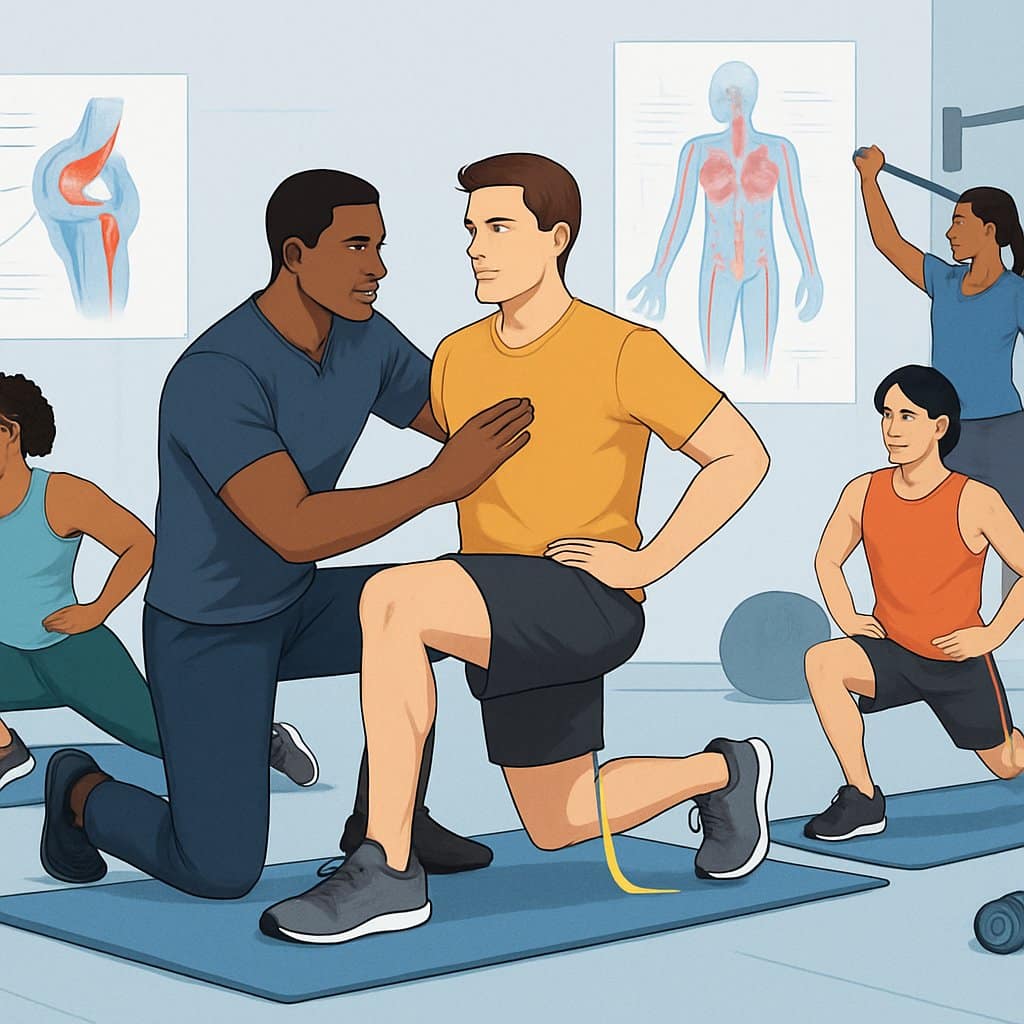
Athletes and fitness professionals have plenty of questions about corrective exercises and what it takes to get certified. People want to know about performance perks, injury prevention methods, and the credentials needed to run these programs well.
What is corrective exercise and how does it differ from regular training?
Corrective exercise is a systematic approach that identifies and fixes movement dysfunction, muscle imbalances, and mobility restrictions before they cause injury or limit performance. Unlike conventional training that focuses primarily on building strength and endurance, corrective exercise prioritizes movement quality—teaching your body to move efficiently through proper muscle activation patterns and joint mechanics.
Regular training assumes you’re moving correctly and adds load or intensity. Corrective exercise first assesses how you move, identifies compensations (like knees caving inward during squats or shoulders hiking up during overhead movements), then uses targeted drills to restore proper patterns. Once your movement quality improves, you can train harder and more safely.
How do I know if I need corrective exercise?
Several signs indicate you’d benefit from corrective work:
🔴 Physical Symptoms:
- Recurring pain during or after training (even if it’s “minor”)
- One side consistently feels tighter or weaker than the other
- You can’t achieve full range of motion in basic movements (overhead reach, deep squat, single-leg balance)
- You experience unusual tightness after desk work or commuting
⚠️ Movement Red Flags:
- Knees cave inward when you squat or land from jumps
- Your lower back arches excessively during overhead movements
- One shoulder sits higher than the other
- You lose balance easily on one leg
- Your feet excessively roll inward (overpronate) when walking or running
📉 Training Plateaus:
- Your performance has stalled despite consistent training
- You can’t add weight or intensity without pain
- You feel “off” during movements that used to feel natural
A professional movement assessment can identify specific dysfunctions, but even basic self-screening (like filming yourself doing squats or single-leg balance exercises) often reveals obvious asymmetries or restrictions.
Can corrective exercise improve my athletic performance even if I’m not injured?
Corrective exercise isn’t just injury rehabilitation—it’s performance optimization. Even athletes without pain typically have movement inefficiencies that limit their potential.
🚀 Performance Benefits Include:
Power and speed improvements: When your body moves through optimal patterns, you generate more force with less energy waste. A runner with proper hip extension mechanics can access more power from the glutes instead of overworking the hip flexors and lower back.
Better skill execution: Athletes with full shoulder mobility and proper scapular control serve harder in tennis, throw more accurately in baseball, and press more weight overhead in the gym—all because their joints move through complete, unrestricted ranges.
Enhanced movement efficiency: Fixing compensations means your muscles fire in the right sequence with appropriate timing. This reduces the “energy leaks” that occur when stabilizer muscles work overtime to compensate for mobility restrictions or weak links.
Faster recovery: Balanced movement patterns distribute training stress evenly across muscle groups. When one area isn’t chronically overloaded from compensating for weak or tight areas, you recover faster between sessions.
For Manhattan professionals training around demanding work schedules, these efficiency gains are especially valuable. Better movement quality means you get more from limited training time.
How long does it take to see results from corrective exercise?
Timelines vary based on the severity of your movement dysfunction and training consistency, but most athletes notice changes within 2-4 weeks.
📅 Short-term improvements (1-2 weeks):
- Reduced muscle tension and tightness
- Better body awareness during movement
- Small increases in range of motion
- Decreased minor aches and pains
📅 Medium-term changes (4-8 weeks):
- Noticeable movement pattern improvements
- Increased stability and balance
- Measurable mobility gains
- Improved performance in training lifts or sport-specific movements
📅 Long-term adaptation (3-6 months):
- Fully integrated new movement patterns
- Significant performance improvements
- Substantially reduced injury risk
- Movement quality maintained even under fatigue
Nervous system adaptations (teaching muscles to fire in proper sequences) happen relatively quickly—often within a few sessions. Structural changes (improving flexibility, building stability strength) take longer but create lasting improvements.
Keep in mind that corrective exercise isn’t a “fix it and forget it” approach. Even after resolving initial dysfunctions, periodic assessment and maintenance work keeps movement quality high—especially given the postural demands of desk work and urban life.
What’s the difference between corrective exercise and physical therapy?
While corrective exercise and physical therapy share some similarities, they serve different purposes and operate under different frameworks.
🏥 Physical Therapy:
- Requires a medical diagnosis and prescription
- Treats injuries, pathologies, and post-surgical rehabilitation
- Performed by licensed healthcare professionals (PTs, PTAs)
- Often covered by insurance
- Focuses on returning function after injury or medical condition
- Can include manual therapy, modalities (ultrasound, e-stim), and therapeutic exercise
💪 Corrective Exercise:
- Addresses movement dysfunction and imbalances in generally healthy individuals
- Prevents injury by optimizing movement quality
- Performed by certified fitness professionals (trainers with corrective exercise specialization)
- Not typically covered by insurance (part of training services)
- Focuses on performance enhancement and injury prevention
- Uses assessment-based exercise programming
When You Need Physical Therapy:
Active injuries, post-surgical recovery, diagnosed conditions (torn meniscus, rotator cuff injury, herniated disc), or situations requiring medical evaluation and treatment.
When Corrective Exercise Is Appropriate:
You’re generally healthy but have movement limitations, muscle imbalances, postural issues from desk work, training plateaus, or want to optimize movement patterns to prevent injury.
Some overlap exists: many physical therapists incorporate corrective exercise principles, and quality corrective exercise specialists know when to refer clients to medical professionals. The key is matching the right professional to your current needs.
Do I need special equipment for corrective exercise?
Most corrective exercise requires minimal equipment—many effective techniques use just your bodyweight. This makes corrective work especially practical for Manhattan athletes with limited home space.
🎯 Essential Tools (Most Effective, Minimal Cost):
- Foam roller ($20-40): Self-myofascial release for tight muscles
- Resistance bands ($10-25): Muscle activation drills and mobility work
- Lacrosse ball or massage ball ($5-10): Targeted tissue release
- Yoga mat ($15-30): Comfortable surface for floor exercises
➕ Helpful Additions:
- Small stability ball or cushion for balance challenges
- Resistance loop bands for glute activation
- Stretching strap for improving flexibility
- Light dumbbells (5-15 lbs) for stability exercises
✅ No Equipment Needed For:
- Movement assessments and body awareness drills
- Many mobility exercises (hip circles, thoracic rotations)
- Basic activation exercises (glute bridges, clamshells, scapular movements)
- Balance and proprioception training
- Postural awareness exercises
The most valuable corrective exercises typically don’t require equipment at all. Equipment becomes more important as you progress from basic corrective work to integrating improved movement patterns under load. But the foundation—assessment, mobility, activation, and motor control—requires minimal gear.
For Manhattan professionals, this means morning mobility routines, lunch break activation drills, or evening foam rolling sessions fit easily into apartment life and demanding schedules.
Should I do corrective exercise before or after my regular workouts?
The timing depends on the type of corrective work and your training goals.
🌅 Before Workouts (Warm-up Integration):
What to include:
- Foam rolling tight areas (5-10 minutes)
- Joint mobility drills (ankle circles, hip CARs, thoracic rotations)
- Muscle activation exercises (glute bridges, band pull-aparts, core engagement)
- Movement preparation specific to your workout
Why this works: Prepares your body for optimal movement patterns during training. If you’re an Upper East Side runner with tight hip flexors, pre-run hip mobility and glute activation ensures better running mechanics. Pre-workout corrective work “primes” the right muscles to fire properly during training.
🌙 After Workouts (Recovery Focus):
What to include:
- Foam rolling and self-myofascial release
- Gentle stretching for chronically tight areas
- Breathing and parasympathetic nervous system work
Why this works: Addresses tension accumulated during training and begins recovery process. Post-workout is also when you’re physically and mentally fatigued—less ideal for motor learning.
⭐ Separate Dedicated Sessions (Most Effective):
When:
- Morning before work (10-15 minutes)
- Lunch break (15-20 minutes)
- Non-training days (20-30 minutes)
Why this works: Corrective exercise teaches new movement patterns—a skill-learning process requiring focus and quality repetitions. Separate sessions allow you to concentrate on form without the fatigue from intense training compromising motor learning.
- Daily: 10 minutes of targeted corrective work (morning mobility + evening foam rolling)
- Pre-workout: 5-10 minutes of activation and movement prep
- 2-3x weekly: Dedicated 20-30 minute corrective sessions on lighter training days
This approach maintains consistency without requiring massive time blocks—critical for professionals balancing training with demanding careers.
Our corrective-exercise specialists rebuild posture and movement at home — assessment first, then a plan built for your body.
Meet our corrective specialists